
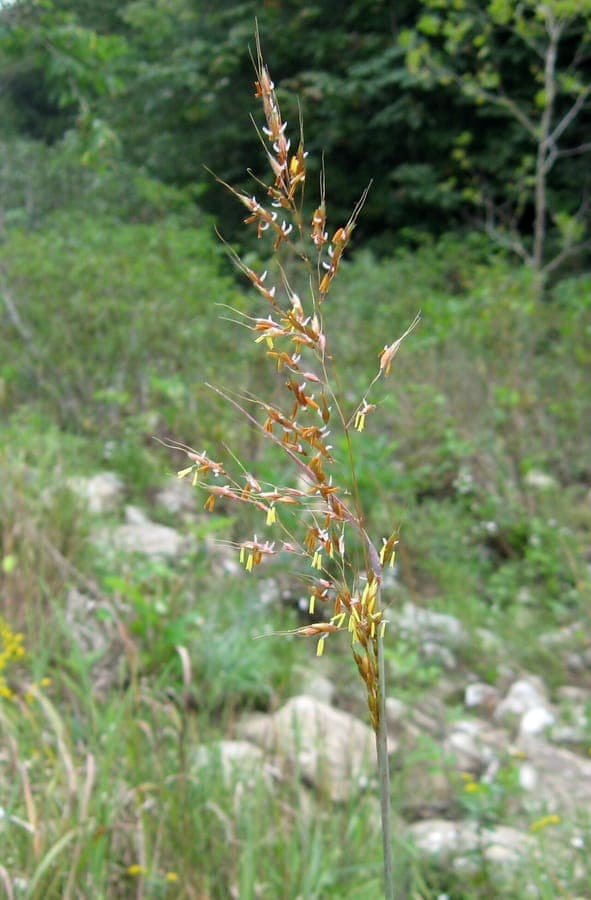
Mason Brock (Masebrock) / Public domain, via Wikimedia Commons
Sorghastrum nutans: complete guide
Sorghastrum nutans
¿Quieres ver Sorghastrum nutans: complete guide en tu jardín?
1 minuto, sin tarjeta de crédito
Overview
Sorghastrum nutans, commonly known as Indiangrass or Wood Grass, is an impressive native ornamental grass from North America. This member of the Poaceae (grass) family grows to 1.5 meters tall and is famous for its distinctive, golden-toned plumes that grace the garden from August through October. The plant is a classic ingredient in prairie gardens and provides seasonal interest plus wildlife habitat.
Appearance and bloom
Sorghastrum nutans grows as an upright, clumping plant with fine, blue-green foliage. The plant reaches 1-1.5 meters tall. From August to October, distinctive golden-brown plumes appear atop slender, elegant stems. These plumes represent the plant's most striking feature. In autumn, the foliage transitions to golden-brown and russet-red tones, providing extended seasonal interest.
Ideal location
Indiangrass thrives in full sun, requiring at least 6 hours of direct daily sunlight. The plant excels in prairie-like settings, native plantings, back borders, and open meadows. Suitable for slopes and dry exposures. Fully hardy and supports native habitat gardening.
Soil
Sorghastrum nutans adapts to diverse soil types. Well-drained, moderately fertile soil is ideal. The plant tolerates dry to moderately moist conditions but dislikes permanently waterlogged sites. Heavy clay can work but may slow root development. The plant grows on poor soils.
Diseño gratis
¿Quieres ver Sorghastrum nutans: complete guide en tu jardín? Crea un diseño gratis ahora.
Watering
Indiangrass is drought-tolerant. Water regularly during the first growing season for establishment. Once established, supplemental water is needed only during extreme drought. Excessive watering is unnecessary. Mulching helps retain moisture in very dry periods.
Pruning
Minimal pruning required. Dead foliage can be removed in early spring. Cut the plant to the ground in March-April to stimulate fresh growth. No other pruning needed. Natural self-seeding typically produces young plants throughout the area.
Maintenance calendar
March-April: Cut old growth to ground level. May-July: Active growth, no special care. August-October: Plume appearance, no feeding needed. October-March: Dormancy, leave dead foliage for winter interest.
Winter hardiness
Sorghastrum nutans is fully hardy to USDA zone 3 (minimum -40 degrees C). In temperate regions, it remains permanent. No winter protection needed. The plant provides attractive winter structure.
Companion plants
Indiangrass pairs beautifully with other tall perennials and seed-producing plants: Rudbeckia, Ratibida, Asters, Echinacea, other grasses (Panicum, Andropogon), and native shrubs. Creative combinations work well in prairie settings.
Conclusion
Sorghastrum nutans is a spectacular, low-maintenance grass for natural, prairie-like gardens. Perfect for those seeking tall, dynamic grass with seasonal drama. Suitable for meadows, borders, and naturalized areas. Plant it and enjoy golden plumes from late summer through fall. Visit gardenworld.app for prairie garden design ideas.
¿Quieres ver Sorghastrum nutans: complete guide en tu jardín? Crea un diseño gratis ahora.
Sube una foto, elige un estilo y obtén un diseño fotorrealista con lista de plantas en menos de un minuto.
Más de 10.000 jardines diseñados
Sin tarjeta de crédito


Plantas similares
Sporobolus pungens: complete guide
Sporobolus pungens
Sporobolus pungens is a stoloniferous Mediterranean coastal grass with outstanding salt and drought tolerance, perfect for seaside and dry gardens.
Mediterranean aegilops: complete guide
Aegilops biuncialis
Everything about Aegilops biuncialis, a Mediterranean annual grass with ornamental spikes and outstanding drought tolerance for dry gardens.
Silver bluestem: complete guide
Bothriochloa saccharoides
Full guide to Bothriochloa saccharoides (silver bluestem): site, soil, watering, winter hardiness, pruning, and garden companions.