
Kurt Stüber [1] / CC BY-SA 3.0, via Wikimedia Commons
Skimmia japonica: complete guide
Skimmia japonica
¿Quieres ver Skimmia japonica: complete guide en tu jardín?
1 minuto, sin tarjeta de crédito
Overview
Skimmia japonica is an evergreen shrub in the Rutaceae family, native to Japan and surrounding regions. This attractive specimen is celebrated for its hardiness, fragrant foliage, and especially its highly decorative red berries that persist long on the plant. With its compact growth habit and minimal maintenance requirements, it is an ideal choice for shaded corners and modern gardens.
Appearance and Bloom
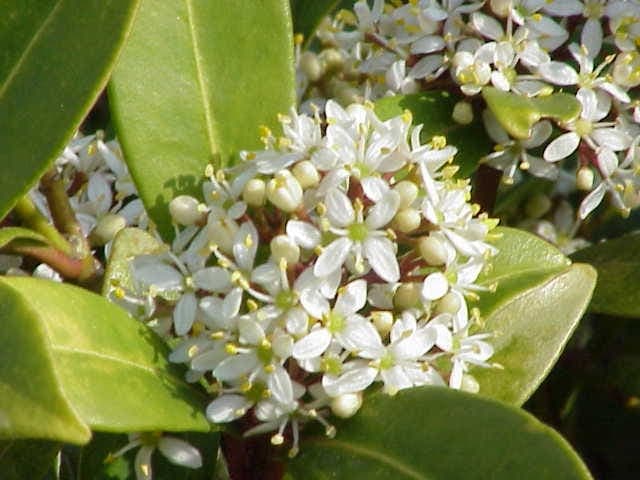
Skimmia japonica grows as a compact, densely branched shrub reaching 1 to 1.5 meters in height. The leaves are narrow-lanceolate, dark green, smooth, and glossy. In spring, small white or pink flowers appear in panicle-like clusters. The true attraction comes from the highly decorative red fruits that remain on the plant from October through March.
Ideal Location
Skimmia japonica is excellent for partial shade to full shade. While it has some sun tolerance, it grows better in shaded locations where it is protected from midday sun. This makes it ideal for shaded corners and spots under trees.
Soil
This plant is not demanding regarding soil composition but grows best in well-draining, humus-rich soil. Skimmia japonica thrives best in acidic to slightly acidic soil (pH 5-6.5). Heavy clay soils should be amended with organic material.
Watering
Water regularly, especially during dry periods and for young plants. Ensure well-draining soil to prevent stagnation. During active growth, water needs can decrease, but ensure the plant does not dry out completely. Mulch helps retain moisture.
Diseño gratis
¿Quieres ver Skimmia japonica: complete guide en tu jardín? Crea un diseño gratis ahora.
Pruning
Skimmia japonica requires minimal pruning. Remove only dead or damaged branches in spring. Light trimming can be done to maintain compact form, but this may result in fewer fruits.
Maintenance Calendar
February-March: Check for winter damage, light pruning if needed. April-June: Growth period with regular watering. July-September: Reduced watering, preparation for flower formation. October-January: Enjoy the red berries with minimal maintenance.
Winter Hardiness
Skimmia japonica is very winter hardy, tolerating temperatures down to -10 to -15 degrees Celsius. This makes it an excellent choice for colder gardens. The red berries remain beautifully visible throughout winter.
Companion Plants
Combine Skimmia japonica with other shade-lovers such as Aucuba japonica, Mahonia, and Fatsia japonica. The red berries provide winter color when little else is growing. Pair it with ferns and heart-leaved plants for interesting leaf contrasts.
Closing Thoughts
Skimmia japonica is a perfect choice for those seeking winter color and structure without excessive maintenance. With fragrant foliage, decorative flowers, and especially beautiful red berries, it offers year-round interest. It is highly suitable for shaded gardens and performs well in modern, minimalist garden designs. For more inspiration, visit gardenworld.app or consult local garden centers.
¿Quieres ver Skimmia japonica: complete guide en tu jardín? Crea un diseño gratis ahora.
Sube una foto, elige un estilo y obtén un diseño fotorrealista con lista de plantas en menos de un minuto.
Más de 10.000 jardines diseñados
Sin tarjeta de crédito


Plantas similares
Thamnosma montana: complete guide
Thamnosma montana
Everything about Thamnosma montana, the aromatic turpentine broom from the Mojave Desert. Location, soil, care and companion planting explained.
Narrow-leaved fringed rue: complete guide
Ruta angustifolia
Everything about Ruta angustifolia: location, soil, watering, pruning and winter care for this Mediterranean subshrub.
Mountain rue: complete guide
Ruta montana
A complete guide to Ruta montana: best location, soil, watering, pruning and overwintering of this aromatic Mediterranean subshrub.