
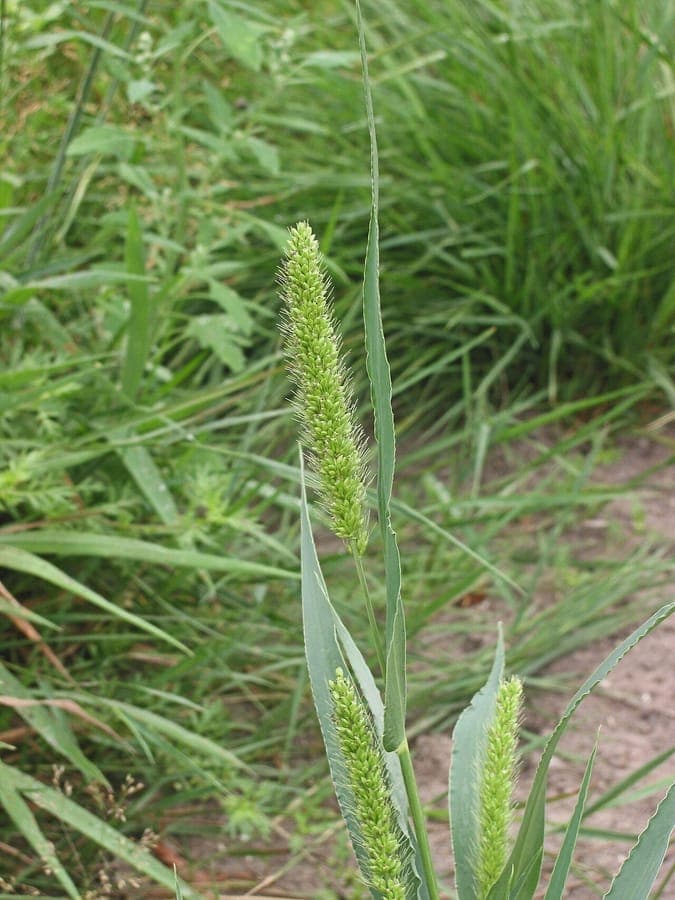
Rasbak / CC BY-SA 3.0, via Wikimedia Commons
Green Bristle-grass: complete guide
Setaria viridis
¿Quieres ver Green Bristle-grass: complete guide en tu jardín?
1 minuto, sin tarjeta de crédito
Overview
Green bristle-grass (Setaria viridis) is a fine grass originating from the Old World and now growing in many temperate and subtropical regions. This plant is recognized by its elegant green seed heads that form in summer and autumn seasons.
Although green bristle-grass is sometimes considered a weed, it also has benefits in naturalistic and ecological gardens. The seed heads provide nutrition for birds and other wildlife. The plant reaches approximately 30-50 centimeters in height and grows in compact, upright forms.
Appearance and Growth
Green bristle-grass has thin, linear leaves approximately 6-10 millimeters wide. Stems are upright and smooth to slightly rough. The characteristic seed heads are green, densely bristled, approximately 4-8 centimeters long, with fine bristles.
Flowers are very small and inconspicuous, yellow to green colored, present in dense spikes. Seed production is very high, with a single plant capable of producing numerous seeds for following seasons.
Ideal Growing Conditions
Green bristle-grass grows best in sunny locations with regular moisture. The plant is unfussy about soil type and grows in many different soils. It dislikes shade and cannot grow well beneath dense tree canopies.
In warm regions, green bristle-grass can grow aggressively and reproduce more vigorously. In temperate climates it usually remains manageable and forms more modest groupings.
Soil Requirements
Green bristle-grass grows well in nearly all soil types, from sandy to heavy clay. The plant dislikes extremely waterlogged conditions but is otherwise very adaptable. Moderately fertile to poor soil is sufficient.
The plant thrives in pH values between approximately 5.5 and 8, so is very tolerant. It has no special fertilizer requirements and can even grow in poor, lean soils.
Diseño gratis
¿Quieres ver Green Bristle-grass: complete guide en tu jardín? Crea un diseño gratis ahora.
Watering
Green bristle-grass requires consistent moisture for optimal growth, especially during germination. Once established, the plant is fairly drought-tolerant and can survive longer dry periods, although growth may slow.
In moisture-retaining soils, green bristle-grass can grow aggressively. In dry areas, supplemental irrigation can help encourage growth if desired.
Management and Maintenance
When green bristle-grass is considered a weed, it is best managed through regular removal before seeds mature. This prevents spread to following seasons.
In larger gardens, regular mowing is effective. Mow before seed heads fully ripen. Young plants can be easily removed by hand.
Maintenance Calendar
Spring: Monitor for germinating seedlings. Summer: Remove plants before seed set begins. Autumn: Mow once more before first frost. Winter: Young seedlings die in freezing weather.
Winter Hardiness
Green bristle-grass is an annual plant in temperate to cold climates and cannot survive below freezing. In tropical and subtropical regions it thrives year-round. This means it is a seasonal plant in Europe.
Special Benefits
In naturalistic gardens, green bristle-grass offers interesting seed heads that provide food for birds and insects. The plant is known as a food source for various birds that enjoy eating the seeds.
For ecological garden designers, green bristle-grass can be a valuable component, although it does require management.
Closing
Green bristle-grass is mainly interesting for birdwatchers and ecological garden enthusiasts. For some it is a bird feeding plant, for others a weed requiring removal. Choose based on your garden objectives. Consult your local garden centre for management advice. More garden inspiration at gardenworld.app and gardenworld.app!
¿Quieres ver Green Bristle-grass: complete guide en tu jardín? Crea un diseño gratis ahora.
Sube una foto, elige un estilo y obtén un diseño fotorrealista con lista de plantas en menos de un minuto.
Más de 10.000 jardines diseñados
Sin tarjeta de crédito


Plantas similares
Sporobolus pungens: complete guide
Sporobolus pungens
Sporobolus pungens is a stoloniferous Mediterranean coastal grass with outstanding salt and drought tolerance, perfect for seaside and dry gardens.
Mediterranean aegilops: complete guide
Aegilops biuncialis
Everything about Aegilops biuncialis, a Mediterranean annual grass with ornamental spikes and outstanding drought tolerance for dry gardens.
Silver bluestem: complete guide
Bothriochloa saccharoides
Full guide to Bothriochloa saccharoides (silver bluestem): site, soil, watering, winter hardiness, pruning, and garden companions.