
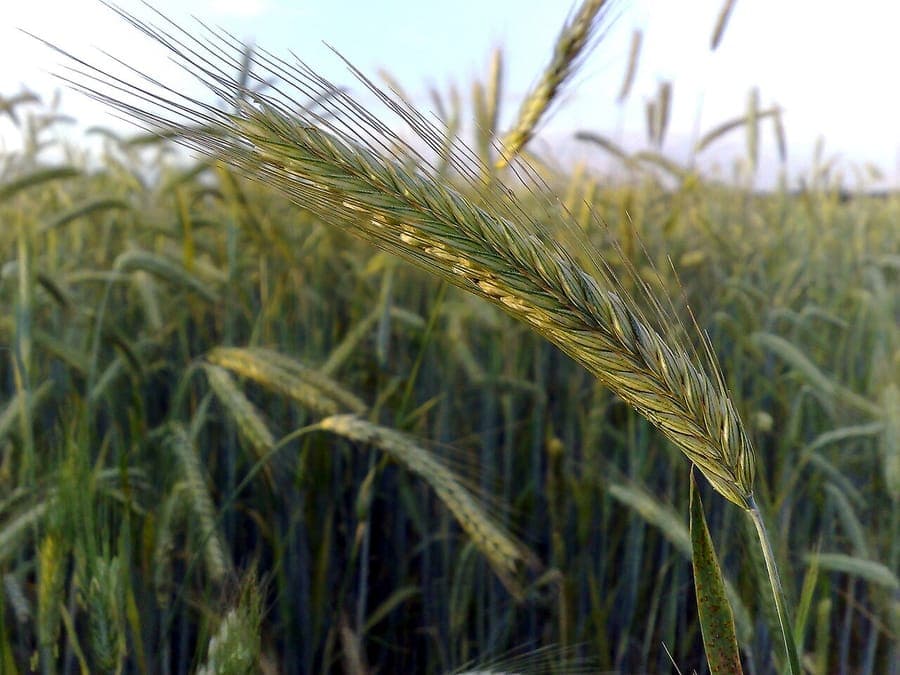
LSDSL / CC BY-SA 3.0, via Wikimedia Commons
Rye (Secale cereale): complete guide
Secale cereale
¿Quieres ver Rye (Secale cereale): complete guide en tu jardín?
1 minuto, sin tarjeta de crédito
Rye (Secale cereale): Complete Guide
Overview
Rye, scientifically Secale cereale, is an important cereal crop in the grass family Poaceae with a long history of human cultivation. This plant serves not only as a food source but offers numerous advantages for gardeners and landowners, from soil improvement to visual interest in landscape designs.
Originating from southern Turkey, rye is now cultivated worldwide. In modern gardens, it finds applications as a green manure crop, cut flowers, and even visual structure in contemporary landscape designs. This versatile crop deserves greater recognition in small-scale gardening.
Appearance and Growth
Rye is recognizable by its elegant upright stems and characteristic seed heads with long bristle-like awns. Plants typically reach 100-150 centimeters in height, making them suitable for garden backgrounds or as structural elements.
Leaves are narrow, typical of grain species, displaying grayish-green coloration. Seed heads appear in June-July and mature through October. The maturation process attracts bird species, making it valuable for birdwatchers.
The plant develops a dense root system that helps improve soil structure, particularly valuable as a green manure crop.
Ideal Location
Rye grows best in full sun, receiving minimum six hours of direct sunlight daily. The plant accepts partial shade but produces less seed in low-light situations.
Rye tolerates much greater variability in growing conditions than many other crops, including cold, wind, and poor soil quality. This makes it valuable for marginal growing locations.
Soil
Rye grows better in less-than-optimal soil than most other grain crops. It tolerates poor, acidic soil (pH 5.5-7.5) and even heavy clay excellently. This plant requires no rich fertilization for excellent growth.
Good drainage helps, although rye tolerates wet conditions much better than wheat or barley. In gardens, rye can be used to improve difficult, under-optimal soils.
Diseño gratis
¿Quieres ver Rye (Secale cereale): complete guide en tu jardín? Crea un diseño gratis ahora.
Watering
Rye is drought-tolerant once established and requires minimal supplemental watering in temperate climates with regular rainfall. During the growing season (October-May in northern hemisphere), regular moisture can help, but remains non-essential.
In very dry seasons, occasional watering improves yields. Excessive water during rainy periods causes no problems.
Pruning
Pruning is not applicable to rye as a crop. If using it for green manure, cutting during growth stimulates rapid regrowth. If harvesting for seed, leave undisturbed.
Maintenance Calendar
Fall (September-October): Direct sow rye seed in garden beds with proper spacing. Firm seed into soil and water. Germination occurs within 1-2 weeks.
Winter (November-February): Plant grows slowly in cold. Minimal maintenance required. Plant is exceptionally frost-resistant.
Spring (March-May): Growth accelerates. Plant reaches full stature in April-May. Thinning may be needed if seed was sown too densely.
Summer (June-August): Flowering, maturation, and harvest. Harvest seed when seed heads turn golden. Dry seed thoroughly before storage.
Winter Hardiness
Rye is exceptionally cold-hardy, surviving much harsher winters than most other grain crops. Fall sowing exposes it to cold night temperatures, helping develop excellent root systems and soil structure.
Companion Plants
Rye can be mixed-planted with:
- Other grain crops: Wheat, barley for diverse structures
- Flowering plants: Lupines and other ornamentals for contrast
- Wildflowers: Poppies for traditional cottage garden effect
- Green manure crops: Compost rye with other cover crops
Closing Remarks
Rye is a remarkable plant for gardeners wanting to move beyond conventional ornamental plantings. Whether using it for food, soil improvement, birdseed, or purely visual interest, rye offers versatile benefits. Sow seed in fall in temperate climates. This versatile grain will provide structure and interest throughout the growing season.
Visit gardenworld.app/en for ideas on integrating utilitarian crops like rye into modern gardens. Discover more edible crops and cover crops at gardenworld.app/en.
¿Quieres ver Rye (Secale cereale): complete guide en tu jardín? Crea un diseño gratis ahora.
Sube una foto, elige un estilo y obtén un diseño fotorrealista con lista de plantas en menos de un minuto.
Más de 10.000 jardines diseñados
Sin tarjeta de crédito


Plantas similares
Sporobolus pungens: complete guide
Sporobolus pungens
Sporobolus pungens is a stoloniferous Mediterranean coastal grass with outstanding salt and drought tolerance, perfect for seaside and dry gardens.
Mediterranean aegilops: complete guide
Aegilops biuncialis
Everything about Aegilops biuncialis, a Mediterranean annual grass with ornamental spikes and outstanding drought tolerance for dry gardens.
Silver bluestem: complete guide
Bothriochloa saccharoides
Full guide to Bothriochloa saccharoides (silver bluestem): site, soil, watering, winter hardiness, pruning, and garden companions.