
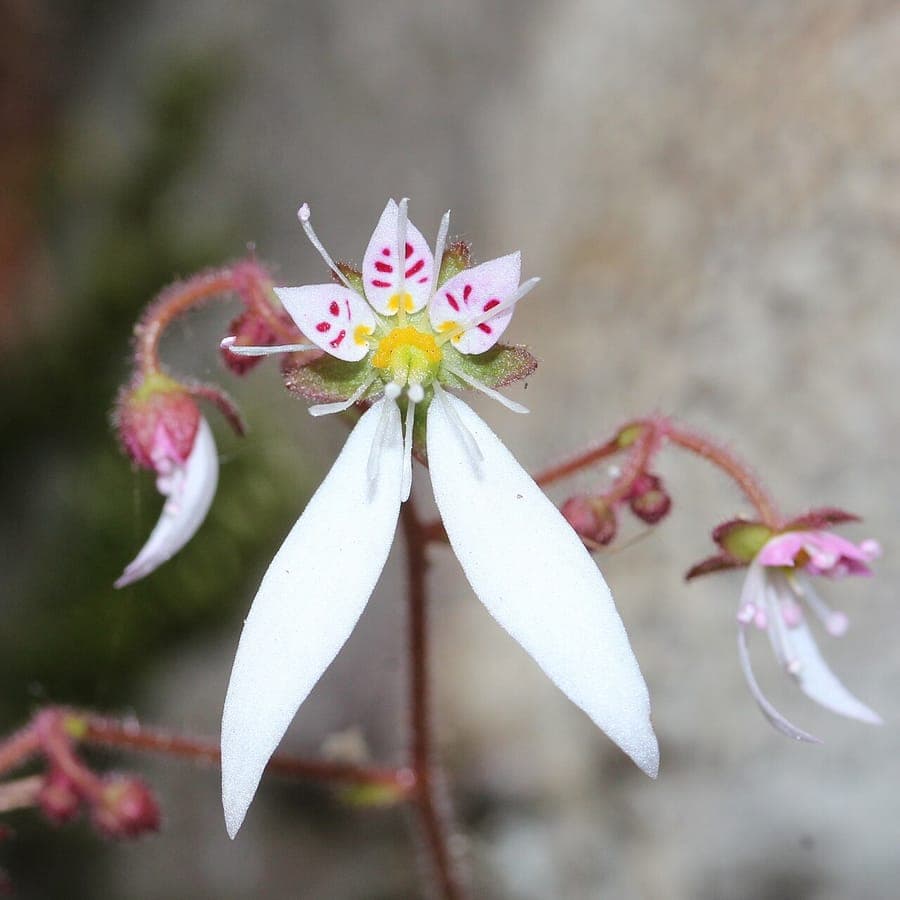
Alpsdake / CC BY-SA 4.0, via Wikimedia Commons
Saxifraga stolonifera: complete guide
Saxifraga stolonifera
¿Quieres ver Saxifraga stolonifera: complete guide en tu jardín?
1 minuto, sin tarjeta de crédito
Overview
Saxifraga stolonifera, commonly known as creeping saxifrage, strawberry saxifrage, or mother-of-thousands, is a popular ornamental plant native to central and southern China, Korea, and Japan. This unique plant is celebrated for its decorative runners - thin threads extending from mother plants with miniature rosettes at the ends.
This is a beloved houseplant in the East and is becoming increasingly popular in the West. Unlike many other saxifrage species, this plant thrives in room temperatures and regular potting soil. However, it is very moisture-loving, much more so than its alpine cousins.
Appearance and Bloom
Saxifraga stolonifera has beautiful, almost circular leaves growing in compact rosettes. The leaves are velvety, usually green with silver stripes or red undersides, depending on the variety and light conditions. These leaves can reach 5-8 centimeters in width.
But where this plant truly stands out are the decorative runners. These slender stems arise from the mother rosette and can extend 30-40 centimeters or more. At each end, a miniature rosette forms with its own root points.
Flowers appear in spring through early summer in small, elegant clusters atop fine stems. They are usually white or light pink with orange stamens.
Ideal Location
This is where Saxifraga stolonifera significantly differs from its alpine relatives. This plant prefers brightness but cannot tolerate direct midday sun, especially in warm regions. A spot by a window with filtered light or light shade is ideal.
Indoors, this plant can thrive in a normal living room window facing north, west, or east. A south-facing window also works, as long as you protect the plant from the hottest afternoon rays with a sheer curtain.
Outdoors, it works well in shaded garden areas, under trees, or under eaves. It is also perfectly suited for hanging in baskets or on shelves.
Soil
This is where this plant wants much more moisture than its alpine relatives. While drainage is still important, the potting soil should be moisture-retentive without being waterlogged. Standard houseplant potting soil works well, but you can improve it by adding 1/4 part coco fiber or peat.
The plant also grows quite well in pure coco fiber and it is recommended for those who want to try. The pH can be neutral to slightly acidic, around 6.0 to 7.5.
Make sure your pot has drainage holes so water cannot become stagnant.
Watering
Here is the big difference from alpine saxifrage species. Saxifraga stolonifera loves regularly moist soil, especially during the growing season. This means not waterlogged, but noticeably moist when you squeeze it.
During the growing season (April to September), you should water at least 1-2 times per week depending on temperature and humidity. In warm, dry environments, daily watering may be necessary.
During the winter period, reduce watering because growth slows. Do not let the soil dry out completely, but water less frequently.
One tip: this plant appreciates light misting with water. Spray the leaves regularly (not the flowers), especially in dry room environments. This helps prevent fungal problems and keeps the leaves beautifully clean.
Diseño gratis
¿Quieres ver Saxifraga stolonifera: complete guide en tu jardín? Crea un diseño gratis ahora.
Pruning
Saxifraga stolonifera requires very little formal pruning. The plant itself determines its shape excellently through its natural growth pattern of rosettes and runners.
However, you can regularly remove runners with dead rosettes. This encourages the mother plant to put more energy into new growth. Also regularly remove yellowed or damaged leaves.
When you want to use runners for propagation, you can simply cut them off and place them in water or directly in potting soil.
Maintenance Calendar
March-April: Beginning of growing season. Increase watering and begin regular misting.
May-June: Peak growth and blooming phase. Ensure consistently moist soil. Continue regular misting.
July-August: Ongoing growth. Watering can become even more important in dry environments. Regularly check for pests.
September-October: Growing season begins to diminish. Gradually reduce watering.
November-February: Winter dormancy. Water sparingly but do not let the soil dry out. Do not add fertilizer.
Winter Hardiness
Saxifraga stolonifera is a tender plant and cannot tolerate frost. It must be grown indoors or in a warm greenhouse in temperate climates.
Minimum temperature for this plant is about 5 degrees Celsius, but it grows better between 10 and 25 degrees. Protect from temperatures below 5 degrees.
Companion Plants
This plant works beautifully in combinations. Here are some ideas:
Mucosa plants: Pot these together in hanging baskets for a nice three-tiered display.
Pothos and Philodendron: These climbing plant species thrive together in hanging situations.
Fittonia: The fine structure of Fittonia against the larger leaves of Saxifraga is very attractive.
Soleirolia: This must-have garden plant makes a cute mini display beneath Saxifraga.
Propagation
This is where Saxifraga stolonifera is really special. Propagation is so simple that even beginners can do it.
Simply cut a runner from the mother plant. The miniature rosette at the end of the runner will already have begun small roots. Place this directly in lightly moist potting soil or in water to allow roots to develop further.
When in water, remove after 1-2 weeks when roots are 1-2 centimeters. Then plant in potting soil.
The rosettes root very easily and you will have very high success rates.
Closing Thoughts
Saxifraga stolonifera is a graceful, elegant, and easy-to-maintain plant that adds much beauty to any space. With simple care and regular watering, you will have much joy from this plant. Whether you are a beginner or experienced gardener, this plant is a great addition to your collection.
Want to learn more? Visit gardenworld.app for more information. For seedlings and mature Saxifraga stolonifera plants, check leading garden retailers for the best options.
¿Quieres ver Saxifraga stolonifera: complete guide en tu jardín? Crea un diseño gratis ahora.
Sube una foto, elige un estilo y obtén un diseño fotorrealista con lista de plantas en menos de un minuto.
Más de 10.000 jardines diseñados
Sin tarjeta de crédito


Plantas similares
Korean astilbe: complete guide
Astilbe grandis
Discover Korean astilbe (Astilbe grandis): a tall shade plant with elegant flower plumes for pond edges and borders.
Heuchera pilosissima: complete guide to seaside alumroot
Heuchera pilosissima
Seaside alumroot (Heuchera pilosissima), an elegant North American dwarf perennial with hairy red-tinged foliage and red flower spikes.
Starry saxifrage: complete guide
Micranthes stellaris
Full guide to Micranthes stellaris, the starry saxifrage: location, soil, blooming and garden use. A tough alpine plant for moist, shady rock faces and pond margins.