
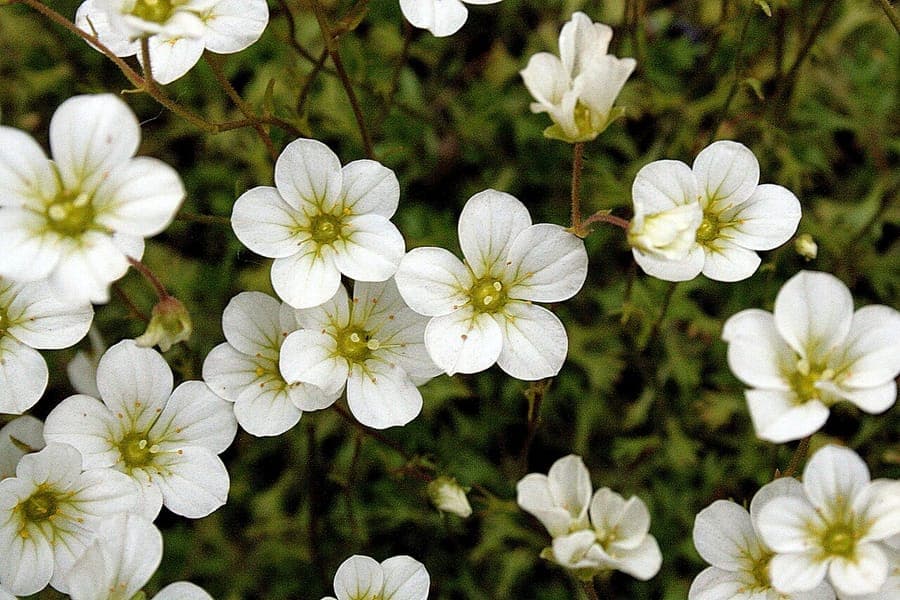
Hedwig Storch / CC BY-SA 3.0, via Wikimedia Commons
Saxifraga rosacea: complete guide
Saxifraga rosacea
¿Quieres ver Saxifraga rosacea: complete guide en tu jardín?
1 minuto, sin tarjeta de crédito
Overview
Saxifraga rosacea, commonly known as Irish saxifrage or rose saxifrage, is a fascinating alpine plant native to the highlands of northwestern Europe. This small, mat-forming plant belongs to the Saxifragaceae family and is celebrated for its ability to thrive in the most challenging rocky and mountainous habitats. The name "saxifrage" comes from the plant's remarkable ability to grow in rock crevices and between stone blocks, where it blooms with passion.
This plant is a true gem for gardeners who dare to venture into rock and alpine gardening. With its compact growth of just a few centimeters high, it forms dense, green cushions that are covered in numerous delicate white to pink flowers from late spring through early summer.
Appearance and Bloom
Saxifraga rosacea is characterized by its densely packed, fine leaves arranged in compact rosettes. Each rosette can reach several centimeters across. The leaves are small, linear to spatulate, and often have a glossy appearance that shimmers in sunlight.
The flowers are where this plant truly shines. They are small, approximately 5-8 millimeters in diameter, and range from white to soft pink. They appear in dense, branched inflorescences that rise above the leaf canopy. Depending on growing conditions, the blooming period can extend from May to September, though peak flowering typically occurs in June and July.
Ideal Location
This is where Saxifraga rosacea's preferences become clear. In nature, this plant grows in mountainous areas on rocks and steep slopes where it receives plenty of light but is also protected from the hottest afternoon sun. In the garden, this means a location with full sun to light shade. South-facing locations can be problematic in very warm regions, so north- to west-facing positions may be better suited in climates with extremely hot summers.
The plant is hardy and suitable for rock gardens, alpine troughs, pergolas, and other structures where excellent drainage can be achieved. It is also ideal for growing in pots and containers, making it perfect for balcony gardeners and those with limited space.
Soil
Well, this is where drainage is everything. Saxifraga rosacea cannot tolerate wet feet. In nature, this plant grows in thin, gritty soils that drain quickly. In your garden, you need to replicate this.
The ideal soil composition consists of:
- Coarse sandy soil (not fine sand)
- Small gravel or shells
- Composted tree bark
- A small amount of bird sand or volcanic sand
The pH should be neutral to slightly acidic, around 6.0 to 7.0. Add extra sand, gravel, and porous materials to your soil before planting. A soil improver specifically made for alpine plants can also help. Check that your drainage is excellent by pouring water on the soil and seeing how quickly it runs off.
Diseño gratis
¿Quieres ver Saxifraga rosacea: complete guide en tu jardín? Crea un diseño gratis ahora.
Watering
Despite its love for dry growing conditions, young Saxifraga rosacea plants should receive regular water until they are well established. This typically takes about a month after planting.
Once the plant is established, drastically reduce watering. Established plants love dry conditions and need limited water, especially during the growing season. Water only when the soil is completely dry. Make sure you do not water from above, as this can leave moisture on the leaves, which can lead to fungal diseases.
In winter, when the plant is largely dormant, water even less. Make sure the plant does not become wet from rain or snow. The best practice is to water from below if you do water, so the water goes directly into the root zone.
Pruning
Fortunately, this alpine plant requires very little pruning. If your plant looks leggy or loses part of its compact form, you can carefully remove dead or damaged stems and leaves. This should be done in early spring before the season begins.
If you have multiple cushions growing together, you can gently separate them with a small knife to replant where you want extra growth.
Maintenance Calendar
March-April: Beginning of the growing season. Check drainage and remove dead leaves from the previous winter.
May-June: Peak blooming period. Enjoy the flowers and ensure you do not overwater.
July-August: Still flowering, though this diminishes. Continue to maintain good drainage conditions and water sparingly.
September-October: Post-bloom decline. Prepare the plant for winter.
November-February: Winter dormancy. Protect against extreme weather and avoid watering unless it is exceptionally dry.
Winter Hardiness
Saxifraga rosacea is hardy to about -20 degrees Celsius, which means it can overwinter well in most European gardens. However, it is not the winter temperature that matters most, but rather the combination of cold and wet feet.
Ensure your plant has well-draining growing conditions. A thin layer of stone grit or sand over the root zone can help manage moisture. Protect against heavy rain and snowfall if you live in a very wet winter climate.
Companion Plants
Saxifraga rosacea grows beautifully with other alpine plants. Some suitable companion plants are:
Sedum species: These sedums have the same dry growing preferences and make lovely combinations with their fleshy, often colored foliage.
Erodium species: These small, compact plants create interesting structure next to the delicate flowers of Saxifraga.
Centaurium species: These small pink or red flowers thrive in the same well-drained, sunny conditions.
Dianthus pygmaeus: These mini-carnation types are perfect for alpine gardens and help balance the scale and shape of your garden plan.
Closing Thoughts
Saxifraga rosacea is a rewarding plant that brings great satisfaction to those who take the time to understand her growing needs. With good drainage, careful watering, and plenty of light, this delicate alpine jewel will bloom year after year. Whether you are an experienced gardener or just beginning with alpine plants, Saxifraga rosacea deserves a place in your garden.
Do you have questions about growing Saxifraga rosacea? Visit gardenworld.app for more plant guides and design tips. For seedlings and established Saxifraga rosacea plants, visit leading garden retailers for the best selection and expert advice.
¿Quieres ver Saxifraga rosacea: complete guide en tu jardín? Crea un diseño gratis ahora.
Sube una foto, elige un estilo y obtén un diseño fotorrealista con lista de plantas en menos de un minuto.
Más de 10.000 jardines diseñados
Sin tarjeta de crédito


Plantas similares
Korean astilbe: complete guide
Astilbe grandis
Discover Korean astilbe (Astilbe grandis): a tall shade plant with elegant flower plumes for pond edges and borders.
Heuchera pilosissima: complete guide to seaside alumroot
Heuchera pilosissima
Seaside alumroot (Heuchera pilosissima), an elegant North American dwarf perennial with hairy red-tinged foliage and red flower spikes.
Starry saxifrage: complete guide
Micranthes stellaris
Full guide to Micranthes stellaris, the starry saxifrage: location, soil, blooming and garden use. A tough alpine plant for moist, shady rock faces and pond margins.