
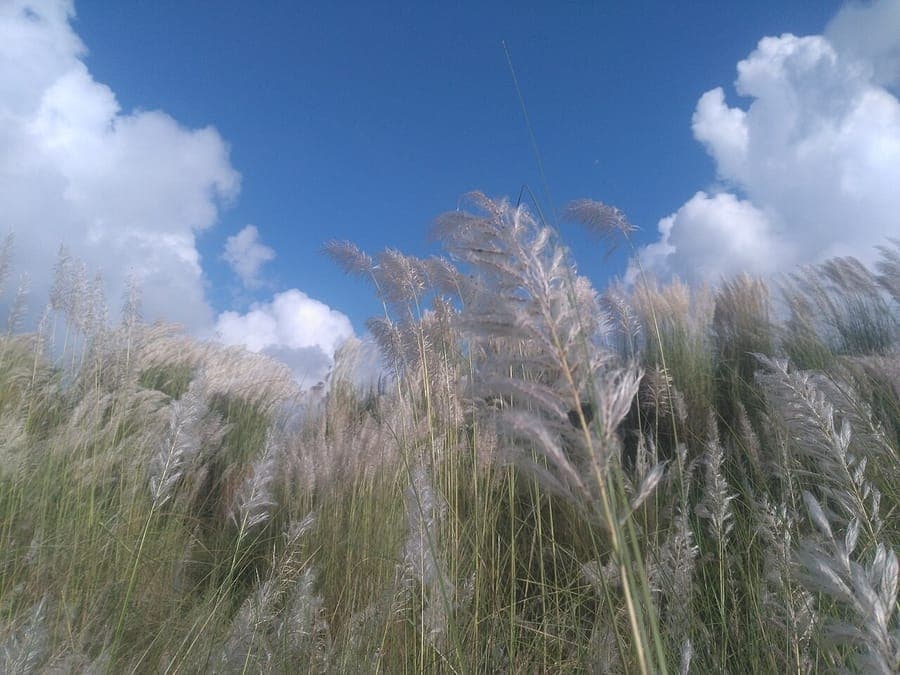
Md Arif bd / CC BY-SA 4.0, via Wikimedia Commons
Saccharum spontaneum: complete guide
Saccharum spontaneum
¿Quieres ver Saccharum spontaneum: complete guide en tu jardín?
1 minuto, sin tarjeta de crédito
Overview
Saccharum spontaneum, commonly known as wild sugarcane, Kans grass, or fodder cane, is an impressive ornamental grass native to tropical and subtropical regions of Asia and Africa. This Poaceae is related to common sugarcane but grows wilder and more gracefully. Once cultivated as a forage crop in Southern Europe, it is now primarily grown for ornamental purposes.
The plant distinguishes itself through tall, upright growth with striking silver-white plumes. This is architectural grasses par excellence, perfect for contemporary garden designs and wildflower meadows. It provides food and shelter for birds and insects throughout autumn and winter.
Appearance and Growth
Wild sugarcane grows upright to 5 to 6 feet tall in optimal conditions. The stems are thick and sturdy, slightly opalescent, bearing narrow, long leaves (to 24 inches) that remain green-gray throughout the season.
Plumes appear in late summer (August-September) and are spectacularly decorative: long, silvery-white to creamy plumes reaching 12 inches in length. These plumes glisten in sunlight, adding dramatic visual impact. Plumes persist late into the season, becoming progressively silver-gray as autumn progresses.
Ideal Location
Wild sugarcane requires full sun, minimum 6 hours direct sunlight daily, for optimal growth and plume production. In lesser light, growth is weaker and plumes less abundant. Position this tall grass in locations where it doesn't shade other plants. Its height makes it ideal for background plantings.
The plant tolerates wind moderately; in very windy locations, light staking may be necessary. It is also very salt-tolerant, suitable for coastal gardens.
Soil
Wild sugarcane is quite undemanding regarding soil composition. It grows in nearly every soil, provided drainage is good. Heavy clay soils benefit from amendment with 20 percent sand and compost. The plant prefers neutral to very slightly acidic soils (pH 6.0-7.0).
The plant is very drought-tolerant once established and also tolerates poor soils. No fertilization is needed for normal growth.
Diseño gratis
¿Quieres ver Saccharum spontaneum: complete guide en tu jardín? Crea un diseño gratis ahora.
Watering
Young plants need regular water during their first growing season to develop strong roots. Plant them preferably in spring so they establish throughout summer months.
Once established, wild sugarcane is remarkably drought-tolerant. Mature plants typically require no supplemental water beyond natural rainfall, even in Mediterranean climates. During exceptionally dry periods, occasional moisture may be beneficial.
Pruning
In temperate climates, the grass dies back to ground level in autumn. Leave the dead tops standing through winter (through March) because they are highly decorative and provide food and shelter for insects and birds. Pruning can be done by cutting back all material to about 2 inches height.
In colder regions where the grass reaches full height, more aggressive cutting (to ground level) in late autumn/early spring may be necessary to encourage vigorous regrowth.
Maintenance Calendar
May: Plant in well-prepared soil. Water regularly. June-August: Water regularly until plant is well established. August-October: Enjoy plumes. Minimal maintenance. November-March: Leave dead tops standing or prune in March.
Winter Hardiness
Wild sugarcane is not cold-hardy. In cooler temperate zones, it tolerates temperatures to 23 degrees Fahrenheit (-5C) but can suffer frost damage in severe weather. In very cold regions (northern Europe), the plant cannot overwinter outdoors.
In cold regions, grow plantings in containers, overwinter indoors, and replant in spring. Alternatively, heavy mulch protection may help in borderline areas.
Companion Plants
Wild sugarcane combines beautifully with:
With Miscanthus: contrast in growth pattern and plume structure. With Panicum: similarly tall grass with different plume appearance. With Calamagrostis: delicate contrast. With dark-foliaged plants: Cimicifuga or Ophiopogon as underplanting.
Closing
Wild sugarcane is indispensable for gardeners seeking dramatic, architectural effects. Tall growth, stunning plumes, and drought tolerance make it ideal for contemporary gardens, xeriscapes, and wildflower meadows. Plant today and enjoy years of magnificent summer display.
Find specialist grass suppliers at gardenworld.app for professional garden designs!
¿Quieres ver Saccharum spontaneum: complete guide en tu jardín? Crea un diseño gratis ahora.
Sube una foto, elige un estilo y obtén un diseño fotorrealista con lista de plantas en menos de un minuto.
Más de 10.000 jardines diseñados
Sin tarjeta de crédito


Plantas similares
Sporobolus pungens: complete guide
Sporobolus pungens
Sporobolus pungens is a stoloniferous Mediterranean coastal grass with outstanding salt and drought tolerance, perfect for seaside and dry gardens.
Mediterranean aegilops: complete guide
Aegilops biuncialis
Everything about Aegilops biuncialis, a Mediterranean annual grass with ornamental spikes and outstanding drought tolerance for dry gardens.
Silver bluestem: complete guide
Bothriochloa saccharoides
Full guide to Bothriochloa saccharoides (silver bluestem): site, soil, watering, winter hardiness, pruning, and garden companions.