
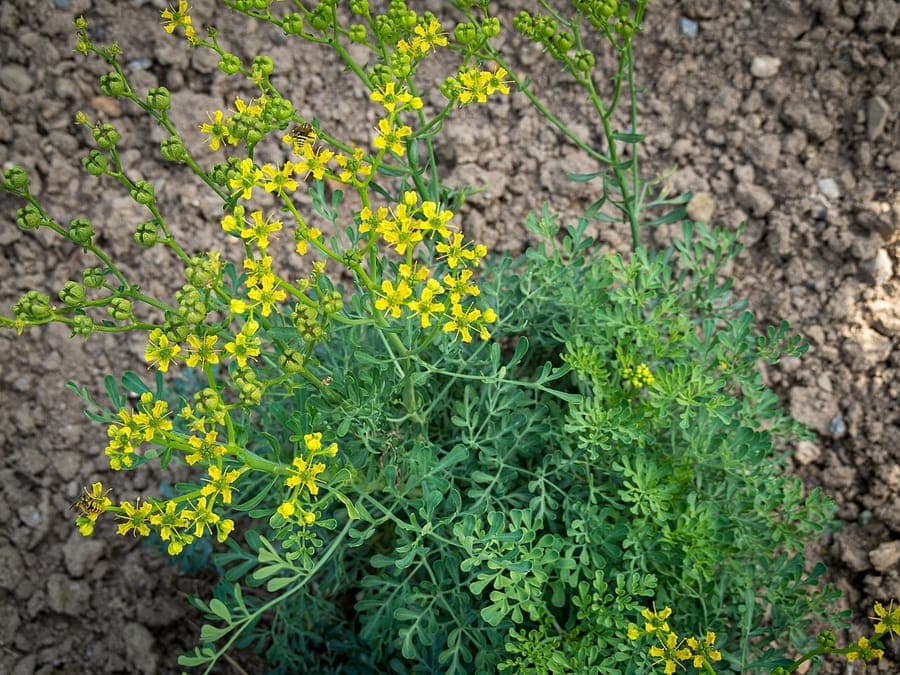
Plenuska / CC BY-SA 4.0, via Wikimedia Commons
Ruta graveolens: complete guide
Ruta graveolens
¿Quieres ver Ruta graveolens: complete guide en tu jardín?
1 minuto, sin tarjeta de crédito
Ruta graveolens: Complete Guide
Overview
Ruta graveolens L., commonly known as Common Rue, Garden Rue, or Herb of Grace, is a classic Mediterranean plant from the Rutaceae family with a rich history. This plant has been cultivated in herb gardens since the Middle Ages for medicinal purposes. The plant originated in the Balkan region (northern Bulgaria and neighboring areas) but has since spread worldwide as a popular garden plant. Common Rue is renowned for its pungent fragrance and bright yellow flowers.
Appearance and Bloom
Common Rue grows as a compact subshrub, usually 60-90 cm tall and equally wide. The plant forms a dense, green canopy with finely branching stems. The leaves are grayish-green, finely divided, and highly aromatic with a characteristic, somewhat narcotic fragrance that some people find pleasant and others less so. Flowering occurs from May to August, with small bright yellow flowers in loose clusters. These flowers attract many pollinators. After flowering, green seed capsules develop that turn gray.
Ideal Location
Ruta graveolens thrives best in full sun, in a location receiving at least 6-8 hours of direct sunlight daily. The plant also tolerates partial shade, although it will not flower as abundantly. Choose a windy spot to keep the plant healthy and prevent diseases. Good air circulation helps prevent leaf diseases. The plant is suitable for roofs, borders, and rock gardens.
Soil
Common Rue thrives in well-draining, moderately fertile soil. Unlike some Mediterranean plants, this plant accepts somewhat more nutrients. A pH between 6.5-7.5 is ideal. Add organic matter when planting to improve soil structure. Ensure good drainage, as the plant dislikes waterlogging. In very poor soil, the plant may grow less vigorously.
Diseño gratis
¿Quieres ver Ruta graveolens: complete guide en tu jardín? Crea un diseño gratis ahora.
Watering
Once well-established, Common Rue is fairly drought-tolerant. Water regularly in the first growing season until the plant is established. After that, water only when the top layer of soil feels dry. During hot, dry weather, more watering may be provided, but always prevent waterlogging. In winter, carefully limit watering. Overwatering can lead to root rot.
Pruning
Ruta graveolens responds well to regular pruning. In early spring (March-April), you can prune the plant back to about half its height to encourage growth. After flowering (late August), remove dead flower clusters. Dead or damaged branches can be removed anytime. Always wear gloves when working with this plant because some people can develop a skin reaction from the sap, especially when exposed to sunlight.
Maintenance Calendar
March-April: Begin pruning. Gradually build up watering. May-July: Continue watering and check for pests. Enjoy blooming. August-September: Remove dead flowers. Moderate pruning. October-February: Minimal care. Frost protection in cold climates.
Winter Hardiness
Common Rue is fairly winter-hardy in temperate climates and can tolerate temperatures down to approximately -5 degrees Celsius. In warmer regions, the plant remains green year-round. In very cold regions, snow and frost damage can occur. A layer of mulch around the base provides extra protection in cold winters. In very cold zones, the plant is best grown in a container for overwintering indoors.
Companion Plants
Common Rue combines excellently in borders with lavender, sage, thyme, and rosemary. With flowering plants such as geraniums and petunias, it creates beautiful color schemes. It also belongs in herb gardens alongside other medicinal herbs. Avoid direct proximity to heavy feeding plants.
Closing Remarks
Ruta graveolens is a classic garden plant with history, character, and practical useful properties. The plant makes your garden aromatic and attractive. Visit gardenworld.app for more information about classic herb gardens and garden design. Or check gardenworld.app for more about garden plants!
¿Quieres ver Ruta graveolens: complete guide en tu jardín? Crea un diseño gratis ahora.
Sube una foto, elige un estilo y obtén un diseño fotorrealista con lista de plantas en menos de un minuto.
Más de 10.000 jardines diseñados
Sin tarjeta de crédito


Plantas similares
Thamnosma montana: complete guide
Thamnosma montana
Everything about Thamnosma montana, the aromatic turpentine broom from the Mojave Desert. Location, soil, care and companion planting explained.
Narrow-leaved fringed rue: complete guide
Ruta angustifolia
Everything about Ruta angustifolia: location, soil, watering, pruning and winter care for this Mediterranean subshrub.
Mountain rue: complete guide
Ruta montana
A complete guide to Ruta montana: best location, soil, watering, pruning and overwintering of this aromatic Mediterranean subshrub.