
Wikimedia Commons / CC BY-SA 3.0, via Wikimedia Commons
Narrow-leaf sorrel: complete guide
Rumex thyrsiflorus
¿Quieres ver Narrow-leaf sorrel: complete guide en tu jardín?
1 minuto, sin tarjeta de crédito
Overview
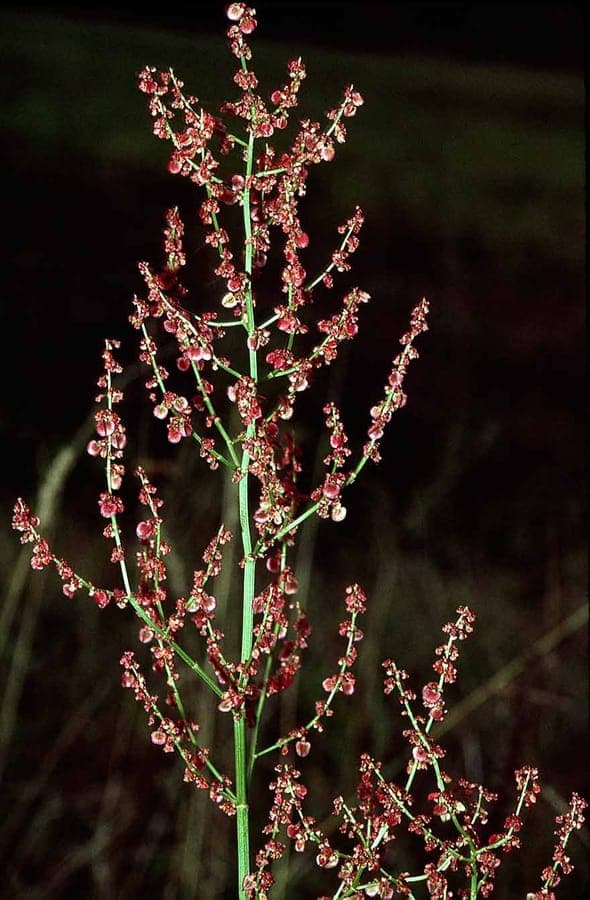
Narrow-leaf sorrel (Rumex thyrsiflorus), known in central European tradition as 'Rispen-Ampfer', is a lesser-known yet valuable perennial that occurs naturally across European meadows and woodlands. Distinguished from its broad-leaved relatives through slender, lance-shaped foliage and elegantly branched, paniculate flowering structures - from which the species derives its Latin name 'thyrsiflorus' meaning 'thyrse-flowering' - this plant brings subtle refinement to food gardens.
This nutritious herb offers the same tart, lemon-like taste as other sorrel species but with more refined texture. In modern food gardens, narrow-leaf sorrel gains favour because it grows more compactly than larger sorrels and rarely becomes dominantly aggressive. At gardenworld.app you can integrate this fascinating herb into food garden designs combining wild elements with cultivation.
Appearance and bloom
Narrow-leaf sorrel forms an elegant, open clump of 40-80 centimetres height with slender, upright stems. The foliage is the most distinctive feature: linear to lance-shaped, dark green, considerably narrower than other sorrel species and often reddish-tinted toward the base. Leaves feel soft and impart refined appearance to the entire plant.
During summer, beautifully branched, paniculate flower structures develop, bearing numerous small reddish-purple flowers. These tiny blossoms delight pollinators. Following bloom, characteristic winged fruits develop in distinctive thread-like structures, expanding the seed dispersal mechanism. This characteristic 'paniculate' fruiting pattern inspired the plant's German name.
Ideal location
Narrow-leaf sorrel performs optimally in full sun to light half-shade (4-6 hours direct daily sunlight). The plant tolerates moister soils better than many sorrel species, making it suitable for pond-sides, rain gardens and somewhat poorly-drained locations.
In food gardens position the plant where it receives adequate light without being overwhelmed by larger vegetables. The elegant flower structures suit ornamental gardens as spontaneous or semi-wild elements. The plant supports pollinators excellently and attracts summer insects.
Diseño gratis
¿Quieres ver Narrow-leaf sorrel: complete guide en tu jardín? Crea un diseño gratis ahora.
Soil and substrate
Narrow-leaf sorrel prefers moderately moist, freely-draining soils (pH 6.5-7.5). Unlike many other sorrels, this species tolerates periodic moisture fluctuations more readily. In dry sandy soils additional compost amendment helps; in heavy clay less drainage improvement is needed.
Amend planting holes with compost at planting time. Annual mulching with thin composted bark layer helps maintain soil quality. The plant demands fewer nutrients than many garden plants.
Watering
Narrow-leaf sorrel accepts greater moisture variation than shield sorrel. Water regularly during growing season (March through October) but allow soil to partially dry between waterings. The plant shows drought stress less quickly than finer-textured sorrels.
In containers water regularly but prevent waterlogging. Mulching assists moisture retention.
Harvesting and use
Pluck leaves regularly for kitchen use beginning when the plant reaches maturity. The slender leaves are refined and mild-flavoured. They work perfectly in salads, sauces and soups. Young leaves may also be harvested.
Regular harvesting promotes lateral growth and more compact plant form. Flowers attract pollinators and may be retained for ornamental purposes.
Maintenance calendar
March-May: Growing season begins. Initiate watering. Begin cautious early harvesting.
June-August: Full growth and bloom. Regular harvesting. Numerous pollinators visible.
September-October: Seed setting. Moisture requirements diminish.
November-February: Rest period. Clear dead material.
Winter hardiness
Narrow-leaf sorrel is hardy to -20°C and persists for years in temperate gardens. In mild winters many leaves remain evergreen.
Companion plants
The plant combines beautifully with other food and medicinal herbs. The elegant flower structures work well in semi-wild garden compositions.
Conclusion
Narrow-leaf sorrel is a valuable, food-productive herb for those appreciating refinement and productivity in their gardens. Its unique characteristics and easier management make it increasingly favoured among discerning cultivators.
¿Quieres ver Narrow-leaf sorrel: complete guide en tu jardín? Crea un diseño gratis ahora.
Sube una foto, elige un estilo y obtén un diseño fotorrealista con lista de plantas en menos de un minuto.
Más de 10.000 jardines diseñados
Sin tarjeta de crédito


Plantas similares
French sorrel: complete guide
Rumex scutatus
Everything about French sorrel (Rumex scutatus): growing, harvesting, health benefits and recipes. Expert tips for this nutritious garden herb.
Garden sorrel: complete guide
Rumex acetosa
Garden sorrel (Rumex acetosa) is a nutritious culinary herb with tangy leaves. Learn to grow, harvest and use it in cooking.