
Pierre-Joseph Redouté / Public domain, via Wikimedia Commons
Clammy Locust: complete guide
Robinia viscosa
¿Quieres ver Clammy Locust: complete guide en tu jardín?
1 minuto, sin tarjeta de crédito
Overview
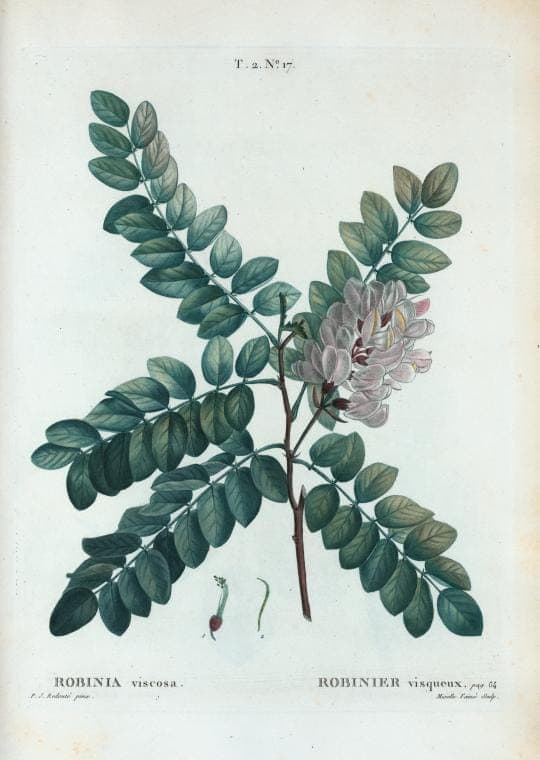
The clammy locust (Robinia viscosa), also known as rose acacia, is a beautiful deciduous tree native to the eastern United States. This tree stands out immediately thanks to its striking pink flowers and characteristic sticky, reddish branches. In Europe, this tree has become established and is widely cultivated in gardens, parks, and landscapes. The tree reaches a height of 13 to 26 feet and offers not only ornamental value but attracts numerous butterflies and insects.
Appearance and Bloom
The clammy locust distinguishes itself through its remarkable morphology. The stems and young branches are covered with a sticky, red resin, which gives the plant its name. The leaves are feathery and green, slowly turning yellow in autumn. The flowers appear in May and June in dense, hanging clusters with a beautiful pink to rose color. These flowers are highly fragrant and attract bees and other pollinators.
After flowering, seed pods form that can remain on the tree for a long time. These fruits are interesting for bird feeding and add extra visual value to the tree in fall and winter.
Ideal Location
The clammy locust thrives best in a sunny spot with at least 6 hours of direct sunlight daily. This ensures the best flowering and vigorous growth. The tree is also reasonably tolerant of partially shaded locations, but blooming will be less abundant. Ensure the tree is sheltered from strong winds, as the branches are fairly brittle.
Soil
The clammy locust makes no extreme demands on the soil. Well-draining, fertile soil is, however, highly appreciated. The tree can grow on slightly acidic to neutral soils and is tolerant of dry periods. Avoid heavily compacted and waterlogged soils that can cause root rot.
Adding compost when planting and applying mulch improves soil quality and moisture retention. This helps especially in dry years.
Watering
After planting, the tree needs regular watering until it is well-established (usually 2-3 seasons). A mature tree is fairly drought-tolerant thanks to its deep root system. However, in periods of extreme drought, supplemental water is beneficial.
Consistent moisture prevents waterlogging around the roots. Water in the morning or late afternoon for minimal evaporation loss.
Diseño gratis
¿Quieres ver Clammy Locust: complete guide en tu jardín? Crea un diseño gratis ahora.
Pruning
The clammy locust requires minimal pruning. Remove dead or damaged branches in spring. If the tree becomes too dense or forms unwanted branches, prune after flowering. Avoid heavy pruning as this can lead to weak regrowth.
The natural form of this tree is elegant and vase-shaped, so keep this form largely intact.
Maintenance Calendar
March: Check for frost damage; remove dead wood. May-June: Enjoy the beautiful pink blooms. September-October: Watch fruit development. November-January: Winter rest; minimal maintenance needed. January-February: Prune dead branches before growth begins.
Winter Hardiness
The clammy locust is reasonably winter-hardy and can tolerate temperatures down to about -4 degrees Fahrenheit. This makes it suitable for most parts of the UK, Northern Europe, and northern France. In very cold regions, the tree may suffer from frost and wind damage. Provide protection with mulch around the base in severe winters.
Companion Plants
The clammy locust pairs well with:
Light underplanting: Geraniums, lavender, and catmint add color without overshadowing the tree.
Low shrubs: Spiraea and weigela provide nice contrasts in form and foliage color.
Ground covers: Creeping jenny and sedum form decorative layers beneath the tree.
Climbing plants: Clematis can grow along the stems for extra texture.
Final Thoughts
The clammy locust is a beautiful addition to any garden landscape with sufficient space and sunlight. The combination of elegant pink flowers, interesting structure, and bird-friendly fruits makes this tree a true multi-purpose star. With minimal care, this North American tree provides years of pleasure.
Available at: Garden centers, specialty nurseries
Want to learn more about this fascinating tree? Visit gardenworld.app for more plant selection and advice. Visit gardenworld.app for more plant selection and advice.
¿Quieres ver Clammy Locust: complete guide en tu jardín? Crea un diseño gratis ahora.
Sube una foto, elige un estilo y obtén un diseño fotorrealista con lista de plantas en menos de un minuto.
Más de 10.000 jardines diseñados
Sin tarjeta de crédito


Plantas similares
Tall Silky Lupine: complete guide
Lupinus elatus
Tall silky lupine is a fast-growing Californian perennial with silvery foliage and blue-purple flower spikes, ideal for a prairie-style garden.
Garfield Lupine: complete guide
Lupinus garfieldensis
The Garfield lupine is a rare, fast-growing American perennial for alkaline, dry grassland gardens, with striking blue flower spikes.
Lupinus elegans: complete guide
Lupinus elegans
Lupinus elegans, the elegant lupine, is a spectacular blooming plant from Mexico with blue flower spikes. Care, cultivation and garden use.