
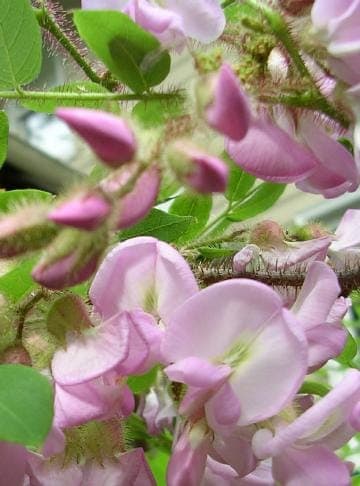
Eoghanacht at English Wikipedia / Public domain, via Wikimedia Commons
Rose acacia: complete guide
Robinia hispida
¿Quieres ver Rose acacia: complete guide en tu jardín?
1 minuto, sin tarjeta de crédito
Overview
Rose acacia or bristly locust (Robinia hispida) is an elegant shrub in the Fabaceae family (legumes), native to eastern United States. Despite its name, it is not a true acacia but shares the same family. This shrub is renowned for its spectacular pink flower clusters that emerge above light green foliage in May-June.
The plant grows to approximately 1.5-2.5 meters tall and forms an elegant, see-through silhouette. It is ideally suited to smaller gardens and borders where space is limited.
Appearance and Bloom
Rose acacia grows as a multi-stemmed shrub with thin, hairy branches (explaining its name). Foliage is imparipinnate (compound with odd number of leaflets), light green, and finely divided.
The bloom is truly spectacular. From May to June, densely packed flower clusters appear filled with pink, pea-like flowers. These lack fragrance, but are highly attractive to bees and other pollinators. After flowering, hairy seed pods develop.
Ideal Location
Rose acacia loves full sun to lightly shaded spots. At least 4-6 hours of direct sunlight helps ensure good flowering. In shade, blooming will be reduced.
A sheltered, wind-protected location is important as thin branches break easily. Against walls or other shrubs is ideal. Frost-hardy to -15 degrees Celsius, thus suitable for temperate climates.
Soil
As a legume, rose acacia needs minimal feeding due to nitrogen-fixing root nodules. It grows on well-draining soils, from acid to neutral.
Waterlogging is problematic. Heavy clay soils should be improved with sand and compost. Actually, poor soils can be advantageous.
Diseño gratis
¿Quieres ver Rose acacia: complete guide en tu jardín? Crea un diseño gratis ahora.
Watering
After planting, water regularly until roots establish (approximately one year). Later, extra water is only needed in extremely dry periods. The plant is fairly drought-tolerant.
In containers, water more frequently; ensure good drainage. Standing water must be prevented.
Pruning
Minimal pruning needed. Only remove dead or withered twigs. Light pruning after flowering helps promote denser growth.
Sucker control: This shrub can send up aggressive shoots from below. Check regularly for unwanted shoots sprouting from the base.
Maintenance Calendar
April-May: Bloom approaches. Monitor for drought stress. May-June: Enjoy full pink glory. Take photographs! July-October: Post-bloom growth. No special care needed. November-March: Winter dormancy. Light clearing of dead wood.
Winter Hardiness
Fairly hardy to -15 degrees Celsius. Protection against extreme frost can be beneficial in very severe winters, especially for young plants. In heavy snow, thin branches may break; gentle brush-off helps.
Companion Plants
Rose acacia combines beautifully with:
- Clematis (climbing over the shrub)
- Lavender (fragrance and bee flowers)
- Spiraea (white flowers for contrast)
- Berberis (green foliage contrast)
- Groundcover underplanting
Final Thoughts
Rose acacia is a gem for those with modest space but wanting impact. Its brief, spectacular bloom is worth the wait. Young plants are typically available at garden centres.
Use gardenworld.app to integrate this elegant shrub perfectly into your front garden. Combining it with climbing plants and groundcovers creates a complete ornamental corner that lasts at least 20 years.
¿Quieres ver Rose acacia: complete guide en tu jardín? Crea un diseño gratis ahora.
Sube una foto, elige un estilo y obtén un diseño fotorrealista con lista de plantas en menos de un minuto.
Más de 10.000 jardines diseñados
Sin tarjeta de crédito


Plantas similares
Black locust: complete guide
Robinia pseudoacacia
Discover black locust, an elegant tree with hanging white flowers. Growing advice, care, and garden benefits.
Bastard indigo-bush: complete guide
Amorpha fruticosa
Complete care guide for Amorpha fruticosa: ideal conditions, pruning tips, watering needs and companion plants. Great for wet areas and wildlife gardens.
Siberian peatree: complete guide
Caragana arborescens
Complete guide to growing Caragana arborescens: ideal conditions, pruning tips, soil needs, and companion planting. Perfect for windbreaks and low-maintenance gardens.