
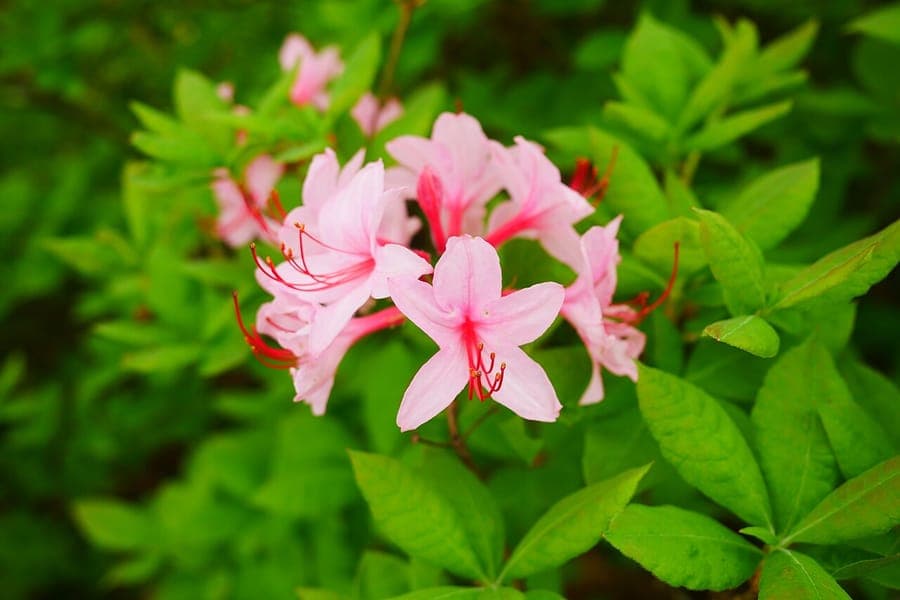
Sgerbic / CC BY-SA 4.0, via Wikimedia Commons
Early Azalea: complete guide
Rhododendron prinophyllum
¿Quieres ver Early Azalea: complete guide en tu jardín?
1 minuto, sin tarjeta de crédito
Overview
The Early Azalea, botanically known as Rhododendron prinophyllum, is a beautiful, deciduous shrub native to eastern and central North America. This plant belongs to the large Rhododendron genus, and more specifically to the azalea group, which distinguishes itself by deciduous foliage and often fragrant flowers. This shrub is renowned for its early, abundantly pink flowers that appear before the foliage fully expands, giving it much character in the spring garden. In the Netherlands and Belgium, this plant is quite hardy and grows well in standard gardens, especially on acidic soils.
For those seeking an early spring bloomer with fragrant flowers and elegant foliage, the Early Azalea is an excellent choice. At gardenworld.app, you can create garden designs that take full advantage of seasonal bloom and plant combinations, where this azalea is a perfect spring focal point. This is a plant for lovers of classic, romantic gardens.
Appearance & Bloom Cycle
The Early Azalea is a deciduous shrub that typically grows 1 to 3 meters tall and equally wide. The plant has a naturally rounded, full growth habit requiring minimal pruning. The foliage is oblong-lanceolate, about 5 to 10 centimeters long, green in summer and sometimes reddish to purple-tinted in autumn before dropping. Young shoots can be red-tinted, especially in spring.
The flowers are the most spectacular feature. They appear in large trusses of 10 to 20 flowers per cluster, typically pink to pale pink, sometimes with deeper pink lips. Characteristic is that the flowers are fragrant - a pleasant, sweet scent that attracts many insects. The flowering period extends from April to May, very early in the season when many other flowers are still closed. This timing makes the plant indispensable for spring gardens.
Ideal Location: Sun, Shade, or Partial Shade
The Early Azalea grows best in locations with abundant light to partial shade. A minimum of 4 to 6 hours of direct or indirect sunlight daily is recommended. The plant also tolerates full sun, especially in northern climates. In very warm regions, some afternoon shade can be beneficial to protect flowers from scorch. In deep shade, blooming will be less abundant and the plant may grow leggy.
Ideally, place the plant on the north or east side of buildings or under light deciduous trees where morning dew evaporates and afternoon shade provides some cooling. Avoid strong wind locations that can damage flowers.
Soil & Underground Requirements
The Early Azalea has very specific soil requirements. This plant MUST grow in acidic soil with pH 4.5 to 6.0. In alkaline gardens, the plant will grow poorly and foliage will show yellowing. The soil must be well-draining yet moisture-retaining. An ideal mixture consists of acidic garden soil mixed with fine bark chips, peat, sand, and organic matter.
The roots are shallow and fine, so avoid heavy, compacted soils. Work the soil well at planting to at least 40 centimeters depth. Add abundant organic matter and ensure drainage is excellent - waterlogging is deadly to azalea roots.
Watering: When and How Much
The Early Azalea loves regularly moist soil without waterlogging. During the growing season (April to October), the soil should be constantly slightly moist. Water when the top 2 centimeters of soil feel dry. This may be needed daily in summer.
From November to March, when the plant is leafless, watering can be reduced somewhat, but never let the soil completely dry out. Rainwater is preferable to tap water, as hard water can contribute to yellowing. Always ensure good drainage - the plant should never sit in muddy water.
Diseño gratis
¿Quieres ver Early Azalea: complete guide en tu jardín? Crea un diseño gratis ahora.
Pruning: When and How
Pruning the Early Azalea is minimal and primarily aimed at maintaining form and preventing aging. The best time to prune is directly after flowering in May or June. Remove dead flowers (deadheading) where reachable - this stimulates better formation next year. For form pruning, carefully shorten long branches by about a third of their length.
Old shrubs can be rejuvenated by cutting everything back to about 30-40 centimeters height in early spring. They will regrow into better, younger forms. Avoid pruning after July, as this can damage next spring's bloom. Let the plant have growing space - azaleas do better when not cut too tightly.
Maintenance Calendar
- January - February: Check soil for moisture. Carefully prune old/damaged branches. No fertilizing needed.
- March - April: Plant is about to bloom. Ensure regular moisture. You can carefully add a layer of compost as forest soil replenishment.
- May - June: Flowering period. Manually remove dead flowers if desired. Perform pruning work after blooming.
- July - August: Growth of new foliage and formation of flower buds for next year. Water regularly. No more fertilizing after July.
- September - October: Foliage colors. Watering can be gradually reduced. Plant prepares for winter.
- November - December: Plant is bare. No fertilizing. Keep moisture minimal but prevent drying out.
Winter Hardiness & Protection
The Early Azalea is very winter-hardy, suitable for all Dutch and Belgian regions. The plant tolerates temperatures down to -25 degrees Celsius without problem. Heavy snow can, however, break branches, so shake snow off branches after winter snowfall. Young plants may suffer some winter damage to flower buds in extremely cold winters, but mature plants usually recover well.
In very cold, dry winters, some extra protection with burlap can be useful, especially for young plants. Ensure the soil does not completely dry out in winter - much azalea winterkill is due to desiccation, not direct frost.
Companion Plants & Combinations
The Early Azalea combines beautifully with other spring bloomers and shade plants:
- Helleborus niger (Black Christmas Rose): Blooms earlier with white flowers, clean contrast.
- Paeonia (Peony): Medium shrubs with later spring bloom create layering.
- Hosta: Interesting foliage follows after azalea blooming period.
- Deschampsia (Ornamental Grasses): Light texture without competition.
- Hydrangea: Larger summer bloomers that bloom later in season.
Check local garden centers for availability of similar plants and acidic soil. gardenworld.app can design complete spring gardens around this beautiful azalea.
Conclusion
The Early Azalea (Rhododendron prinophyllum) is a beautiful, fragrant shrub that adds luster to any spring garden. With its early pink flowers, hardy nature, and fragrant character, this plant provides years of pleasure. Good maintenance, especially preserving acidic soil and regular moisture, ensures this plant blooms for decades. For lovers of classic gardens and spring magnificence, this is a must-have.
¿Quieres ver Early Azalea: complete guide en tu jardín? Crea un diseño gratis ahora.
Sube una foto, elige un estilo y obtén un diseño fotorrealista con lista de plantas en menos de un minuto.
Más de 10.000 jardines diseñados
Sin tarjeta de crédito


Plantas similares
Zenobia pulverulenta: complete guide
Zenobia pulverulenta
Everything about Zenobia pulverulenta (honeycup): siting, acid soil, pruning and the fragrant white bells, in this complete care guide.
Dwarf huckleberry: complete guide
Gaylussacia dumosa
Everything about dwarf huckleberry (Gaylussacia dumosa): acidic soil, partial shade, pruning and care for this compact North American berry shrub.
Drooping leucothoe: complete guide
Leucothoe fontanesiana
Everything about drooping leucothoe (Leucothoe fontanesiana): shade tolerance, soil, watering, pruning, hardiness and companion plants.