
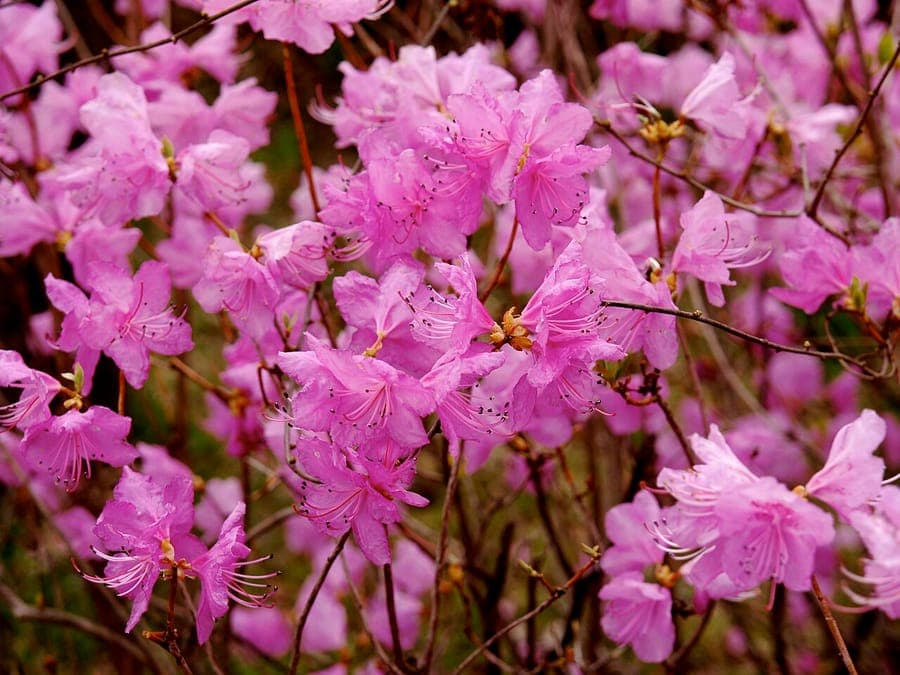
Tae Hoon Kang / CC BY 2.0, via Wikimedia Commons
Rhododendron mucronulatum: complete guide
Rhododendron mucronulatum
¿Quieres ver Rhododendron mucronulatum: complete guide en tu jardín?
1 minuto, sin tarjeta de crédito
Overview
Rhododendron mucronulatum, commonly called early azalea or pointy rhododendron, is a spectacular flowering shrub in the Ericaceae family. Native to the Russian Far East, northern and eastern China, Korea, and Japan, this species is prized for its early blooming and intensely colored flowers. Plants flower as early as March, far earlier than most other rhododendrons, making this species exceptionally valuable for early spring gardens.
The plant is hardy to approximately -15 degrees Celsius in most regions of the Netherlands, Belgium, and Germany, making it a reliable choice for colder climates.
Appearance and Bloom
Rhododendron mucronulatum grows as a dense shrub reaching approximately 2 meters in height and width, though it can become larger under optimal conditions. The branches are reddish and covered with stiff hairs, providing winter interest.
The leaves are oblong and leathery, with a dark green color above and lighter below. They retain their green color year-round. The leaf tips have a characteristic sharp point, which explains the species name "mucronulatum."
The flowers are the highlight of this plant. They appear as early as March and April, directly on still-bare twigs before new leaves fully unfold. The flowers range from pink to bright red in color; some cultivars are white. They grow in dense clusters of 5-10 flowers per terminal. Each flower measures approximately 2-3 centimeters in diameter with five rounded petals.
Ideal Location
Rhododendron mucronulatum thrives in partial shade, where it is not subjected to full afternoon sun. In temperate climates, it can also grow in full sun, especially if the soil remains adequately moist.
Protection from strong drying winds is important, particularly for the frost-sensitive flowers. A location beneath large trees such as oaks or pines, which provide light shade, is ideal and helps conserve soil moisture.
Soil
Rhododendron mucronulatum requires acidic, well-draining, humus-rich soil with a pH between 4.5 and 5.5. The plant cannot thrive in neutral or alkaline soil. If your garden has alkaline soil, creating an acidic heathland garden or growing plants in containers with ericaceous compost is necessary.
Mixing coarse sand into the soil improves drainage and prevents root rot. A thick mulch layer of pine needles or wood chips helps keep soil acidic and improves moisture retention.
Diseño gratis
¿Quieres ver Rhododendron mucronulatum: complete guide en tu jardín? Crea un diseño gratis ahora.
Watering
Rhododendron mucronulatum requires moderate moisture. The soil should remain moist but not waterlogged. Regular watering is essential, especially during growing seasons and flowering. Avoid dripping from lime-rich water sources.
During dry periods, supplemental watering may be necessary. Ensure water drains well. Container plants require regular watering. Use rainwater when possible. Water stress can damage flower development.
Pruning
Rhododendron mucronulatum requires minimal pruning. After blooming, faded flower clusters can be carefully removed to prevent excessive seed set and encourage branching. This also promotes flowering in subsequent years.
Excessive pruning should be avoided, as it can reduce flowering. Any necessary pruning should be done after blooming. Severely neglected plants can be hard pruned, though recovery takes several years.
Maintenance Calendar
Spring: Check flowers for frost damage. Begin regular watering. Remove faded flowers. Ensure mulch layer is intact.
Summer: Keep soil evenly moist. Ensure adequate feeding. Avoid prolonged drought. Monitor for pests.
Autumn: Remove faded flower clusters. Add extra mulch in preparation for winter. Continue watering until the ground freezes.
Winter: Protect against extreme frost and strong wind if the plant is young. Mature plants are typically frost-hardy.
Winter Hardiness
Rhododendron mucronulatum is hardy to approximately -15 degrees Celsius, making it suitable for most regions of the Netherlands, Belgium, and Germany. In extremely cold mountainous areas, some protection may be necessary.
Flowers may suffer frost damage if hard frosts occur immediately after opening. However, this is not fatal to the plant. In mild winters, the plant flourishes and flowers prolifically.
Companion Plants
Rhododendron mucronulatum combines beautifully with other acid-loving plants such as heather, hydrangeas, and ornamental grasses. Other azaleas and rhododendrons create harmonious combinations. Ground-cover plants like rowan create an attractive base layer.
Closing Remarks
Rhododendron mucronulatum is a stunning plant for early spring gardens. It is reliable, hardy, and requires minimal maintenance. Young plants are available at garden centers. Its early blooming makes it indispensable for garden enthusiasts. Visit gardenworld.app for more tips on rhododendrons and other flowering shrubs. Gardenworld.app also provides guides for creating beautiful woodland gardens.
¿Quieres ver Rhododendron mucronulatum: complete guide en tu jardín? Crea un diseño gratis ahora.
Sube una foto, elige un estilo y obtén un diseño fotorrealista con lista de plantas en menos de un minuto.
Más de 10.000 jardines diseñados
Sin tarjeta de crédito


Plantas similares
Zenobia pulverulenta: complete guide
Zenobia pulverulenta
Everything about Zenobia pulverulenta (honeycup): siting, acid soil, pruning and the fragrant white bells, in this complete care guide.
Dwarf huckleberry: complete guide
Gaylussacia dumosa
Everything about dwarf huckleberry (Gaylussacia dumosa): acidic soil, partial shade, pruning and care for this compact North American berry shrub.
Drooping leucothoe: complete guide
Leucothoe fontanesiana
Everything about drooping leucothoe (Leucothoe fontanesiana): shade tolerance, soil, watering, pruning, hardiness and companion plants.