
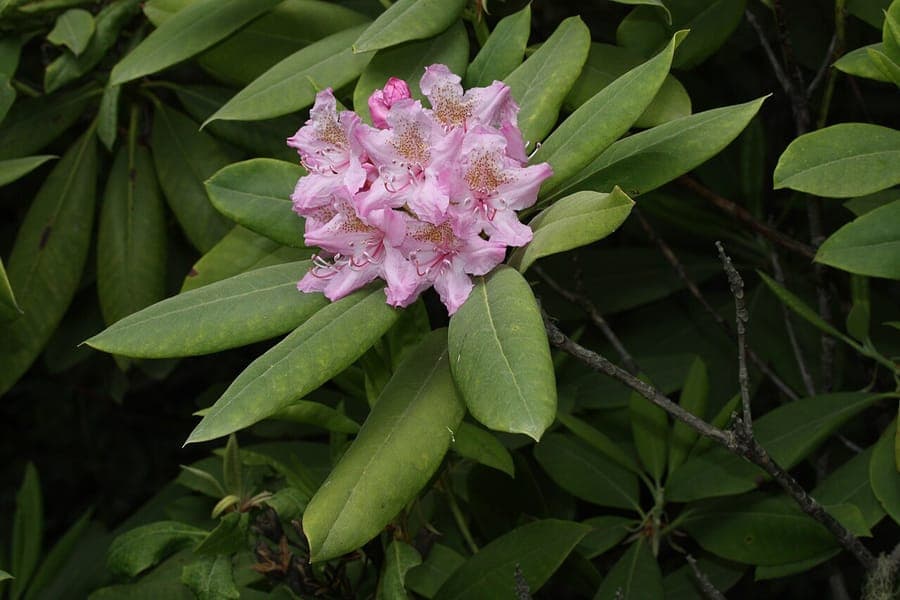
Walter Siegmund (talk) / CC BY-SA 3.0, via Wikimedia Commons
Rhododendron macrophyllum: complete guide
Rhododendron macrophyllum
¿Quieres ver Rhododendron macrophyllum: complete guide en tu jardín?
1 minuto, sin tarjeta de crédito
Overview
Rhododendron macrophyllum, commonly known as California rose bay or Pacific rhododendron, is an impressive flowering shrub native to western North America. This plant naturally thrives in the moist mountain forests of California, Oregon, Washington, and British Columbia, where it flourishes in shaded and humid environments. In Europe, this rhododendron is a popular choice for garden owners seeking a robust, winter-hardy plant that produces beautiful purple blooms year after year. This magnificent shrub has captured the hearts of many gardeners with its dramatic blooms and robust growth patterns.
The California rose bay reaches heights of two to four meters and develops into a dense, full shrub. The plant is ideal for woodland gardens, shaded corners, and as a specimen plant in mixed plantings. Its durability and unique beauty make it a favorite among garden architects and plant enthusiasts seeking enduring value. This plant can bloom for decades without excessive maintenance requirements.
Appearance and bloom
The leaves of Rhododendron macrophyllum are large and leathery, with a glossy dark green color on the upper surface. The foliage grows in dense rosettes at the shoot tips, giving the plant a full, voluminous appearance. The leaves retain their color throughout the year, meaning the plant remains decorative even in winter and provides structure to the garden.
Flowers appear in May and June in large, striking clusters of purplish to lilac blooms. Each flower is funnel-shaped and measures approximately five centimeters in diameter. The flowers are not fragrant, but their colorfulness more than compensates for this absence. After blooming, brown seed capsules form and may remain on the plant through winter while remaining visually attractive.
Ideal location
Choose a spot in partial to full shade for this rhododendron. Direct sunlight, especially in hot afternoons, can cause leaf scorch. The plant thrives much better in filtered light beneath trees or on the north side of buildings. This positioning is crucial for keeping the plant healthy.
Ensure wind-protected environments where the plant is sheltered from strong winds. A location receiving some morning sun while protected from intense midday sun is ideal. Also ensure adequate air circulation to prevent fungal diseases. Good air movement contributes greatly to overall plant health.
Soil
Rhododendron macrophyllum requires acidic soil with a pH between five point five and seven. The plant thrives best in humus-rich, well-draining soil. Heavy, compacted soils should be improved with substantial additions of worked-in humus, leaf mold, or compost before planting. This is an essential part of the planting process.
Ensure the soil drains well. Stagnant water causes root rot and fungal issues. If your garden has heavy clay, it is best to work in thirty to forty percent sand and organic material. Mulch around the plant with five to seven centimeters of coniferous bark or leaf mold to maintain acidity and moisture. This mulching also helps prevent unwanted weeds.
Diseño gratis
¿Quieres ver Rhododendron macrophyllum: complete guide en tu jardín? Crea un diseño gratis ahora.
Watering
Rhododendron macrophyllum requires regular water supply, especially during the growing season and dry periods. The soil should remain moist but not waterlogged. Water in the morning at the root zone; avoid spraying water over the foliage. This prevents problems with leaf disease.
During dry summers, you may need to water two to three times per week. In wet periods, you can reduce watering frequency. In winter, the plant requires less water, but the soil should not dry out completely. Regular monitoring helps prevent water stress in your garden.
Pruning
Rhododendron macrophyllum requires minimal pruning. After flowering, you can carefully remove drooping or damaged branches. Avoid aggressive pruning, as this can lead to irregular growth.
You can support the plant by deadheading spent flowers immediately after blooming. This encourages the plant to invest more energy in vegetation and growth rather than seed production. Pruning work should be done after flowering. This practice promotes richer flowering the following season.
Maintenance calendar
March-April: Check the plant for winter damage, work humus around the base, and begin regular watering. This is essential for the new season.
May-June: The plant blooms. Enjoy the flowers and remove spent blooms after flowering. Remember that bees and bumblebees visit these flowers.
July-August: Increase watering during dry periods. Check for pests and diseases, especially spider mites. This is crucial during warm periods.
September-October: Reduce watering. Apply a final fertilization in September. Prepare the plant for winter ahead.
November-February: The plant rests. Protect against heavy snow with help from surrounding shrubs or a light structure. Minimal care is needed during this period.
Winter hardiness
Rhododendron macrophyllum is very winter-hardy in most parts of northern Europe. This plant can tolerate temperatures down to minus twenty to minus twenty-five degrees Celsius. In severe winters in the far north, young plants may benefit from protection through mulching or burlap screens.
The plant is particularly susceptible to early spring frosts that can damage blooms. If you live in an area with late frosts, plant it where morning sun does not directly hit flowering buds. This protects your valuable flowers.
Companion plants
Rhododendron macrophyllum grows well alongside other acid-loving plants such as azalea, pieris, kalmia, and leucothoe. Underplanting with heart-shaped ivy, Hedera helix, or mahonia provides interesting texture contrasts.
Herbs such as gaultheria and sarcococca can also thrive in the same environment. Avoid direct competition with large trees with shallow root systems. This ensures better growth of all plants.
Closing
Rhododendron macrophyllum is an excellent choice for shaded gardens in temperate climates. With the right growing location, suitable soil, and regular watering, this plant will provide decades of beautiful purple blooms. Find your plant at quality nurseries specializing in shade plants. Discover more plants for your ideal garden on gardenworld.app where you can create unique designs with hundreds of plant varieties. For garden advice and inspiration, visit gardenworld.app. There you find everything you need for your dream garden.
¿Quieres ver Rhododendron macrophyllum: complete guide en tu jardín? Crea un diseño gratis ahora.
Sube una foto, elige un estilo y obtén un diseño fotorrealista con lista de plantas en menos de un minuto.
Más de 10.000 jardines diseñados
Sin tarjeta de crédito


Plantas similares
Zenobia pulverulenta: complete guide
Zenobia pulverulenta
Everything about Zenobia pulverulenta (honeycup): siting, acid soil, pruning and the fragrant white bells, in this complete care guide.
Dwarf huckleberry: complete guide
Gaylussacia dumosa
Everything about dwarf huckleberry (Gaylussacia dumosa): acidic soil, partial shade, pruning and care for this compact North American berry shrub.
Drooping leucothoe: complete guide
Leucothoe fontanesiana
Everything about drooping leucothoe (Leucothoe fontanesiana): shade tolerance, soil, watering, pruning, hardiness and companion plants.