
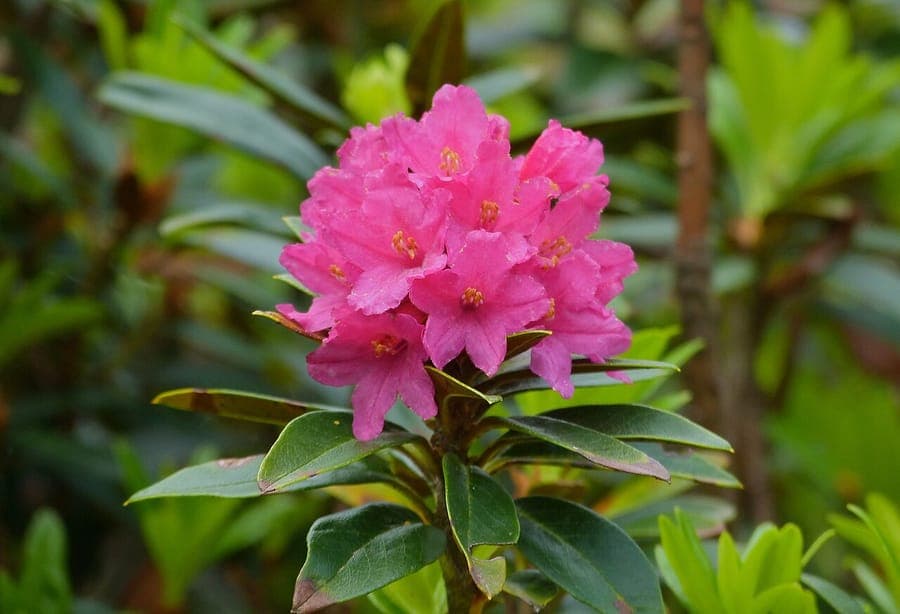
Bernard DUPONT from FRANCE / CC BY-SA 2.0, via Wikimedia Commons
Alpine rose: complete guide
Rhododendron ferrugineum
¿Quieres ver Alpine rose: complete guide en tu jardín?
1 minuto, sin tarjeta de crédito
Overview
The alpine rose (Rhododendron ferrugineum) is one of Europe's most charming alpine plants. This modest dwarf shrub is native to the Alps and reaches only 50-100 centimetres height. Despite its humble proportions, this plant makes a bold impression with its robust character and extended flowering season.
Often overlooked by gardeners thinking alpine species are difficult, the alpine rose proves otherwise. Once properly planted, this plant demands minimal attention and rewards with decades of flowering.
Appearance & bloom cycle
The alpine rose forms a dense, rounded shrub with small, leathery leaves 3-8 centimetres long. The leaves have a characteristic rusty underside (ferrugineum = rust-coloured), distinguishing this species. In May and June, numerous small flowers appear in deep pink or purple clusters.
Each flower is approximately 1.5 centimetres wide in funnel form. Bloom typically lasts 3-4 weeks, making this plant a valuable mid-season colour provider. Leaves remain green year-round, helping winter structure.
Ideal location
The alpine rose thrives in partial shade with 3-4 hours sunlight daily. Full sun can scorch flowers and stress the plant during hot summers. Partial shade beneath large trees or on north-facing slopes is ideal.
The plant works excellently at altitude and in mountain areas. Wind poses no problem; alpine plants are wind-adapted. Provide shelter from intense midday sun during heat waves.
Soil requirements
This is where it becomes critical: the alpine rose is a calcifuge (acid-loving) plant. Ideal pH is 4.0-4.5, very acidic. This may be the greatest limitation. Planting on neutral or alkaline soils will fail.
Soil must also be exceptionally well-draining; heavy clay is not tolerated. Recommended mixture: 50% heather soil or acidic potting mix, 30% coarse sand, 20% perlite. Ensure excellent drainage; waterlogging is fatal.
Watering
Despite Alpine origin, the alpine rose demands regular moisture during the growing season (May-September). However, wet feet are deadly - it's about consistent moisture without waterlogging.
Water twice weekly during the growing season, carefully using lime-free water (rainwater ideal). During dry spells, daily watering may be necessary. Winter requires less water but never completely dry.
Diseño gratis
¿Quieres ver Alpine rose: complete guide en tu jardín? Crea un diseño gratis ahora.
Pruning
Minimal pruning is needed. Remove only dead branches in spring. After flowering, you can gently trim to maintain compact form, but avoid heavy pruning - let natural form prevail.
Overgrown plants can be carefully cut back after flowering, but this is rarely needed if you've chosen the right spot.
Maintenance calendar
March-April: Inspect for winter damage. Begin regular moisture management as growth starts. Water carefully as temperatures rise.
May-June: Peak bloom period. Regular watering essential. Check for spider mites in dry spells.
July-September: Summer moisture management critical. Daily watering during heat waves. Apply fertilizer mid-summer.
October-November: Gradually reduce water. Prepare for winter wind desiccation.
December-January: Minimal watering; check for frost damage. No feeding in winter.
Winter hardiness
The alpine rose is very winter-hardy, tolerating temperatures to -20°C without damage. The problem isn't cold, but wind desiccation. Wintry east winds can damage leaves as the plant loses moisture from winter dormancy.
Protection: plant against wind, possibly use shade cloth in January-February. Don't mulch heavily - alpine plants tolerate this poorly. Light branch protection suffices.
Companion plants
The alpine rose works well in mixed alpine plantings:
- Saxifraga species: low, simultaneous flowering
- Heathers/Erica: similar growth, shared habitat
- Sempervivum: low, structural contrast
- Gaultheria procumbens: bloom timing alignment, evergreen
Avoid large neighbours; alpine rose works best with other alpines. Create an informal alpinum.
On gardenworld.app, see how alpine gardens are designed with rhododendrons and other mountain plants. This requires careful planning but is entirely achievable.
Closing remarks
The alpine rose is for gardeners with patience and willingness for precautions (acidic soil). With the right growing place, you'll enjoy decades of flowering. This is a plant for alpine gardening enthusiasts.
On gardenworld.app, find guides for creating acidic soils and alpine retaining walls. The effort is worthwhile for this jewel of a plant.
¿Quieres ver Alpine rose: complete guide en tu jardín? Crea un diseño gratis ahora.
Sube una foto, elige un estilo y obtén un diseño fotorrealista con lista de plantas en menos de un minuto.
Más de 10.000 jardines diseñados
Sin tarjeta de crédito


Plantas similares
Zenobia pulverulenta: complete guide
Zenobia pulverulenta
Everything about Zenobia pulverulenta (honeycup): siting, acid soil, pruning and the fragrant white bells, in this complete care guide.
Dwarf huckleberry: complete guide
Gaylussacia dumosa
Everything about dwarf huckleberry (Gaylussacia dumosa): acidic soil, partial shade, pruning and care for this compact North American berry shrub.
Drooping leucothoe: complete guide
Leucothoe fontanesiana
Everything about drooping leucothoe (Leucothoe fontanesiana): shade tolerance, soil, watering, pruning, hardiness and companion plants.