
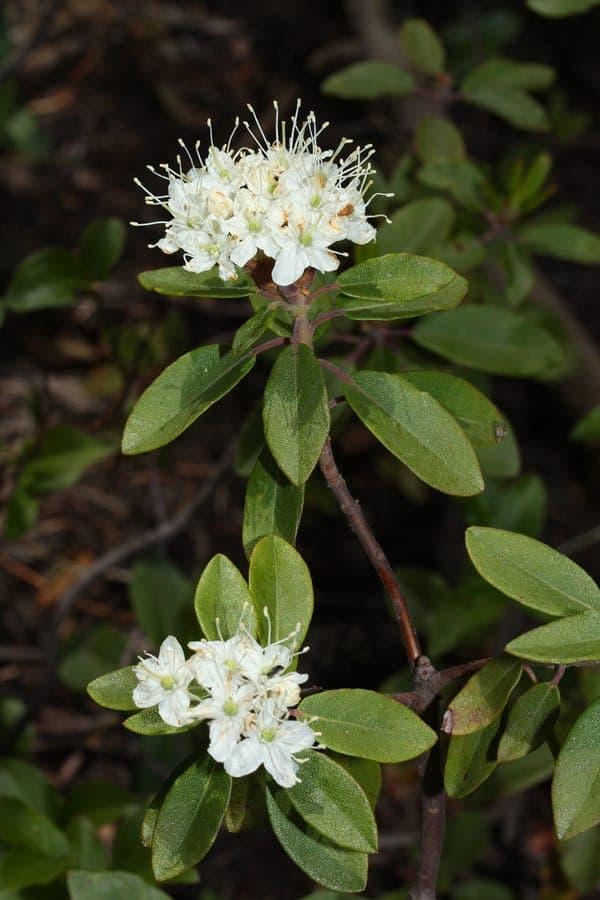
Walter Siegmund (talk) / CC BY-SA 3.0, via Wikimedia Commons
Rhododendron columbianum: complete guide
Rhododendron columbianum
¿Quieres ver Rhododendron columbianum: complete guide en tu jardín?
1 minuto, sin tarjeta de crédito
Overview
Rhododendron columbianum, commonly known as Western labrador-tea or trapper's tea, is a beautiful dwarf shrub from the mountain regions of North America, from Canada to the western United States. This plant is particularly renowned for its glossy yellow-green foliage that is aromatic and its delicate flowers in purple-red tones. The plant is a true jewel for shady woodland gardens and alpine applications.
This rhododendron grows slowly and forms a dense, low shrub. The plant thrives on moisture-retaining acidic soils and is perfect for gardeners seeking a winter-hardy plant for mountainous or shady gardens. The foliage remains green throughout the year, providing additional ornamental value.
Appearance and bloom cycle
Rhododendron columbianum usually reaches a height of 50 to 120 centimetres and gradually spreads. The growth is slow, making this plant ideal for small gardens and alpine rockeries.
The leaves are small, approximately 1 to 3 centimetres long, oval-elongated and have a glossy, somewhat leathery texture. The foliage is dark green to greyish-green and remains throughout the year. The underside of the leaves has yellow dots, which characterizes the genus Ledum (Rhododendron columbianum was formerly Ledum).
The flowers are small, up to 1 centimetre in diameter, and appear in clusters. They are reddish-purple to white with distinct stamens. The flowering period is late in the season, usually May to June in mountain areas, making the plant particularly valuable because it blooms later than many other alpine plants.
Ideal location
Rhododendron columbianum grows best in full shade to partial shade. The plant tolerates more shade than many other rhododendrons, making it ideal for woodland gardens and shady corners.
The plant can, however, also grow in partial sunlight, with at least two to three hours of indirect sunlight. Preference for cool, moist environments makes this plant perfect for mountain gardens or cold valleys.
Wind is less problematic than for other rhododendrons. This plant grows in mountain areas where wind is common and tolerates gusts well.
Soil requirements
Rhododendron columbianum requires acidic soil with a pH of 4.6 to 7.0. The plant can, however, cope better with slightly higher pH than many other rhododendrons. The pH should, however, remain below 6.5 for optimal growth.
The soil must be well-draining with plenty of organic material. Add generous amounts of humus, leaf mould or peat sand. Heavy clay soils should be improved with peat (caution: more and more gardeners avoid peat due to environmental concerns and use alternatives such as coco-fibre).
Mulching around the plant with leaf mould or pine bark helps maintain soil acidity.
Diseño gratis
¿Quieres ver Rhododendron columbianum: complete guide en tu jardín? Crea un diseño gratis ahora.
Watering
Rhododendron columbianum requires regular moisture supply, especially during the growth and flowering periods. The soil should remain moist but never waterlogged. A layer of mulch helps retain moisture.
Water best with rainwater or softened water. Hard, chalky water types can cause problems with calcification of the root zone.
During dry periods water until the top 5 centimetres of soil feel dry. In full ground the plant usually grows well with natural rainfall in mountain areas where it comes from the wild.
Pruning
Rhododendron columbianum requires minimal pruning. The natural compact shape usually does not need to be modified.
Remove faded flowers to prevent seed formation and retain energy for growth. This is best done carefully as young growth below flowers is fragile.
Weak or damaged branches can be carefully removed after flowering. Avoid hard pruning, as this plant grows slowly and takes a long time to recover from damage.
Maintenance calendar
May-June: Flowering period. Carefully remove faded flowers.
July-August: Growth of young leaves. Ensure adequate moisture supply.
September-October: Preparation for winter. Ensure good mulching.
November-March: Winter rest status. No special care needed except moisture control during dry periods.
April: Early spring inspection. Remove damaged foliage from winter.
Winter hardiness
Rhododendron columbianum is very winter-hardy and tolerates temperatures down to -30 degrees Celsius. The plant is originally from cold mountain areas and is perfect for temperate and cold climates.
The plant is resistant to frost and snow. In areas with heavy snow, snow can be carefully removed from branches to prevent damage, although the plant usually tolerates snow well.
Companion plants
Rhododendron columbianum grows beautifully together with:
Alpine roses (Rhododendron spp.) - other alpine rhododendrons form a beautiful whole.
Erica and Calluna - heather-like plants emphasize the mountainous setting.
Gaultheria and Ledum - other acid-loving alpine plants with similar requirements.
Farnia species and other foliage - provide texture and contrast.
Closing
Rhododendron columbianum is an indispensable choice for gardeners with mountainous or shady gardens that have acidic soil. This plant offers long-lasting foliage, delicate flowers and extreme winter hardiness. The plant grows slowly but rewards patience with years of beauty.
Available at your local garden centres. For more information about acidic-loving plants and mountain gardens, visit gardenworld.app for complete guides and advice. Create an authentic mountain garden with this North American treasure!
On gardenworld.app you will also find more advice for combining alpine plant species in your garden schemes.
¿Quieres ver Rhododendron columbianum: complete guide en tu jardín? Crea un diseño gratis ahora.
Sube una foto, elige un estilo y obtén un diseño fotorrealista con lista de plantas en menos de un minuto.
Más de 10.000 jardines diseñados
Sin tarjeta de crédito


Plantas similares
Zenobia pulverulenta: complete guide
Zenobia pulverulenta
Everything about Zenobia pulverulenta (honeycup): siting, acid soil, pruning and the fragrant white bells, in this complete care guide.
Dwarf huckleberry: complete guide
Gaylussacia dumosa
Everything about dwarf huckleberry (Gaylussacia dumosa): acidic soil, partial shade, pruning and care for this compact North American berry shrub.
Drooping leucothoe: complete guide
Leucothoe fontanesiana
Everything about drooping leucothoe (Leucothoe fontanesiana): shade tolerance, soil, watering, pruning, hardiness and companion plants.