
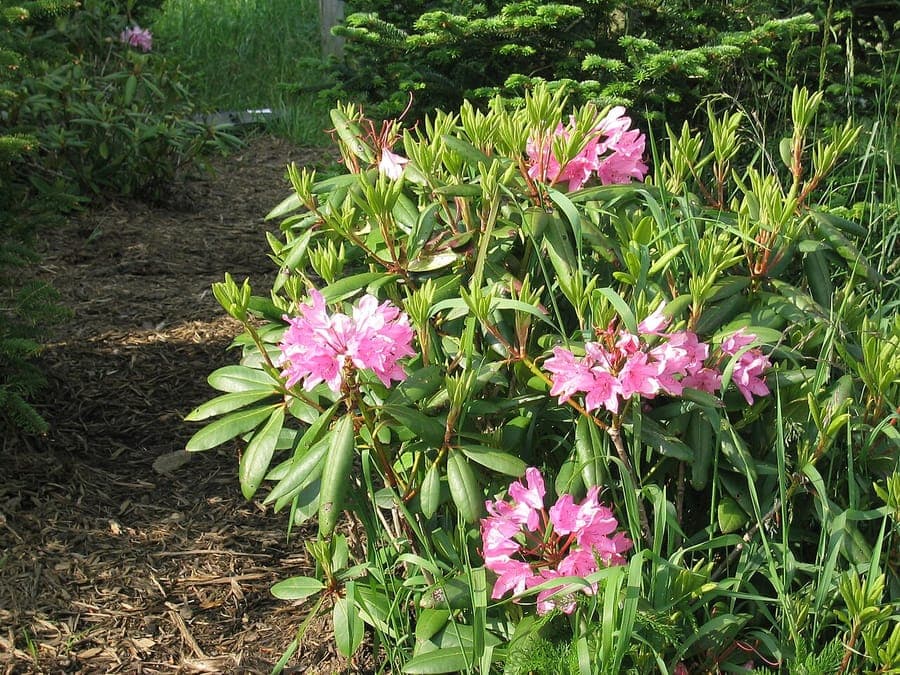
No machine-readable author provided. Edgester assumed (based on copyright claims). / CC BY-SA 3.0, via Wikimedia Commons
Catawba rhododendron: complete guide
Rhododendron catawbiense
¿Quieres ver Catawba rhododendron: complete guide en tu jardín?
1 minuto, sin tarjeta de crédito
Overview
Catawba rhododendron, scientifically known as Rhododendron catawbiense, is a robust shrub native to the Appalachian mountains of eastern America. The plant grows naturally in mountain forests from West Virginia southward to the Carolinas, having adapted perfectly to temperate climates and acidic soils.
This is a classic ornamental shrub widely used in European gardens because it is exceptionally hardy and produces magnificent purple flowers. The plant is incredibly durable and can last decades with minimal maintenance, making it an excellent investment.
Appearance & bloom cycle
Catawba rhododendron is a substantial shrub typically reaching 2-4 meters in height, depending on variety and growing conditions. The foliage is large, leathery, and glossy dark green. The plant retains its leaves year-round, providing winter interest.
The flowers are unquestionably the highlight. They appear in May-June in large, dense flower trusses. Each flower is trumpet-shaped with five petals in shades of purple to lavender. Some varieties display red or pink tones. The flowers emit a lovely fragrance.
After flowering, seed capsules develop. The plant remains ornamental throughout the year thanks to its glossy foliage.
Ideal location
Catawba rhododendron performs best in dappled shade to semi-shade. Direct afternoon sun can cause leaf scorch, especially in very hot regions. Morning sun of 2-4 hours is ideal.
Plant beneath large trees or on the north or east side of buildings. The shrub appreciates shelter from strong winds. In cold mountain regions, full sun may be acceptable.
Ensure good air circulation to prevent moisture problems. The plant is exceptionally hardy and grows outdoors in virtually all European climates.
Soil requirements
Catawba rhododendron is fussy about soil and demands acidic, well-draining earth. The plant naturally grows in acidic mountain forests with abundant humus. Neutral or alkaline soil leads to nutrient deficiency problems.
Preferred soil mix:
- 40% garden soil
- 30% peat or acid soil
- 20% leaf mould
- 10% sand
Soil pH must be acidic (pH 4.5-6.0). If you have neutral soil, work in substantial amounts of peat or plant in a raised bed with amended soil.
Watering
Catawba rhododendron requires regular water, especially during growth and flowering season. Water when soil feels dry to a depth of 5 cm, typically once or twice weekly in spring and summer.
Newly planted specimens need substantial water during their first season. Once established (after 2-3 seasons), water requirements decrease considerably.
During autumn and winter, water according to rainfall. The plant tolerates short dry spells well once established.
Avoid hard tap water; rainwater is preferable.
Diseño gratis
¿Quieres ver Catawba rhododendron: complete guide en tu jardín? Crea un diseño gratis ahora.
Pruning
Catawba rhododendron requires minimal pruning. Remove spent flower trusses just after blooming ends, which helps the plant concentrate energy on foliage growth.
Remove dead, damaged, or diseased wood in early spring. This can help shape the plant and maintain vigor.
Avoid heavy pruning; the plant recovers poorly from aggressive cutting. Gentle, selective work is best.
Maintenance calendar
February-March: Inspect for winter damage. Remove dead material.
April-May: Growth accelerates. Water regularly. Flowering begins.
June: Peak flowering. Deadhead spent blooms. Continue regular watering.
July-August: New shoot growth. Water as needed. Plant rests partially.
September-October: Prepare for winter. Gradually reduce watering.
November-January: Winter dormancy. Minimal maintenance. Plant is dormant.
Winter hardiness
Catawba rhododendron is exceptionally hardy, tolerating temperatures down to approximately -25 to -30 degrees Celsius. This makes it ideal for European gardens, even in mountainous regions with harsh winters.
The plant remains evergreen throughout winter, providing winter interest to the garden. Snow may accumulate on foliage but rarely causes damage.
In extreme frosts, flower buds may suffer frost damage, limiting spring flowering. This is normal and not serious.
Companion plants
Catawba rhododendron pairs well with other acid-loving plants:
- Azalea: Other rhododendron-type shrubs bloom simultaneously.
- Skimmia: Red berries create nice contrast.
- Pieris japonica: Elegant drooping flower sprays.
- Leucothoe: White flowers and red foliage combine beautifully.
- Helleborus: Christmas roses in front plantings.
Combine in woodland gardens or semi-shade borders.
Conclusion
Catawba rhododendron is a classic choice for European gardens, thanks to its hardiness, longevity, and stunning purple flowers. With proper acidic soil and semi-shade location, this shrub will thrive for decades.
Seek this plant from garden centres or specialized rhododendron nurseries. Widely available at major retailers. Once established with minimal care, it is a valuable garden investment.
Discover more plant guides and garden design inspiration at gardenworld.app. Let this classic shrub elevate your garden!
¿Quieres ver Catawba rhododendron: complete guide en tu jardín? Crea un diseño gratis ahora.
Sube una foto, elige un estilo y obtén un diseño fotorrealista con lista de plantas en menos de un minuto.
Más de 10.000 jardines diseñados
Sin tarjeta de crédito


Plantas similares
Zenobia pulverulenta: complete guide
Zenobia pulverulenta
Everything about Zenobia pulverulenta (honeycup): siting, acid soil, pruning and the fragrant white bells, in this complete care guide.
Dwarf huckleberry: complete guide
Gaylussacia dumosa
Everything about dwarf huckleberry (Gaylussacia dumosa): acidic soil, partial shade, pruning and care for this compact North American berry shrub.
Drooping leucothoe: complete guide
Leucothoe fontanesiana
Everything about drooping leucothoe (Leucothoe fontanesiana): shade tolerance, soil, watering, pruning, hardiness and companion plants.