
Wikimedia Commons / CC BY-SA 3.0, via Wikimedia Commons
Rhododendron canadense: complete guide
Rhododendron canadense
¿Quieres ver Rhododendron canadense: complete guide en tu jardín?
1 minuto, sin tarjeta de crédito
Overview
Rhododendron canadense, popularly known as Rhodora, is a North American semi-deciduous shrub native to eastern Canada and northeastern United States. This compact, graceful azalea is one of the hardiest rhododendrons and ranks among the most robust plant choices for cold climates.
The name "Rhodora" derives from Greek meaning "rose". However, it's not a rose but an azalea - a subgenus of Rhododendron. With its low-growing habit and early, abundant purple flowers, it's an excellent choice for shaded conditions and acidic mineral soils.
When well-maintained, Rhododendron canadense lives 100+ years in the same garden.
Appearance and Bloom
Rhododendron canadense is a compact, multi-stemmed shrub reaching 0.5 to 1.5 meters tall. Branches grow horizontally to upright, creating a natural low form. Leaves are small, lanceolate, mid-green, and soft.
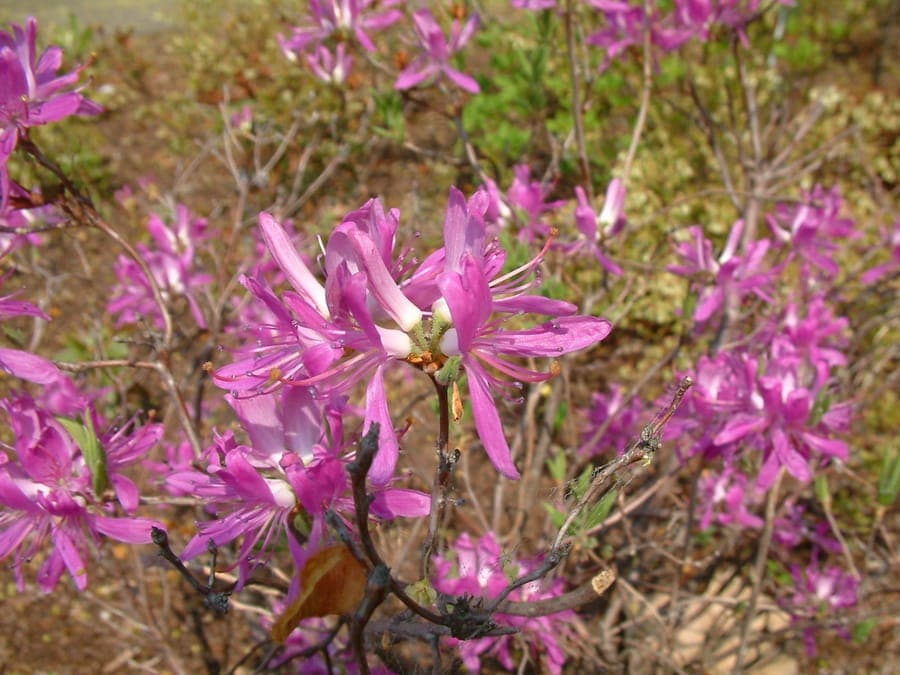
Blooming is the highlight. In April to May, before or with emerging leaves, flowers appear in clusters. They're lovely purple to lavender-purple, sometimes with pinkish tints. Each flower measures approximately 2 centimeters long, lightly fragmented.
After blooming, the plant produces small, brown seed pods ripening in September to October.
Ideal Location
Rhododendron canadense thrives in partial shade or filtered sunlight. In full sun, leaf scorch can occur, especially in warm climates. North or east-facing positions are ideal.
The plant appreciates protection from strong winds, which can damage tender flowers. Seek a spot in the shade of larger trees.
Soil
Acid soils are essential. Rhododendron canadense grows poorly on neutral to alkaline soils. The ideal pH range is 4-5.5. The plant also needs well-draining, humus-rich soil.
Mix: 40% peat moss, 30% leaf mold, 20% sand, 10% perlite. Ensure excellent drainage - stagnation must be avoided.
Diseño gratis
¿Quieres ver Rhododendron canadense: complete guide en tu jardín? Crea un diseño gratis ahora.
Watering
Rhododendron canadense loves consistently moist soil but not waterlogged. Water regularly, especially during growth and bloom periods (April to June).
Use soft water (rainwater). Hard, lime-rich water can cause chlorosis (yellowing). Mulching with leaf mold helps moisture retention.
Pruning
Minimal pruning needed. After blooming, damaged branches can be removed. If the plant grows too large, prune carefully immediately after bloom.
Remove spent flower stems to encourage continued blooming.
Maintenance Calendar
January-March: Rest period, minimal water April-May: Bloom, consistent water and feeding June-July: Leaf growth, regular watering August-September: Seed ripening, reduce water October-December: Winter preparation, dormancy
Winter Hardiness
Rhododendron canadense is extremely hardy to -30 degrees Celsius. It's an excellent choice for gardens in USDA zones 3-7. The plant overwinters without protection in most temperate climates.
Companion Plants
Beautiful combinations with:
- Other Rhododendrons and azaleas (acid-loving)
- Pieris species
- Kalmia species
- Birches and conifers above
- Hostas and foliage plants below
Preference goes to plants sharing the same acid soil and moisture requirements.
Closing
Rhododendron canadense is a hardy classic choice for cold climates. With its early purple flowers and compact form, it delivers early color and botanical interest.
Available from specialized plant nurseries. Plant in fall or early spring for best results.
Visit gardenworld.app for more azalea tips and acid-soil gardening guidance. Enjoy your Rhodora!
¿Quieres ver Rhododendron canadense: complete guide en tu jardín? Crea un diseño gratis ahora.
Sube una foto, elige un estilo y obtén un diseño fotorrealista con lista de plantas en menos de un minuto.
Más de 10.000 jardines diseñados
Sin tarjeta de crédito


Plantas similares
Zenobia pulverulenta: complete guide
Zenobia pulverulenta
Everything about Zenobia pulverulenta (honeycup): siting, acid soil, pruning and the fragrant white bells, in this complete care guide.
Dwarf huckleberry: complete guide
Gaylussacia dumosa
Everything about dwarf huckleberry (Gaylussacia dumosa): acidic soil, partial shade, pruning and care for this compact North American berry shrub.
Drooping leucothoe: complete guide
Leucothoe fontanesiana
Everything about drooping leucothoe (Leucothoe fontanesiana): shade tolerance, soil, watering, pruning, hardiness and companion plants.