
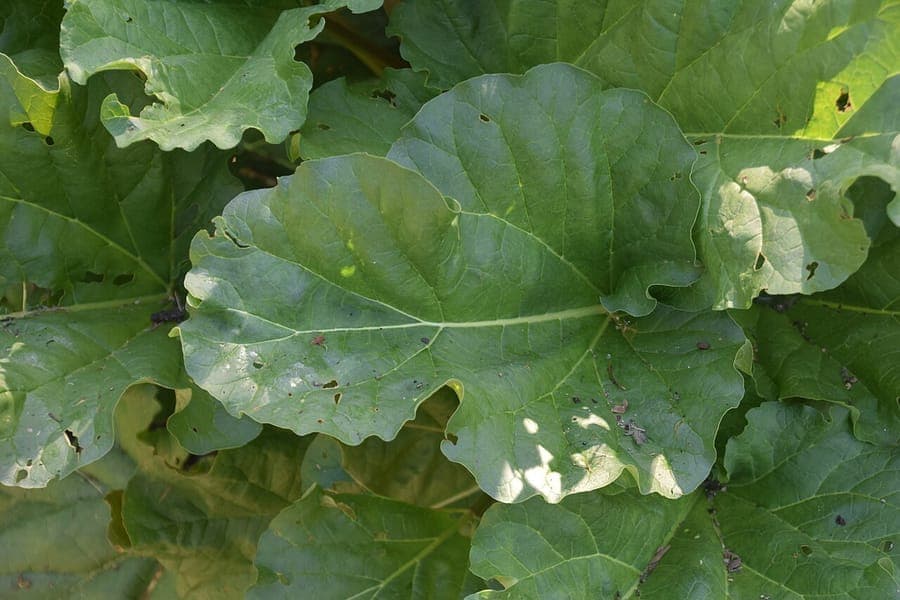
Krzysztof Golik / CC BY-SA 4.0, via Wikimedia Commons
Rheum rhabarbarum: complete guide
Rheum rhabarbarum
¿Quieres ver Rheum rhabarbarum: complete guide en tu jardín?
1 minuto, sin tarjeta de crédito
Rheum rhabarbarum: Complete Guide
Overview
Garden rhubarb (Rheum rhabarbarum) is a vigorous, perennial plant that has been cultivated in European gardens for centuries. This plant originates from Siberia and northern China and is now widespread across Europe and North America. With its massive, deep red stalks and large green leaves, it forms a striking element in gardens while the stalks are also edible and deliciously tart.
Appearance and Bloom
Rheum rhabarbarum is a large, herbaceous plant that can grow 1.5-2 meters tall. The leaves are very large, dark green, heart-shaped with wavy edges, up to 1 meter wide. The stalks are thick, red to pink colored, and can grow up to 60 cm long.
Flowers appear in May-June as large, yellowish-green flower spikes reaching enormous heights. These are striking but especially the female plant has the most spectacular flowers. After flowering, seed capsules form.
Ideal Location
This plant thrives best in full sun to partial shade. Provide at least 4-6 hours of direct sunlight daily. Rhubarb grows well in open gardens, kitchen gardens, and can also be used in larger container plants. The plant works well as a specimen or in groups.
Soil
Rheum rhabarbarum requires very nutrient-rich, well-draining soil. This plant grows best on humus-rich soils with plenty of compost. Ensure pH between 6.0-7.5. Add plenty of compost and manure when planting and provide regular mulching during the season.
Diseño gratis
¿Quieres ver Rheum rhabarbarum: complete guide en tu jardín? Crea un diseño gratis ahora.
Watering
During the growing season, water regularly, especially soon after planting. Mature plants are drought-tolerant but produce better stalks with regular watering. Water deeply but not too frequently - this promotes deeper rooting.
Pruning
Remove all flowers in the first year to encourage energy division toward root development. After that, flowers can remain for seed production. Remove old leaves and stalks regularly to create space for new growth. Best pruned in late winter.
Maintenance Calendar
FEBRUARY-MARCH: Pruning, mulching, add fertilizer. APRIL-MAY: Regular watering, start light harvest. JUNE-AUGUST: Full harvest season, regular watering. SEPTEMBER-OCTOBER: Preparation for rest, reduce watering. OCTOBER-JANUARY: Rest period.
Winter Hardiness
Rheum rhabarbarum is extremely winter-hardy and grows easily in temperate Europe. This plant tolerates temperatures down to -25 degrees Celsius. Very suitable for all temperate European gardens.
Companion Plants
Combine with other large-leafed plants such as Hosta, Ligularia, Darmera. For color, add red-flowering plants such as red pieris or cardinal flower. In kitchen gardens, plant alongside other vegetables such as beans and potatoes.
Conclusion
Garden rhubarb is a must-have for kitchen gardeners and gardening enthusiasts who grow their own food. With its massive growth, sturdy stalks, and year-round production, it makes a valuable addition. Harvest carefully by twisting stalks downward rather than cutting. Available at nurseries and garden centers. Learn more at gardenworld.app/en.
¿Quieres ver Rheum rhabarbarum: complete guide en tu jardín? Crea un diseño gratis ahora.
Sube una foto, elige un estilo y obtén un diseño fotorrealista con lista de plantas en menos de un minuto.
Más de 10.000 jardines diseñados
Sin tarjeta de crédito


Plantas similares
Goat's-beard: complete guide
Aruncus dioicus
A full guide to Aruncus dioicus: ideal conditions, care tips, and planting advice for shaded gardens. Hardy and low-maintenance.
Darmera peltata: complete guide
Darmera peltata
Discover the giant umbrella plant with spectacular shield-shaped leaves. Perfect for moist gardens and shaded spots. Read our full care and cultivation guide.