
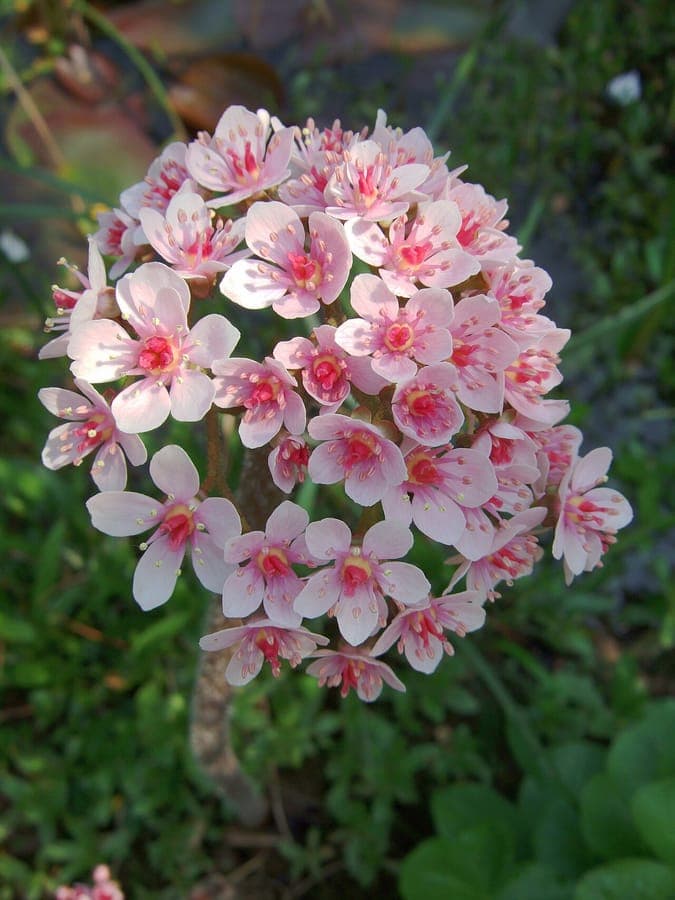
User:Jasper33 / Public domain, via Wikimedia Commons
Darmera peltata: complete guide
Darmera peltata
¿Quieres ver Darmera peltata: complete guide en tu jardín?
1 minuto, sin tarjeta de crédito
Overview
Darmera peltata, commonly called umbrella plant or Indian rhubarb, is an impressive herbaceous perennial from the Saxifragaceae family. This remarkable plant originates from the Pacific Northwest of North America, thriving natively in California and Oregon. Gardeners love this plant primarily for its enormous shield-shaped leaves that can reach up to 90 centimeters in width. In gardens, this plant creates a striking sculptural statement that stands out dramatically.
Appearance & Bloom
Darmera peltata distinguishes itself through its remarkably large, nearly circular leaves that resemble shields. These leaves grow on long, sturdy petioles that emerge vertically from the ground. In early spring, delicate pink or white flowers appear in dense clusters before the foliage unfolds. You first see the flowers, then the impressive leaf canopy gradually emerges afterward.
The plant reaches approximately 60-90 centimeters in height but can spread considerably wider. In autumn, the leaves display beautiful red to orange coloring before dying back for winter.
Ideal Location
Darmera peltata thrives best in full shade to partial shade conditions. Direct midday sun can scorch the large foliage. This plant is ideal for waterside locations, as it naturally grows in moist, woodland environments. Plant it beneath trees where it receives protection from intense solar radiation.
Soil
The plant prefers moist, humus-rich soil. Ensure the soil remains consistently moist but not waterlogged. Incorporate compost or peat into the planting area to improve water retention capacity. A neutral to slightly acidic pH is ideal for optimal growth.
Diseño gratis
¿Quieres ver Darmera peltata: complete guide en tu jardín? Crea un diseño gratis ahora.
Watering
Water regularly, especially during dry periods. This plant naturally occurs in wet mountain streams, making water essential for its health. Keep the soil consistently moist but never waterlogged. Daily watering may be necessary during hot, dry summers.
Pruning
Darmera peltata requires minimal pruning requirements. Remove dead leaves at season's end and cut away spent flower stems. The plant can be drastically cut back in spring if it becomes overly large.
Maintenance Calendar
February-March: Amend planting area with fresh compost. May-June: Enjoy impressive flower displays. July-September: Maintain consistent watering schedules. October-November: Foliage colors beautifully and drops. December-January: Rest period.
Winter Hardiness
Darmera peltata is fully winter hardy in temperate climates. In harsh winters of zone 4 and higher, frost protection may be necessary, especially in regions experiencing extreme freezing temperatures.
Companion Plants
Combine Darmera with other moisture-loving perennials like hostas, astilbe, and rodgersia. These plants appreciate identical growing conditions and create cohesive shade garden compositions. Rodgersia provides beautiful textural contrast through its finer foliage patterns.
Closing
Darmera peltata is a spectacular addition to the shaded, moist garden environment. With its enormous shield-shaped leaves and delicate spring blooming, it creates a unique sculptural element. Provide adequate moisture and position in shaded locations for optimal growth results. Order this magnificent specimen now from garden centers worldwide.
¿Quieres ver Darmera peltata: complete guide en tu jardín? Crea un diseño gratis ahora.
Sube una foto, elige un estilo y obtén un diseño fotorrealista con lista de plantas en menos de un minuto.
Más de 10.000 jardines diseñados
Sin tarjeta de crédito


Plantas similares
Korean astilbe: complete guide
Astilbe grandis
Discover Korean astilbe (Astilbe grandis): a tall shade plant with elegant flower plumes for pond edges and borders.
Heuchera pilosissima: complete guide to seaside alumroot
Heuchera pilosissima
Seaside alumroot (Heuchera pilosissima), an elegant North American dwarf perennial with hairy red-tinged foliage and red flower spikes.
Starry saxifrage: complete guide
Micranthes stellaris
Full guide to Micranthes stellaris, the starry saxifrage: location, soil, blooming and garden use. A tough alpine plant for moist, shady rock faces and pond margins.