
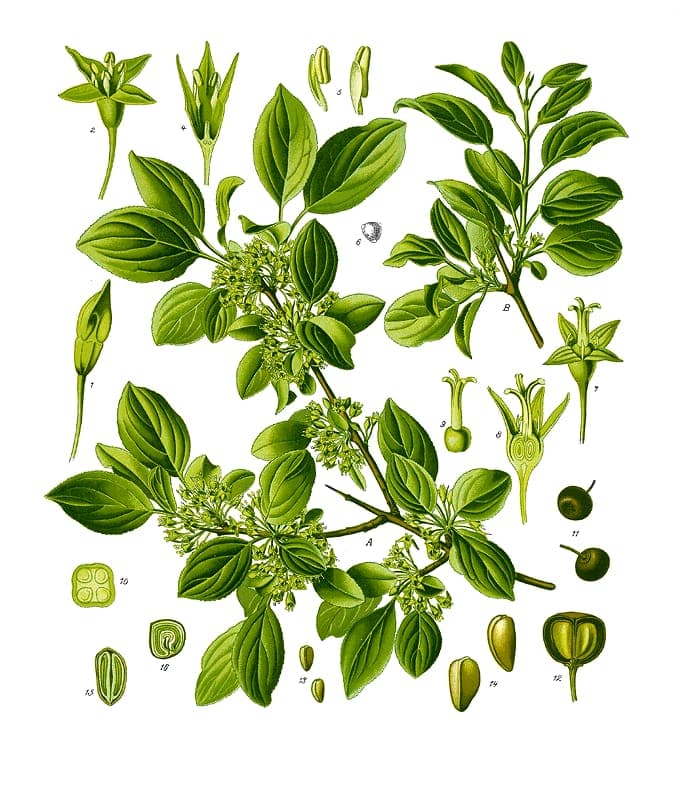
Köhler, F. E. (Franz Eugen) / Public domain, via Wikimedia Commons
European buckthorn: complete guide
Rhamnus cathartica
¿Quieres ver European buckthorn: complete guide en tu jardín?
1 minuto, sin tarjeta de crédito
Overview
European buckthorn (Rhamnus cathartica), also known as common buckthorn or purging buckthorn, is a native European shrub with extensive history in gardens and landscapes. This robust, vigorous shrub proves invaluable for creating hedgerows and screening. The plant flourishes across much of Europe extending through Western Siberia and northwestern Africa.
European buckthorn is celebrated for its fine structure, attraction to birds, and significant value in natural landscapes.
Appearance & Bloom
European buckthorn is a shrub reaching 2 to 4 metres in height, though typically maintained smaller in managed landscapes. The bark ranges from dark grey to blackish with rough texture. Branch tips sometimes terminate in thorn-like points.
Leaves are opposite, oval to lanceolate, approximately 2 to 5 centimetres long, and green with matte finish. In autumn, they transform to yellow-orange tones.
Flowers emerge in May through June as extremely small, white blooms in clusters. Though individually inconspicuous, these flowers receive substantial insect visitation. Following flowering, glossy black berries develop, proving extremely attractive to birds, especially thrushes.
Ideal Location
European buckthorn thrives in full sun through partial shade. Plants flourish best with minimum four hours daily sunlight. They tolerate shade but develop less compact growth patterns.
Position European buckthorn where hedgerows or screening prove desired. Also excellent as border backgrounds given its full, dense growth habit.
Soil
European buckthorn displays remarkable soil flexibility. The plant grows on poor to moderately fertile soils, chalky and acidic substrates, even on moderately compacted grounds. This makes it exceptionally suitable for challenging locations.
Diseño gratis
¿Quieres ver European buckthorn: complete guide en tu jardín? Crea un diseño gratis ahora.
Watering
Once established, European buckthorn displays remarkable drought tolerance. Water regularly during the first growing season, thereafter only during severe droughts. This makes it an extremely low-maintenance choice.
Pruning
European buckthorn responds excellently to pruning and shaping. Regular hedgerow pruning occurs in June and August, promoting compact growth and attractive form.
Maintenance Calendar
- May-June: Flowering appears
- June-July: Possible hedgerow pruning
- August-September: Potential second pruning
- August-October: Glossy black berries develop, extremely valuable for birds
- November-March: Winter dormancy, pruning possible but unnecessary
Birds & Pollinators
The glossy black berries prove highly nutritious for bird species, particularly thrushes. The flowers attract insects. European buckthorn thus offers significant wildlife value in landscapes.
Winter Hardiness
European buckthorn displays complete winter hardiness across Europe, tolerating severe frost below -20 degrees Celsius.
Companion Plants
European buckthorn combines well with:
- Hawthorn (Crataegus monogyna)
- Hazel (Corylus avellana)
- Elder (Sambucus nigra)
- Blackthorn (Prunus spinosa)
- Dog rose (Rosa canina)
Conclusion
European buckthorn is an excellent native shrub for gardens and landscapes. Its resilience, dense growth, bird attraction, and low-maintenance nature make it an outstanding choice. Whether creating hedgerows, establishing screening, or supporting wildlife, European buckthorn thoroughly merits consideration.
Discover more native plant options on gardenworld.app.
¿Quieres ver European buckthorn: complete guide en tu jardín? Crea un diseño gratis ahora.
Sube una foto, elige un estilo y obtén un diseño fotorrealista con lista de plantas en menos de un minuto.
Más de 10.000 jardines diseñados
Sin tarjeta de crédito

