
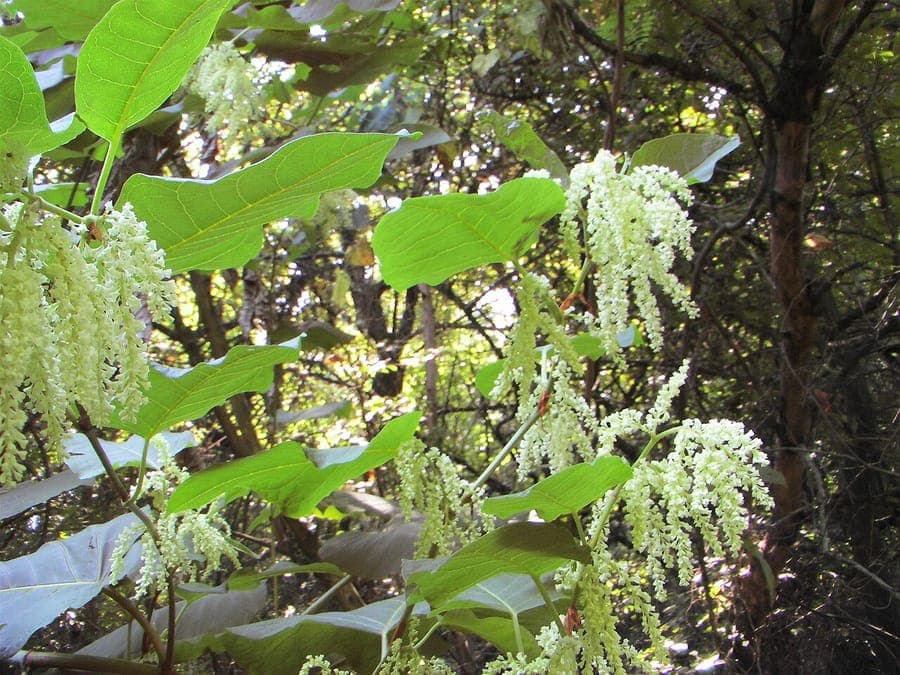
Velocicaptor at en.wikipedia / Public domain, via Wikimedia Commons
Giant knotweed: complete guide
Reynoutria sachalinensis
¿Quieres ver Giant knotweed: complete guide en tu jardín?
1 minuto, sin tarjeta de crédito
Overview
Giant knotweed (Reynoutria sachalinensis), also called Sakhalin knotweed, is a colossal plant native to the Far East, particularly Sakhalin Island and the Russian Far East. This plant is renowned for its extraordinary growth, occasionally exceeding 3 metres in height. Like its relative, Japanese knotweed, giant knotweed is classified as invasive in many European countries.
This article provides essential insight into managing this extraordinary plant and warns of its problematic potential.
Appearance & Bloom
Giant knotweed achieves truly massive dimensions. Plants regularly grow to 3 to 4 metres in a single season. Stems are thick and robust, ranging from red to greenish tones. Leaves are extraordinarily large, heart-shaped to deltoid, often 20 to 30 centimetres or larger.
Flowers appear from August through October as densely packed, white to pale green blooms in upright plumes. This represents a truly spectacular flowering. Seed formation, however, proves susceptible to frost damage in many climates.
The plant dies back in winter but regrows vigorously each spring from extremely robust rhizomes.
Diseño gratis
¿Quieres ver Giant knotweed: complete guide en tu jardín? Crea un diseño gratis ahora.
Spread & Invasiveness
Giant knotweed spreads via seeds and particularly through underground rhizomes equally aggressive as Japanese knotweed. Fragments merely centimetres long can establish new plant colonies.
In many European countries, this plant is now legally prohibited. Removal demands sustained effort and frequent herbicide application.
Ideal Location
Where giant knotweed grows, containment must be rigorous. This demands metal barriers or extremely deep physical containment measures.
Soil & Water
Giant knotweed grows on virtually all soil types and accepts extremely wet to extremely dry conditions, making it challenging to manage.
Management & Control
Managing giant knotweed requires:
- Regular cutting/mowing
- Extremely deep physical containment (minimum 1.5 metres deep)
- Sustained monitoring
- Likely herbicide application
- For large infestations: professional removal
This plant is substantially larger and more aggressive than Japanese knotweed.
Why This Article
We warn gardening enthusiasts against this extraordinary plant. Though admittedly impressive to view, it poses serious long-term garden management risks.
Conclusion
Giant knotweed is absolutely unsuitable for residential gardens. If you possess this plant already, seriously consider professional removal. For future projects, seek free, fully alternative plants without invasiveness risk.
Discover safer garden plant selections on gardenworld.app.
¿Quieres ver Giant knotweed: complete guide en tu jardín? Crea un diseño gratis ahora.
Sube una foto, elige un estilo y obtén un diseño fotorrealista con lista de plantas en menos de un minuto.
Más de 10.000 jardines diseñados
Sin tarjeta de crédito

