
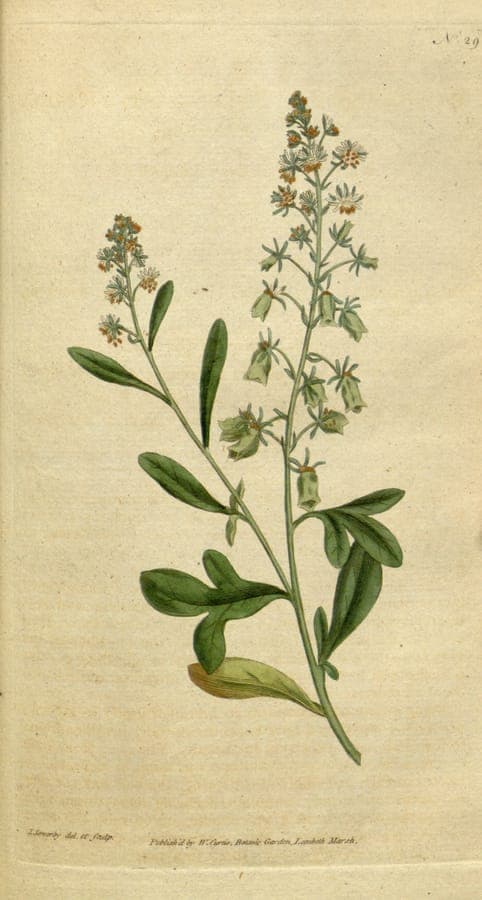
James Sowerby / William Curtis / Public domain, via Wikimedia Commons
Reseda odorata: complete guide
Reseda odorata
¿Quieres ver Reseda odorata: complete guide en tu jardín?
1 minuto, sin tarjeta de crédito
Overview
Reseda odorata, commonly known as garden mignonette or sweet reseda, is an annual herbaceous plant from the Resedaceae family. Though the flowers are subtle and greenish-yellow, the intense, delightful fragrance makes this plant a worthy garden classic. Native to North Africa, especially Egypt and Libya, this crop is grown worldwide for its aroma.
Garden mignonette deserves a place in every scent-focused garden. Even a single plant disperses its aroma across a large area.
Appearance and bloom
Garden mignonette grows as a compact, herbaceous plant, typically 30-50 centimeters tall, with green foliage. Flowers are small, unobtrusive, greenish with light yellow tints, clustered in densely flowered, elongated inflorescences (clusters). Though not visually spectacular, the fragrance provides the primary attraction.
Bloom runs June through October, depending on climate. The plant blooms richly and continuously if well-grown. The flower clusters are also suitable for cut flowers.
Ideal location
Garden mignonette grows best in full sun to light partial shade. Minimum four hours direct sun daily is needed. The plant can grow in full shade, but will produce much less fragrance. Place it where you can be near it or where passersby will appreciate the aroma fully.
Soil requirements
Garden mignonette is not fussy about soil type. It grows well in virtually any garden soil if it has good drainage. A pH of approximately 7.0 is ideal. In poor, sandy soil it grows reasonably well, though richer soil can help nutrient uptake.
Watering
Garden mignonette loves consistent moisture. Water regularly, especially in dry periods, so soil feels always moderately moist. If the plant becomes too dry, fragrance development will decrease. Excessive wetness or stagnant water must be avoided.
In containers, you must water more frequently than in ground beds because pots dry out faster.
Diseño gratis
¿Quieres ver Reseda odorata: complete guide en tu jardín? Crea un diseño gratis ahora.
Pruning and maintenance
Garden mignonette requires minimal intervention. Pinching the tops in the young stage can force the plant to form more side branches, resulting in more flower clusters. This pinching is optional.
Remove spent flower clusters to encourage further bloom. This "deadheading" can significantly extend flowering.
Maintenance calendar
April to May: Plant seeds outdoors or start seeds indoors. June to August: Plant grows rapidly; water carefully and feed moderately. September to October: Peak bloom; deadhead spent flowers. November: Plant reaches season's end; can be removed or overwintered.
Winter hardiness
Garden mignonette is an annual plant - not winter-hardy. It cannot survive frost. In mild winter zones (USDA 9-11), it can grow into winter. In much of Europe, you'd treat it as summer flowering. Reseed each year in spring.
There are some winter-hardy forms of Reseda, but fragrant garden mignonette is annual.
Companion plants
Garden mignonette combines beautifully with other scent plants and summer bloomers:
- Matthiola: purple flowers with complementary fragrance
- Heliotropium: blue flowers and aroma
- Nicotiana: trumpet flowers with evening fragrance
- Jasminum: other fragrant plants for composition
Closing
Reseda odorata is an indispensable plant for the scent-focused garden. Though modest in appearance, this crop with its rich aroma and easy growth is worthy of place alongside other classics. Seed is widely available at garden centers and online plant nurseries. Plant several groups to appreciate the aroma fully. For more fragrant garden ideas, visit gardenworld.app.
¿Quieres ver Reseda odorata: complete guide en tu jardín? Crea un diseño gratis ahora.
Sube una foto, elige un estilo y obtén un diseño fotorrealista con lista de plantas en menos de un minuto.
Más de 10.000 jardines diseñados
Sin tarjeta de crédito


Plantas similares
Reseda glauca: complete guide
Reseda glauca L.
Discover the Pyrenean mignonette, an elegant alpine plant with white flowers and grey-green foliage. Perfect for xeriscaping and dry gardens.
Reseda alba: complete guide
Reseda alba
Discover white mignonette with delicate fragrant blooms on poor Mediterranean soils. Perfect for dry gardens. Learn growth, fragrance, and companion plants.
Reseda lutea: complete guide
Reseda lutea
Discover yellow mignonette with strong fragrance and historic dye plant heritage. Grows on dry chalky soils. Learn cultivation, fragrance, and garden uses.