
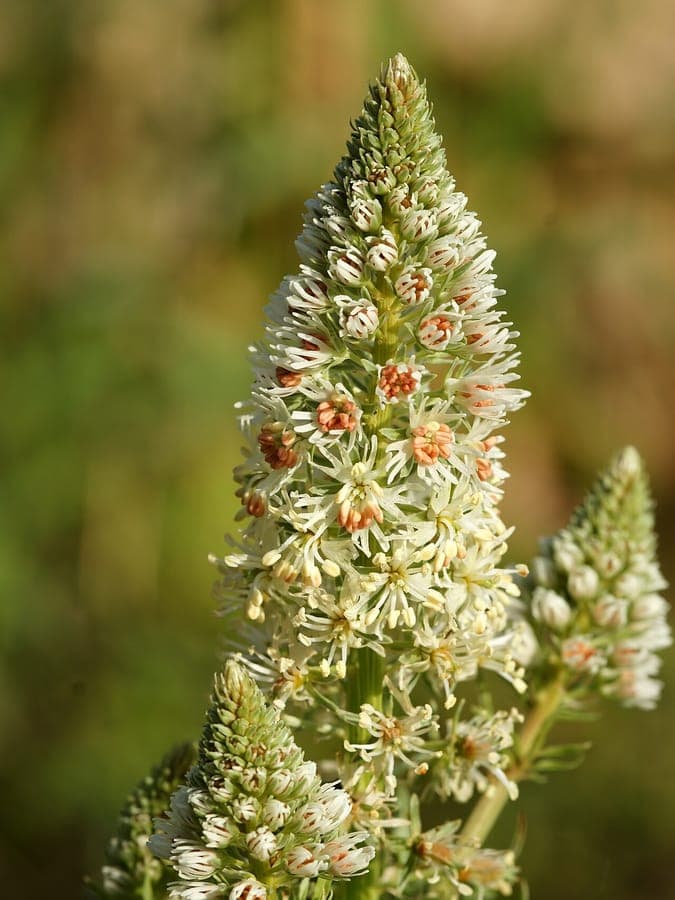
Hans Hillewaert / CC BY-SA 3.0, via Wikimedia Commons
Reseda alba: complete guide
Reseda alba
¿Quieres ver Reseda alba: complete guide en tu jardín?
1 minuto, sin tarjeta de crédito
Overview
Reseda alba, known as white mignonette or white weld, is a fascinating plant from the Resedaceae family. This Mediterranean native naturally grows on dry, calcareous and poorly irrigated soils in southern Europe. White mignonette is renowned for its subtle, pleasantly fragrant flowers and ability to thrive on marginal soils.
In modern gardens, white mignonette is increasingly valued as an interesting addition to dry borders, rock gardens, and wild plantings. The plant attracts numerous butterflies, bees, and other pollinators. It adds fragrance and subtle beauty to gardens where few other plants flourish.
Appearance and Blooming
White mignonette reaches heights between 40 and 80 centimeters. The plant grows upright with gray-green, finely divided leaves. These leaves are highly ornamental with hair-like segments creating a feathery appearance. The stems are robust and sturdy.
Flowers are very small, approximately 0.5 centimeters across, white or very pale yellow, densely packed in long, slender flower spikes. They appear May through October. The flowers have a considerable and pleasant fragrance, especially in evening. After blooming, small elongated seed capsules form.
Ideal Location
White mignonette grows best in full sun to partial shade. At least 5 to 6 hours direct sunlight daily is ideal. The plant tolerates partial shade but will have less vigor. It works perfectly in dry, warm locations against walls and on south-facing borders.
This plant excels in Mediterranean gardens, rocky sites, rock gardens, and dry plantings. It provides texture and fragrance to locations where other plants cannot thrive.
Soil Requirements
White mignonette grows best in dry, calcareous, poor soil. The plant tolerates poorly draining soil poorly. Sandy, gravel, and chalky soils are ideal. Add gravel to heavy clay soils.
The plant requires minimal nutrition - actually it grows less well in very rich soils. It tolerates neutral to alkaline pH very well.
Diseño gratis
¿Quieres ver Reseda alba: complete guide en tu jardín? Crea un diseño gratis ahora.
Watering
After establishment, white mignonette tolerates drought excellently. Regular watering is only necessary during extreme drought. Excessive water can lead to disease, especially in wet winters.
In Mediterranean climates, natural rainfall will usually suffice. In average conditions, supplemental water is rarely needed.
Pruning
White mignonette requires minimal pruning. Deadhead spent flower spikes around August-September to encourage new blooming. Remove dead or damaged parts as needed. After frost damage the plant can be cut back to ground level.
The plant actually thrives with minimal pruning - letting it grow naturally.
Maintenance Calendar
March-April: Sow seeds directly. Or plant seedlings.
May-July: First flowering period. Minimal water in extreme heat.
August-October: Second flowering period after deadheading. Harvest seeds.
October-November: Seeds ripen. Plant growth slows.
December-February: Rest period. Plant can regrow from seed next season.
Winter Hardiness
Reseda alba is moderately hardy. It tolerates temperatures down to approximately -5 degrees Celsius. In very cold areas it may die in severe winters. In UK and temperate Europe usually overwinters outdoors in mild years.
In harsh winters you can save seed and resow next season. Mulching helps the plant survive winter.
Companion Plants
Combine white mignonette with other drought-loving species like Lavender, Santolina, Helichrysum, and Mediterranean herbs. It works well combined with Cistus and other salt-loving plants. In rock gardens it combines perfectly with sedums and succulents.
The fragrance of mignonette makes it attractive near seating areas - close to terrace or patio.
Closing Thoughts
Reseda alba offers subtle beauty, attractive fragrance, and ecological benefits. It is a fascinating plant for dry gardens and Mediterranean landscapes. The delicate flowers and fragrance make it a favorite for sophisticated gardens.
Buy seeds from garden centres. Discover more Mediterranean herbs and fragrant flowers on gardenworld.app. Read our guides on gardenworld.app for dry garden design.
¿Quieres ver Reseda alba: complete guide en tu jardín? Crea un diseño gratis ahora.
Sube una foto, elige un estilo y obtén un diseño fotorrealista con lista de plantas en menos de un minuto.
Más de 10.000 jardines diseñados
Sin tarjeta de crédito


Plantas similares
Reseda glauca: complete guide
Reseda glauca L.
Discover the Pyrenean mignonette, an elegant alpine plant with white flowers and grey-green foliage. Perfect for xeriscaping and dry gardens.
Reseda odorata: complete guide
Reseda odorata
Garden mignonette is a fragrant flowering plant with small greenish-yellow flower clusters. Perfect for borders, containers, and cut flowers with delightful spring fragrance.
Reseda lutea: complete guide
Reseda lutea
Discover yellow mignonette with strong fragrance and historic dye plant heritage. Grows on dry chalky soils. Learn cultivation, fragrance, and garden uses.