
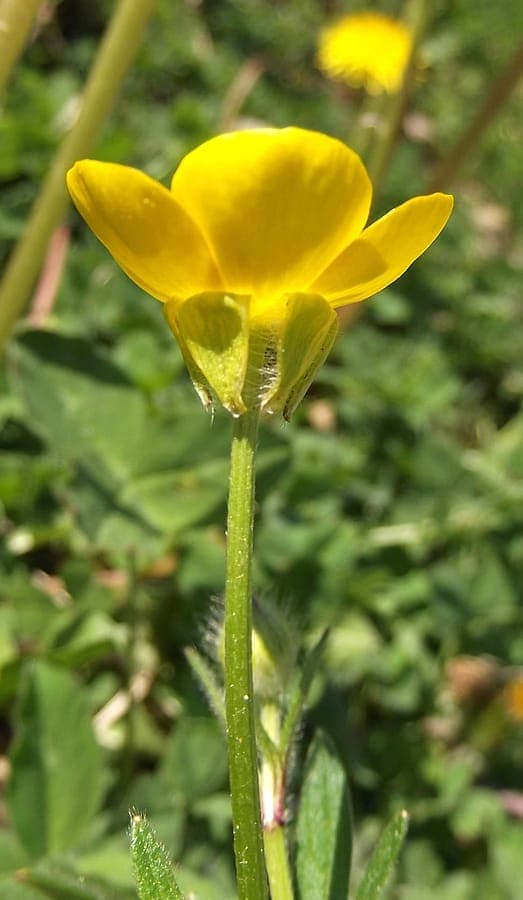
Jay Sturner from USA / CC BY 2.0, via Wikimedia Commons
Bulbous buttercup: complete guide
Ranunculus bulbosus
¿Quieres ver Bulbous buttercup: complete guide en tu jardín?
1 minuto, sin tarjeta de crédito
Overview
Bulbous buttercup (Ranunculus bulbosus) is a distinctive buttercup from the Ranunculaceae family, native across Europe and the Mediterranean. This characteristic plant grows from underground corms beneath the plant, making it self-multiplying and frost-resistant in wet winters.
Bulbous buttercup is a classic meadow plant abundant in natural grasslands. The intense yellow flowers with their distinctive glossy petals reveal this plant wherever it grows. This species is crucial for spring pollinators and represents living meadow ecosystems.
Appearance and Blooming
Bulbous buttercup grows to approximately 10-40 centimeters height from an underground corm at the base. Roots originate from this corm. Leaves are thin, lance-shaped and greyish-green. The stem is slender, sometimes reddish-tinged.
Flowers are intense yellow with five glossy, polished petals. The characteristic shine and reflection give the plant its 'buttercup' name. Blooming extends from April through June when numerous flowers appear. After flowering, characteristic seed capsules develop.
Ideal Location
Bulbous buttercup grows optimally in grassy meadows, moist grasslands, and meadow margins. The plant prefers locations with minimum 6 hours direct sun. Semi-shaded grasslands suit it well. Avoid completely dark locations.
The plant spreads via underground corms, so suitable sites avoid soil disturbance.
Soil
Bulbous buttercup thrives on nutrient-poor to moderately rich clay and sandy meadow soils. The plant tolerates acidic soils well. Water-influenced soils are favorable - the plant grows especially well in damp, wet meadows.
Calciferous soils also provide suitable habitat.
Diseño gratis
¿Quieres ver Bulbous buttercup: complete guide en tu jardín? Crea un diseño gratis ahora.
Watering
As a meadow plant, bulbous buttercup has moderate moisture requirements. During growing period (March-May), regular water aids flower production. During summers, it tolerates dry periods. Spring rainfall usually suffices.
Pruning and Maintenance
Bulbous buttercup requires no active pruning. Seed capsules can remain for natural dispersal. In intensively managed meadows, regular mowing prevents excessive spreading.
After June mowing, underground corms gradually multiply.
Maintenance Calendar
March: first flower shoots appear. April-May: full bloom. June-July: seed ripening, mowing stimulates next year. July-September: corm build-up underground. October-February: dormancy, the plant disappears above ground.
Winter Hardiness
Bulbous buttercup is fully winter hardy throughout northern Europe. Underground corms survive frosts to -15 degrees Celsius without damage. No protection needed. The plant disappears above ground and reappears the following spring.
Companion Planting
Bulbous buttercup combines excellently with meadow wildflowers: Deadnettles, wildflowers, and cowslips create rich spring meadows. These plant communities provide nourishment for bees and bumble bees.
Conclusion
Bulbous buttercup brings golden-yellow optimism to meadows. This robust plant deserves a place in natural grassland sections. gardenworld.app helps you rediscover meadow beauty. Plant bulbous buttercup corms and enjoy spring brilliance in your garden.
Availability in UK: Garden centers and bulb suppliers stock corms and seeds. Wildflower specialists carry them.
¿Quieres ver Bulbous buttercup: complete guide en tu jardín? Crea un diseño gratis ahora.
Sube una foto, elige un estilo y obtén un diseño fotorrealista con lista de plantas en menos de un minuto.
Más de 10.000 jardines diseñados
Sin tarjeta de crédito


Plantas similares
Water-crowfoot: complete guide
Ranunculus aquatilis
Discover water-crowfoot aquatic plant for ponds and water gardens. Growth care overwintering and expert planting advice on gardenworld.app here.
Goldilocks buttercup: complete guide
Ranunculus auricomus
Discover goldilocks buttercup a woodland plant for shade and part shade. Growth care and planting advice for natural gardens here now.
Field buttercup: complete guide
Ranunculus arvensis
Discover field buttercup a wildflower for meadow and agricultural margins. Growth care seed production and expert planting advice here now.