
Abrahami / CC BY-SA 3.0, via Wikimedia Commons
Field buttercup: complete guide
Ranunculus arvensis
¿Quieres ver Field buttercup: complete guide en tu jardín?
1 minuto, sin tarjeta de crédito
Overview
Field buttercup (Ranunculus arvensis) is a characteristic annual plant from the Ranunculaceae family, native across Europe to Central Asia. This humble yet charming buttercup thrives on nutrient-poor arable land and meadows, bringing bright yellow light to the agricultural landscape.
Field buttercup represents botanical richness of traditional farmland. Once abundant in grain fields, this plant disappeared as modern intensive agriculture eliminated its habitat. Botanical restoration and wildflower gardening now offer ways to reestablish this beautiful species.
Appearance and Blooming
Field buttercup is a slender, herbaceous annual reaching 10-40 centimeters in height. Stems are thin, branched, and sometimes reddish-tinged. Leaves are deeply divided into linear segments, giving the plant fine texture.
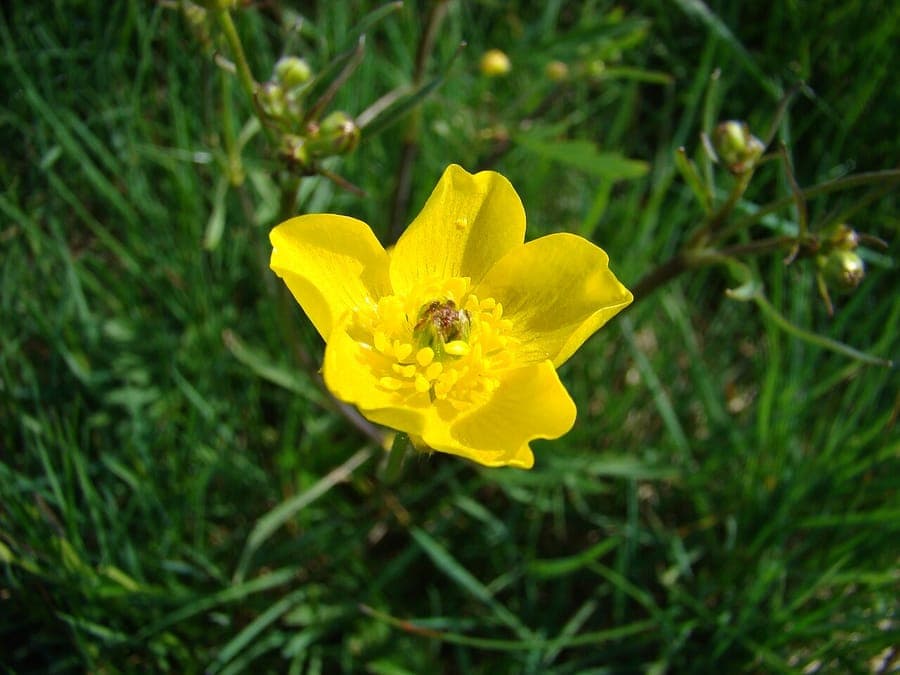
Flowers are bright yellow with five glossy, shining petals. Blooming occurs from May through July with numerous small flowers clustered along stems. After blooming, distinctive spiky seed capsules develop.
Ideal Location
Field buttercup grows on nutrient-poor, preferably sandy or loamy soils. The plant prefers sunny locations receiving minimum 6 hours direct sun. Suitable locations include meadows, fallow land, wild garden corners, and field margins.
The plant spreads via seeds and requires minimal care. Plant in neglected areas where heavy fertilization is avoided.
Soil
Field buttercup thrives on nutrient-poor substrates. Sandy soils without heavy lime content prove ideal. Avoid high nutrient concentrations - heavy fertilization encourages weeds rather than this species. Ensure soil drains well without waterlogging.
Diseño gratis
¿Quieres ver Field buttercup: complete guide en tu jardín? Crea un diseño gratis ahora.
Watering
As an annual field plant, field buttercup shows moderate drought sensitivity. In dry summers, growth becomes modest. Regular moisture without waterlogging works best. Summer drought poses limited problems since seeds have already set.
Pruning and Maintenance
Field buttercup requires virtually no pruning. Leave seed capsules standing to allow natural dispersal. Cutting after flowering causes seed drop and young plants emerge the following spring.
In managed gardens, selective cutting prevents excessive self-seeding.
Maintenance Calendar
April-May: natural seeding emergence. June-July: blooming and seed production. August-September: seed ripening and dispersal. October-March: dormancy with seed stratification in soil.
The plant follows a natural annual cycle requiring minimal winter care.
Winter Hardiness
Field buttercup is a true annual that does not overwinter as living plants. Seeds remain dormant in soil and germinate the following spring. This natural pattern creates continuous populations without intervention.
Companion Planting
Field buttercup combines beautifully with meadow wildflowers: Rough hawkbit, pignut, and poppies create rich biotopes. These plant communities support pollinators and diverse insects.
Conclusion
Field buttercup contributes to landscape character and ecological restoration. Allow this beautiful flower to flourish in neglected garden corners. gardenworld.app helps you rediscover botanical beauty. Sow field buttercup seeds and enjoy natural garden style.
Availability in UK: Seeds available through wildflower specialists. Garden centers stock wildflower seed packets.
¿Quieres ver Field buttercup: complete guide en tu jardín? Crea un diseño gratis ahora.
Sube una foto, elige un estilo y obtén un diseño fotorrealista con lista de plantas en menos de un minuto.
Más de 10.000 jardines diseñados
Sin tarjeta de crédito


Plantas similares
Water-crowfoot: complete guide
Ranunculus aquatilis
Discover water-crowfoot aquatic plant for ponds and water gardens. Growth care overwintering and expert planting advice on gardenworld.app here.
Goldilocks buttercup: complete guide
Ranunculus auricomus
Discover goldilocks buttercup a woodland plant for shade and part shade. Growth care and planting advice for natural gardens here now.
Bulbous buttercup: complete guide
Ranunculus bulbosus
Discover bulbous buttercup a meadow plant with corms for grazing land. Growth multiplication care and planting guidance experts here now.