
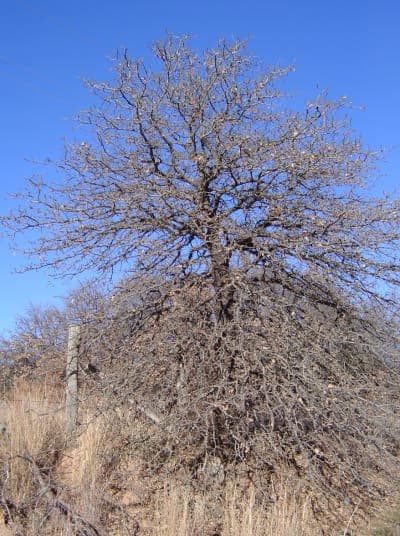
DeepFork (talk) (Uploads) / Public domain, via Wikimedia Commons
Blackjack Oak (Quercus marilandica): complete guide
Quercus marilandica
¿Quieres ver Blackjack Oak (Quercus marilandica): complete guide en tu jardín?
1 minuto, sin tarjeta de crédito
Overview
The blackjack oak (Quercus marilandica), also called blackjack, is a unique North American oak with compact shrubby growth form and remarkable toughness. Originating from central and eastern United States, this tree grows on the poorest, driest terrain where many other trees give up. Typically growing as a shrub between 10 and 20 feet tall, under ideal conditions it can reach up to 40 feet.
The blackjack oak is unique because it thrives without problems on virtually impossible soils - dry, sandy, acidic grounds full of rocks and gravel. This makes it ideal for landscape projects in difficult conditions where normal trees fail. Additionally, it provides nutrients for wildlife and has interesting fall color. For gardeners struggling with poor soil, the blackjack oak is a gift from nature.
Appearance and Bloom
The most distinctive feature of the blackjack oak are its large, three-lobed leaves, usually 3 to 6 inches wide and about as long. These leaves are deeply divided into three large lobes at the tip, with two smaller side lobes at the base. The leaves are dark green and feel rough with distinct texture. In fall, the foliage transforms dramatically to glowing red to reddish-brown.
In early spring, inconspicuous flowers appear: small green catkins for flowers and inconspicuous female flowers hidden in emerging foliage. These flowers are not decoratively important, but very useful for pollinators and local insects. By September-October, the tree forms irregular, approximately 0.6 inch long acorn caps with deep cups - food for squirrels and other wildlife.
Ideal Location
The blackjack oak thrives in sunny locations where this tree receives at least five hours of direct sunlight daily. This is a tree that adapts to full sun but can also grow in partial shade. However, in very dark locations, growth will stagnate. Provide adequate air circulation, as this tree feels at home on windy peaks and exposed slopes.
Diseño gratis
¿Quieres ver Blackjack Oak (Quercus marilandica): complete guide en tu jardín? Crea un diseño gratis ahora.
Soil
The blackjack oak is unique because of its ability to grow on particularly poor soils. This tree thrives best on dry, acidic soils with a pH between 4.6 and 5.6, probably due to natural adaptation to nutrient-poor soils. The tree also grows without problems on sandy, gravel-rich, and stone-rich soils where other trees struggle.
Actually, in very rich soil, the blackjack oak sometimes performs poorly - it is adapted to poor conditions. Avoid soil that is permanently waterlogged; this tree feels at home in dry soils.
Watering
Once established (after one to two years), the blackjack oak is exceptionally drought-tolerant and requires no regular supplemental water. This is probably the least water-demanding oak you can plant. In the first year after planting, water minimally once every three weeks, responsive to exceptional drought.
Overwatering can be problematic; preventing disease through stagnation is more important than regular feeding.
Pruning
The blackjack oak grows naturally into an open, spreading form and requires minimal pruning. Remove only dead or clearly damaged branches. This tree does best when managed very lightly; aggressive shaping can cause tree stress.
Maintenance Calendar
Spring (March-May): Growing season begins. Very minimal maintenance required. Monitor for insect damage.
Summer (June-August): Virtually no maintenance required. This is the least demanding tree.
Autumn (September-October): Enjoy spectacular reddish-brown fall color. No maintenance required.
Winter (November-February): Tree rests. Very minimal pruning possible. Planting season for new trees.
Winter Hardiness
The blackjack oak is very cold-hardy throughout Europe, certainly down to USDA zone 6a (-10 degrees Fahrenheit). This is a North American tree that feels perfectly at home in European winters.
Companion Plants
The blackjack oak forms combinations with:
- Other drought-tolerant structures: juniper, rosemary, sage
- Ground covers: woodland strawberry, bearberry, low-growing broom
- Summer bloomers: coreopsis, delosperma, sedum
Conclusion
The blackjack oak is unparalleled for difficult site situations. With its extreme hardiness and drought tolerance, this tree delivers value year after year in places where other trees fail. Visit specialized tree nurseries for blackjack oaks. More information at gardenworld.app.
¿Quieres ver Blackjack Oak (Quercus marilandica): complete guide en tu jardín? Crea un diseño gratis ahora.
Sube una foto, elige un estilo y obtén un diseño fotorrealista con lista de plantas en menos de un minuto.
Más de 10.000 jardines diseñados
Sin tarjeta de crédito

