
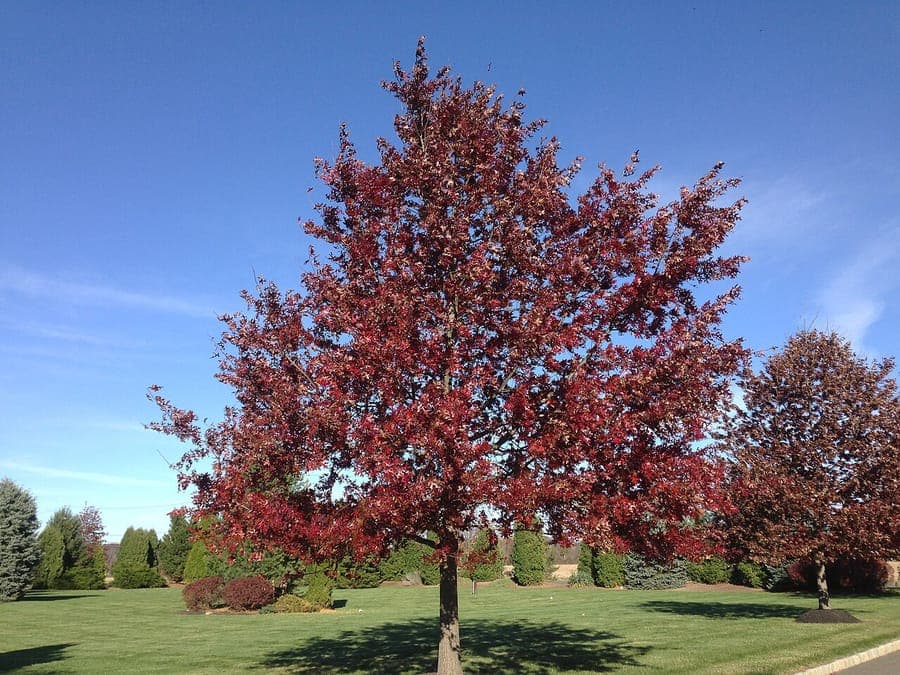
Famartin / CC BY-SA 4.0, via Wikimedia Commons
Scarlet oak: complete guide
Quercus coccinea
¿Quieres ver Scarlet oak: complete guide en tu jardín?
1 minuto, sin tarjeta de crédito
Overview
Scarlet oak (Quercus coccinea) is a majestic North American tree celebrated for its spectacular autumn foliage. This member of the Fagaceae family naturally occurs in eastern North American woodlands. The tree is prized for landscape architecture due to its elegant form, glossy summer foliage, and especially its dramatic scarlet-red autumn coloration from which its name 'coccinea' derives.
Appearance and foliage
Scarlet oak grows 15-25 meters tall with a broad, rounded crown. The tree displays gray-brown bark and characteristic deeply lobed leaves with sharp points. Summer foliage is glossy dark green. Autumn brings the true spectacle - leaves ignite in scarlet-red, orange, and gold hues. This transformation continues for weeks, creating unforgettable visual impact.
Ideal location
Scarlet oak thrives in full sun locations receiving minimum 6 hours direct sunlight daily. Optimal growth and autumn coloration requires ample light. Plant where autumn colors are visible from your home. The tree appreciates adequate space for its broad crown.
Soil
Scarlet oak grows best in well-draining, acidic soil with pH between 4.5 and 6.9. The tree accepts various soil types including sandy, silty, and clay soils as long as drainage is excellent. Waterlogged conditions must be avoided. Growth in poor soils may be slower initially, but the tree eventually establishes vigorously.
Diseño gratis
¿Quieres ver Scarlet oak: complete guide en tu jardín? Crea un diseño gratis ahora.
Watering
Newly planted Scarlet oaks require regular water during the first year. Water deeply and regularly, especially during dry periods. Once established, trees tolerate moisture fluctuations well and need water only during extreme drought. In arid climates, additional summer watering may benefit young trees.
Pruning
Minimal pruning is necessary. Remove only dead or damaged branches in late winter or early spring. Summer pruning is discouraged as Scarlet oaks are sensitive to moisture loss. Allow the tree its natural form.
Maintenance calendar
Spring (March-April): Check for winter damage, water thoroughly. Growing season (May-August): Ensure regular water during drought. Autumn (September-October): Enjoy spectacular color, remove fallen leaves. Winter (November-February): Minimal care, prune dead branches.
Winter hardiness
Scarlet oak is hardy to -25 degrees Celsius. The tree suits northern temperate zones. In regions with mild winters, complete spectacular autumn coloration may not develop fully.
Companion plants
Scarlet oak works well as a specimen tree or with other autumn-colored trees. Combine with other oaks, azaleas, rhododendrons, or underplant with autumn-flowering perennials.
Closing thoughts
Quercus coccinea is essential for autumn color enthusiasts and landscape beauty seekers. The size requires adequate space, but the scarlet display is worth the wait. Available at specialized tree nurseries. Check Intratuin or Gamma for ornamental tree selections. Visit gardenworld.app for garden design inspiration featuring seasonal color trees.
¿Quieres ver Scarlet oak: complete guide en tu jardín? Crea un diseño gratis ahora.
Sube una foto, elige un estilo y obtén un diseño fotorrealista con lista de plantas en menos de un minuto.
Más de 10.000 jardines diseñados
Sin tarjeta de crédito

