
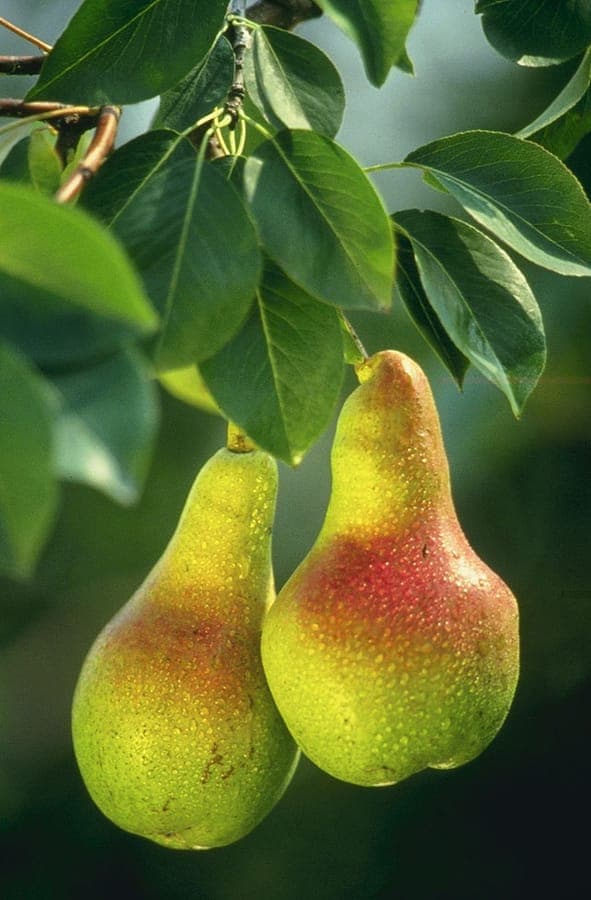
Keith Weller / Public domain, via Wikimedia Commons
Common pear: complete guide
Pyrus communis
¿Quieres ver Common pear: complete guide en tu jardín?
1 minuto, sin tarjeta de crédito
Overview
Common pear (Pyrus communis) is a magnificent fruit tree cultivated for centuries across Europe. This member of the Rosaceae family naturally occurs from Central to Southeast Europe through northern Iraq. The tree is valued for its delicious fruit, elegant flowers, and architectural form.
Appearance and bloom
Pyrus communis grows 15-20 meters tall but can be managed as a smaller specimen. The tree displays an upright, pyramidal form with gray-brown bark. In spring (April-May), it produces abundant white flowers in clusters, invaluable for honeybee populations. Flowers give way to green fruit, maturing to yellow-brown pears with characteristic pear shape. Autumn foliage turns yellow to reddish-brown.
Ideal location
Common pear thrives on sunny locations receiving minimum 6 hours direct sunlight daily. The tree appreciates wind protection and prefers warm summers for fruit ripening. Plant where spring flowers are visible from windows.
Soil
Pyrus communis tolerates various soil types but prefers well-draining, fertile substrate with pH between 5.2 and 6.7. The tree tolerates enriched soil better than many fruit trees. Heavy waterlogged soil must be avoided. For optimal yields, add organic matter and ensure adequate nutrients.
Watering
Common pear requires regular water, especially during drought and fruit development. Water deeply and regularly without creating waterlogged conditions. Established trees tolerate moisture fluctuations better. Young specimens require consistent moisture monitoring.
Diseño gratis
¿Quieres ver Common pear: complete guide en tu jardín? Crea un diseño gratis ahora.
Pruning
Pruning is important for structure and productivity. Prune in winter (December-February) to shape and remove dead wood. Summer pruning can manage excessive growth. Thin fruit in June-July for improved quality if desired.
Maintenance calendar
Spring (March-April): Inspect and remove dead branches, apply fertilizer. Growing season (May-September): Water regularly, observe flower and fruit development, thin fruit. Autumn (October-November): Harvest mature pears, add compost. Winter (December-February): Winter pruning, dormancy period.
Winter hardiness
Common pear is hardy to -25 degrees Celsius in most climates. However, the tree requires adequate chilling hours for fruit production. In very cold regions, certain cultivars perform better.
Companion plants
Common pear blooms better with pollinators. Plant two cultivars for cross-pollination. Good pollinizers include 'Doyenne du Comice', 'Conference', 'Bartlett'. Underplanting with flowering plants attracts bees.
Closing thoughts
Pyrus communis produces fruit for decades. The combination of pristine spring flowers and delicious fruit makes it valuable. For best yields, plant two compatible cultivars. Available at major nurseries. Check Intratuin or Gamma for established pear selections. Visit gardenworld.app for fruit tree inspiration and guidance.
¿Quieres ver Common pear: complete guide en tu jardín? Crea un diseño gratis ahora.
Sube una foto, elige un estilo y obtén un diseño fotorrealista con lista de plantas en menos de un minuto.
Más de 10.000 jardines diseñados
Sin tarjeta de crédito

