
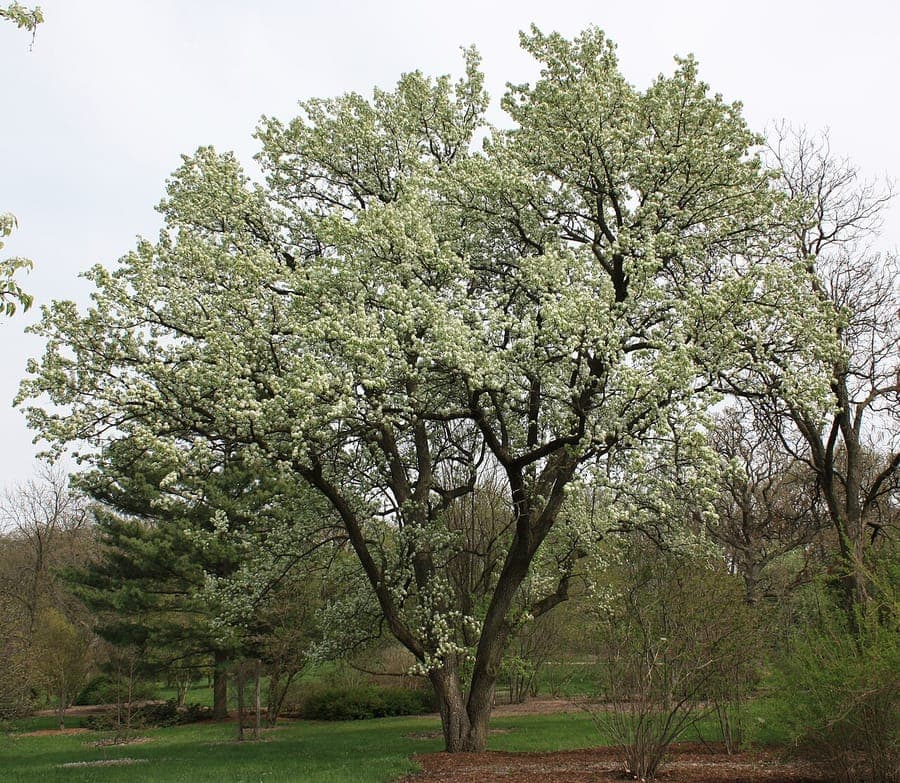
Bruce Marlin / CC BY 3.0, via Wikimedia Commons
Callery Pear (Pyrus calleryana): complete guide
Pyrus calleryana
¿Quieres ver Callery Pear (Pyrus calleryana): complete guide en tu jardín?
1 minuto, sin tarjeta de crédito
Overview
The Callery pear (Pyrus calleryana), also known as the Bradford pear or Chinese pear, is an elegant ornamental tree native to China and Japan that has become beloved worldwide since its introduction in 1871. This tree is particularly cherished for its spectacular white spring blossoms that transform the landscape each year. With a mature height of 26 to 50 feet and neat, compact pyramidal growth habit, this tree fits perfectly into modern gardens, entranceways, and public green spaces.
Behind the attractive appearance lies a highly practical tree. The Callery pear is remarkably hardwearing and thrives under diverse conditions. Whether you live in the warmer south or the cooler north of Europe, this tree adapts and blooms season after season. The combination of low maintenance requirements, moderate growth rate, and long lifespan makes this tree an excellent choice for both novice and experienced gardeners.
Appearance and Bloom
The Callery pear distinguishes itself through its highly distinctive spring flowering. In April through May, thousands of small white flowers blanket the entire canopy in a sea of white. These blossoms have a heavy, sweet fragrance that attracts bees and other pollinators, bringing your garden to life. The flowers are approximately one inch wide and grow in dense, scattered clusters.
After flowering, the tree develops thick foliage with glossy, deep green leaves in an opposite arrangement with sharp points. In autumn, the foliage transforms spectacularly into brilliant shades of red, orange, and yellow before dropping. This makes the Callery pear a true two-season attraction: first white in spring, then green in summer, and fiery colored in fall.
Ideal Location
The Callery pear flourishes in sunny locations where the tree receives at least six to eight hours of direct sunlight daily. A spot on the south or west side of your home is ideal. However, this tree demonstrates remarkable tolerance for partial shade and can still grow well in areas with limited light, although flowering may be less abundant.
Ensure adequate space around the tree - at least 16 to 23 feet away from other large trees, buildings, or utility lines. This prevents mutual competition and allows the tree to fully unfold to its complete beauty.
Soil
The Callery pear is very flexible regarding soil conditions. This tree thrives best in loose, well-draining soil with a pH value between 5.0 and 7.5. Rich, humus-rich earth promotes faster growth and healthier foliage, but this tree can also survive in less ideal conditions.
Ensure the soil does not remain constantly wet, especially not in winter. Waterlogging can lead to root rot. When planting, incorporate compost or well-rotted leaf mold to improve soil structure and optimize water availability.
Diseño gratis
¿Quieres ver Callery Pear (Pyrus calleryana): complete guide en tu jardín? Crea un diseño gratis ahora.
Watering
In the first year after planting, the Callery pear requires regular watering until the root system is well-established. Water when the top layer of soil feels dry - typically once to twice weekly, depending on weather and soil type.
Once established (after one to two years), the Callery pear is very drought-tolerant and requires minimal supplemental water except during prolonged dry periods of more than two weeks without rain. Water deeply and less frequently rather than shallow and regularly; this promotes deeper root development.
Pruning
The Callery pear grows naturally into a neat, pyramidal shape requiring little assistance. Some basic pruning in late winter (February to March, before the growing season) can refine the shape and remove dead or crossing branches.
Remove any thin, damaged, or diseased branches as they grow. Avoid aggressive pruning; this tree responds best to light shaping. Use sharp tools and clean cuts to prevent disease spread.
Maintenance Calendar
Spring (March-May): The growing season begins. Check for pests and diseases. Adjust mulch around the tree base. Enjoy the spectacular bloom.
Summer (June-August): Water during prolonged drought. Monitor for plant diseases. Avoid heavy pruning wounds now.
Autumn (September-November): Enjoy the fall color display. Remove fallen leaves around the tree. No maintenance actions required.
Winter (December-February): Light pruning possible. Protect young trees against heavy snow weight with stakes. Planting season for new trees.
Winter Hardiness
The Callery pear is very cold-hardy throughout Europe, down to USDA zone 5 (-20 degrees Fahrenheit). The tree feels at home from northern regions to southern areas. Young trees may benefit from some winter protection, especially against strong winds. A mulch layer of 2 to 3 inches of organic material around the base helps keep roots warm.
Companion Plants
The Callery pear forms a beautiful composition with:
- Early-blooming bulbs: snowdrops, crocuses, and tulips for March-April color under the tree
- Low-growing shrubs: spirea, dogwood, or rowan varieties for year-round interest
- Upright perennials: delphiniums, salvia, and lavender for summer color around the tree
- Ornamental grasses: feather grass, miscanthus, and fountain grass for texture and movement
Avoid heavy root competitors like alders and birches in close proximity.
Conclusion
The Callery pear is one of the most rewarding and reliable ornamental additions to any garden. With its spectacular spring bloom, attractive fall color, and low maintenance requirements, this tree delivers beauty year after year with minimal effort. Whether you have a small urban garden or a large residential landscape, the Callery pear fits perfectly and will provide decades of horticultural pleasure.
Looking for a Callery pear? Visit local garden centers for a good selection of ornamental pears in various sizes and price ranges. These well-known horticultural suppliers also offer expert advice on placement and care. More information can be found at gardenworld.app, your destination for complete garden solutions.
¿Quieres ver Callery Pear (Pyrus calleryana): complete guide en tu jardín? Crea un diseño gratis ahora.
Sube una foto, elige un estilo y obtén un diseño fotorrealista con lista de plantas en menos de un minuto.
Más de 10.000 jardines diseñados
Sin tarjeta de crédito

