
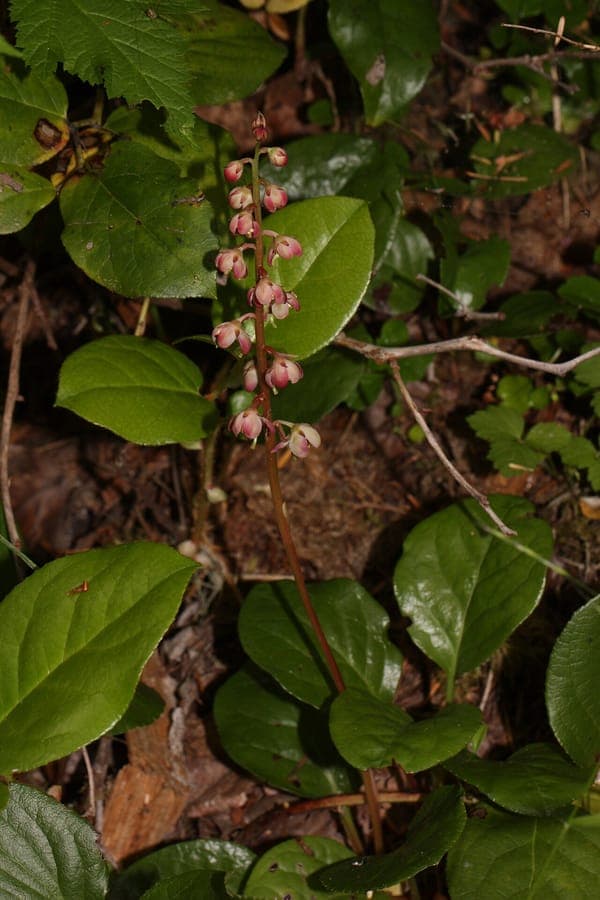
Walter Siegmund (talk) / CC BY-SA 3.0, via Wikimedia Commons
Liver-leaf Wintergreen: complete guide
Pyrola asarifolia
¿Quieres ver Liver-leaf Wintergreen: complete guide en tu jardín?
1 minuto, sin tarjeta de crédito
Overview
Liver-leaf Wintergreen, botanically known as Pyrola asarifolia, is a charming and delicate plant native to subarctic and temperate regions of North America and Asia. This evergreen plant belongs to the Ericaceae family, the same family as rhododendrons and blueberries, which explains its elegant and refined character. While not yet common in temperate gardens, this plant deserves much more attention from enthusiasts of natural, woodland-style gardens. It excels in shaded areas where many other plants struggle to thrive.
For those seeking a quiet, natural garden with shade plantings, Pyrola asarifolia offers a surprising ornament. At gardenworld.app, you can create garden designs that perfectly integrate woodland plantings and shade gardens, where plants like Liver-leaf Wintergreen create natural, subtle textures. This is a plant that appeals to the botanically curious gardener who appreciates what is subtly beautiful.
Appearance & Bloom Cycle
Liver-leaf Wintergreen is a low, evergreen groundcover typically reaching 10 to 20 centimeters in height. Its most characteristic feature is the round, glossy leaves that give the plant its name. These leaves form a basal rosette and have a fine, leathery texture. The foliage remains green year-round, making this plant valuable for winter garden scenes. In cold weather, the leaves can develop a subtle purple-red tint, enhancing the winter appeal.
The flowers of Pyrola asarifolia are small but elegant. They appear in drooping racemes and are typically pink to cream-colored. The blooming period extends from May to July, making this plant a unique addition to woodland gardens. The flowers have a delicate structure and attract small insects such as bees. After flowering, small seed pods develop that can persist into winter, adding extra texture.
Ideal Location: Sun, Shade, or Partial Shade
Liver-leaf Wintergreen naturally grows beneath tree canopies in forests, indicating it prefers partial to full shade. Direct afternoon sun can cause leaf scorch, so a location under deciduous trees or receiving only morning sun is ideal. The plant thrives in deep shade and will actually perform better there than in full sun. A minimum of 2 to 4 hours of indirect light daily is sufficient. This makes it ideal for difficult shaded spots where almost nothing else will grow.
In cooler climates where summer temperatures do not exceed 20 degrees Celsius, more sunlight can be tolerated. In warmer areas, shade is essential. Ensure the plant never receives full midday sun, especially not in south-facing gardens.
Soil & Underground Requirements
Pyrola asarifolia has very specific soil demands. The plant naturally grows in humus-rich, acidic woodland soils. Therefore, a soil with pH 4.5 to 6.0 is essential. The soil must be well-draining yet moisture-retentive. A mixture of garden soil with fine bark chips, sandy loam, and conifer needle debris works excellently. Add organic matter generously - this plant tolerates richer soils than many other woodland plants.
The roots are shallow and fine, so avoid heavy, compacted soils. Ensure the soil never completely dries out but also never becomes waterlogged. For container cultivation, a mixture of rhododendron potting mix with extra fine bark chips is ideal.
Watering: When and How Much
Liver-leaf Wintergreen loves consistently moist soil without waterlogging. In garden soil, the plant usually manages reasonably well with rainfall, but drought periods can cause problems. Water regularly, especially during dry summers. The soil should always feel slightly moist, like a wrung-out sponge.
In pots, more frequent watering is needed, possibly daily in hot summers. Ensure water drains well and the plant never sits in muddy water. Rainwater is preferable to tap water, as this plant is sensitive to water hardness. In winter, reduce watering somewhat, but never let the plant dry out completely.
Diseño gratis
¿Quieres ver Liver-leaf Wintergreen: complete guide en tu jardín? Crea un diseño gratis ahora.
Pruning: When and How
Pruning Pyrola asarifolia is hardly necessary. This is a slow-growing, natural plant that maintains its form well. You can remove dead leaves or faded flowers to keep the plant tidy, but structural pruning can be harmful. The plant grows very low and naturally, so let it do its thing and appreciate its natural form.
If the plant becomes too dense, you can gently remove some branches to allow more light into the center, but this is rarely needed. Heavy pruning can set the plant back decades and must absolutely be avoided.
Maintenance Calendar
- January - February: Check that the plant is not buried under snow. Gently remove dead foliage at the edges, but leave protective leaves intact.
- March - April: Gently remove dead plant material from the previous year. Ensure good drainage after winter rains. Feeding is not needed - this plant prefers poor soils.
- May - June: The plant will begin to bloom. Enjoy the delicate flowers. Ensure regular moisture during rainless periods.
- July - August: Continue regular watering during dry summers. Watch for moisture stress that can cause leaf drop. Seed pods mature now.
- September - October: Gradually reduce watering as it cools. Ensure the plant can store reserves for winter.
- November - December: Ensure snow does not permanently bury the plant (can cause damage). Monitor moisture - plant should not sit in wet mud.
Winter Hardiness & Protection
Liver-leaf Wintergreen is extremely hardy and survives even in southern Scandinavian regions and Canada. It tolerates temperatures down to -30 degrees Celsius without problems. In the Netherlands and Belgium, winter protection is not needed. The plant does not die back but continues growing, especially under snow cover which acts as insulation.
In very severe winters, young material may suffer slightly, but mature plants always regrow. The evergreen foliage remains attractive year-round, adding extra value.
Companion Plants & Combinations
Liver-leaf Wintergreen combines beautifully with other woodland plants. Suitable companions include:
- Helleborus (Christmas Rose): The white or red flowers of helleborus contrast nicely with pyrola's pink blooms.
- Maianthemum (False Lily of the Valley): A delicate woodland plant with similar requirements that creates natural carpets together.
- Polystichum (Christmas Fern): Beautiful ferns provide vertical accent without competition.
- Galax: With glossy foliage, this provides beautiful contrast with delicate pyrola.
- Saxifraga (Saxifrage): Low groundcovers that together form a natural forest floor carpet.
These plants are available at specialized garden centers. Ensure companion plants share the same preference for acidic, humus-rich soil. gardenworld.app can help you realize this natural woodland composition in your garden with a complete garden plan.
Conclusion
Liver-leaf Wintergreen (Pyrola asarifolia) is a beautiful, subtle plant that deserves much more presence in gardens. With patience and attention to specific growing conditions - particularly soil acidity and shade - this elegant plant becomes a wonderful addition to shaded corners of your garden. The delicate flowers, evergreen foliage, and natural beauty make this a plant for those who appreciate woodland gardens and natural plant composition.
¿Quieres ver Liver-leaf Wintergreen: complete guide en tu jardín? Crea un diseño gratis ahora.
Sube una foto, elige un estilo y obtén un diseño fotorrealista con lista de plantas en menos de un minuto.
Más de 10.000 jardines diseñados
Sin tarjeta de crédito


Plantas similares
Zenobia pulverulenta: complete guide
Zenobia pulverulenta
Everything about Zenobia pulverulenta (honeycup): siting, acid soil, pruning and the fragrant white bells, in this complete care guide.
Dwarf huckleberry: complete guide
Gaylussacia dumosa
Everything about dwarf huckleberry (Gaylussacia dumosa): acidic soil, partial shade, pruning and care for this compact North American berry shrub.
Drooping leucothoe: complete guide
Leucothoe fontanesiana
Everything about drooping leucothoe (Leucothoe fontanesiana): shade tolerance, soil, watering, pruning, hardiness and companion plants.