
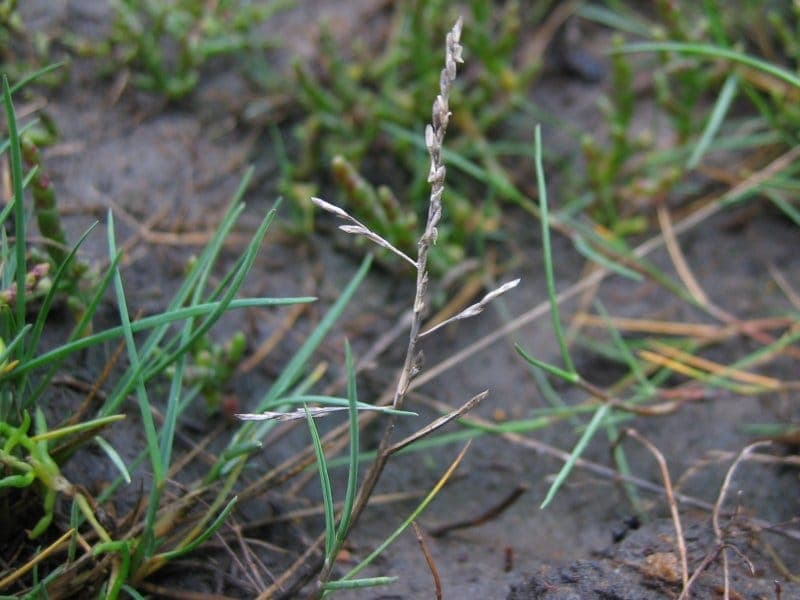
Kristian Peters -- Fabelfroh 15:37, 27 November 2006 (UTC) / CC BY-SA 3.0, via Wikimedia Commons
Saltmarsh Grass (Puccinellia maritima): complete guide
Puccinellia maritima
¿Quieres ver Saltmarsh Grass (Puccinellia maritima): complete guide en tu jardín?
1 minuto, sin tarjeta de crédito
Overview
Saltmarsh grass (Puccinellia maritima) is a remarkable and specialized halophytic grass species native to coastal regions of Europe and the Canary Islands. This extraordinary plant has evolved exceptional salt tolerance, making it a cornerstone of coastal marsh ecosystems where few other plants can survive. For gardeners near the sea or in areas with saline soil conditions, saltmarsh grass offers a unique solution for creating authentic coastal landscapes.
Beyond its ecological significance, this grass introduces subtle texture and authentic maritime character to garden designs. Its fine-textured foliage and compact growth habit make it an elegant choice for wildlife-friendly coastal gardens and natural waterside plantings.
Appearance & Bloom
Saltmarsh grass develops as a low, densely-tufted perennial, typically reaching 15 to 40 centimeters in height. The fine, blue-green leaves form tight mats that stabilize coastal soils and prevent erosion. From May through September, inconspicuous flower spikes emerge, attracting birds and small wildlife seeking seeds.
The distinctive characteristic of saltmarsh grass is its ability to thrive where regular submersion in seawater occurs. Many coastal plants cannot tolerate such extreme salinity, making this grass truly exceptional. The foliage emits a subtle salty aroma when brushed or handled.
Ideal Location
Saltmarsh grass demands full sun exposure, thriving with at least 6 to 8 hours of direct sunlight daily. It performs admirably in windy coastal environments that would damage most garden plants. The grass establishes equally well on low-lying saltmarsh areas and on elevated terrain overlooking the coast.
This plant strongly dislikes shade. For maximum performance, position it near direct seawater or tidal zones. In inland gardens, it works well in salt-affected borders and specialized coastal plant collections.
Soil
Saltmarsh grass demonstrates remarkable preference for saline, often waterlogged substrates. The plant thrives in poor, sandy or clay-rich soils with pH ranges from 6.0 to 7.5. Its specialized root system efficiently extracts nutrients from highly alkaline and salty environments where conventional garden plants fail.
Excellent drainage is beneficial, though saltmarsh grass equally tolerates muddy or regularly-flooded conditions. This grass accepts minimal soil nutrition better than most grassroots species and actually prefers nutrient-poor conditions.
Diseño gratis
¿Quieres ver Saltmarsh Grass (Puccinellia maritima): complete guide en tu jardín? Crea un diseño gratis ahora.
Watering
Saltmarsh grass requires minimal supplemental watering after establishment. In coastal zones, natural rainfall and seawater spray typically suffice entirely. During extended dry periods, occasional watering may help, though the grass demonstrates remarkable drought tolerance.
In inland gardens without natural salt-water exposure, regular watering becomes more important. Avoid stagnant pools, though the grass actually thrives in wet situations.
Pruning
Saltmarsh grass demands minimal pruning and maintenance. Early spring (February to March) allows careful removal of dead material and winter debris. The grass may be cut back to 10-15 centimeters height at winter's end if it appears overgrown.
Never remove more than one-third of the plant in any season. No regular pruning schedule is required; gentle, occasional tidying suffices completely.
Maintenance Calendar
March: Remove dead material and carefully cut back overgrowth. Check salt content in dry soils.
May-June: Observe flowering and seed development. Leave seed heads for bird food.
August-September: Flowering concludes. Minimize water additions.
October-November: No maintenance required; grass prepares for dormancy.
December-February: Freezing is possible in harsh winters. Frost protection rarely needed except in extreme conditions.
Winter Hardiness
Saltmarsh grass is exceptionally hardy throughout European zones, tolerating temperatures to -15 degrees Celsius without damage. Freezing periods pose no threat. No winter protection is necessary in most European climate zones.
During severe winters, snow cover provides marginal benefit. The grass reliably regrows each spring.
Companion Plants
Saltmarsh grass combines beautifully with other coastal species like sea-blite, seakale, and salt marsh-sedge. In saline borders, sea aster and sea thistle provide striking visual contrast.
In wildlife gardens, saltmarsh grass works excellently alongside coastal fescue and salt marsh orchids. This discrete grass adds texture without visual dominance.
Conclusion
Saltmarsh grass represents a unique, ecologically-valuable species offering coastal garden sustainability and authenticity. Its rare salt-tolerance makes it the perfect choice for seaside gardens where conventional plants struggle. With minimal maintenance requirements and maximum ecological benefits, saltmarsh grass is an intelligent choice for authentic coastal landscapes. Discover more unique plants on gardenworld.app and design your perfect coastal garden.
¿Quieres ver Saltmarsh Grass (Puccinellia maritima): complete guide en tu jardín? Crea un diseño gratis ahora.
Sube una foto, elige un estilo y obtén un diseño fotorrealista con lista de plantas en menos de un minuto.
Más de 10.000 jardines diseñados
Sin tarjeta de crédito


Plantas similares
Sporobolus pungens: complete guide
Sporobolus pungens
Sporobolus pungens is a stoloniferous Mediterranean coastal grass with outstanding salt and drought tolerance, perfect for seaside and dry gardens.
Mediterranean aegilops: complete guide
Aegilops biuncialis
Everything about Aegilops biuncialis, a Mediterranean annual grass with ornamental spikes and outstanding drought tolerance for dry gardens.
Silver bluestem: complete guide
Bothriochloa saccharoides
Full guide to Bothriochloa saccharoides (silver bluestem): site, soil, watering, winter hardiness, pruning, and garden companions.