
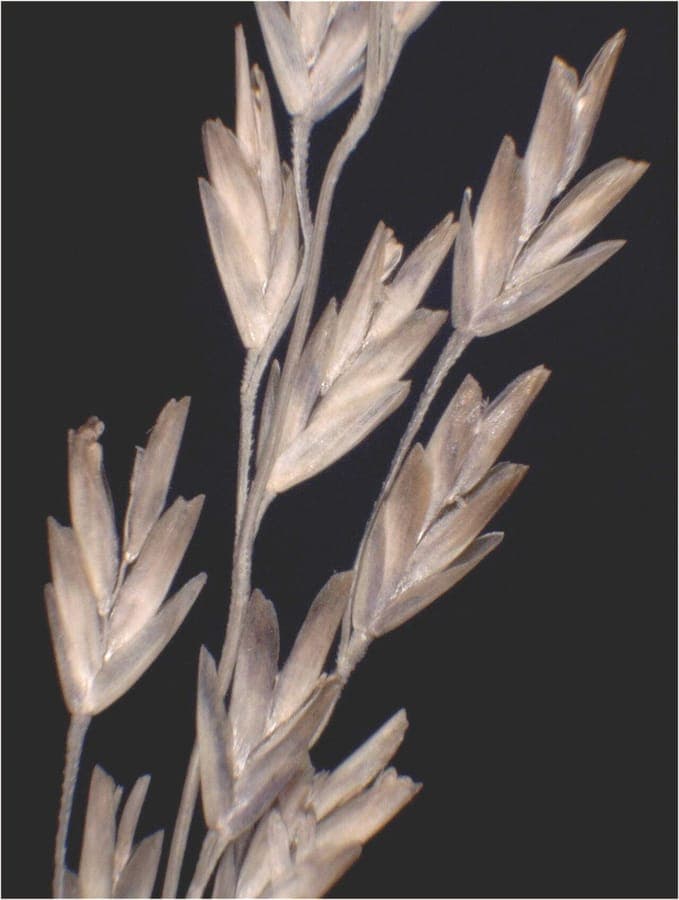
Andrea Moro / CC BY-SA 4.0, via Wikimedia Commons
Puccinellia fasciculata: complete guide
Puccinellia fasciculata
¿Quieres ver Puccinellia fasciculata: complete guide en tu jardín?
1 minuto, sin tarjeta de crédito
Overview
Puccinellia fasciculata, known as Borrer's Saltmarsh-grass, is a remarkable salt-tolerant grass native to coastal marshes and saltwater wetlands of Europe and beyond. This elegant ornamental grass thrives in highly saline environments and tolerates both wet and temporarily dry conditions. With its fine, blue-green foliage and delicate flower spikes, this grass offers unique possibilities for gardeners managing saline soils.
Appearance and growth pattern
Borrer's Saltmarsh-grass forms slender, upright tufts with fine foliage. Leaves are narrow, approximately 20-40 cm long, with blue-green coloration. In summer, delicate flower spikes emerge with minute florets. The grass reaches approximately 30-60 cm height. The appearance is light and elegant, especially appealing in salt-laden coastal breezes.
Ideal location
Puccinellia fasciculata thrives best in sunny coastal locations. Provide at least 6 hours of direct sunshine. This grass loves open, windy places. Plant in coastal gardens or exposed, elevated locations. Inland, it occurs in low-lying areas with periodic water inundation. Avoid deep shade.
Soil requirements
Borrer's Saltmarsh-grass grows naturally in highly saline soils. This grass tolerates salt better than most garden plants. A pH of 7.5 to 8.0 is preferred. Ensure very good drainage without waterlogging. Add sand and gravel to clay soils. This grass tolerates nutrient-poor, sandy soils well. In freshwater gardens, salt additions support optimal growth.
Diseño gratis
¿Quieres ver Puccinellia fasciculata: complete guide en tu jardín? Crea un diseño gratis ahora.
Watering
After planting, maintain moderate moisture until the grass is well-rooted. Thereafter, this grass is very drought-tolerant and independent. In coastal gardens, natural rainwater usually suffices. During dry periods, freshwater can be applied, but this grass also tolerates salt water well. Excessive water is undesirable in very wet areas.
Pruning
Borrer's Saltmarsh-grass requires minimal pruning. In late winter, withered leaves and stems can be removed. This grass may be cut back short if growth becomes excessive. Prune carefully to avoid damaging the crowns. Generally, the grass grows freely without intervention.
Maintenance calendar
Spring (March-May): Growth period, rainwater usually sufficient. Summer (June-August): Flowering time, enjoy fine texture. Autumn (September-October): Seed availability, wildlife food. Winter (November-February): Dormancy, natural leaf drop.
Winter hardiness
Puccinellia fasciculata is hardy in temperate European climates. The grass tolerates temperatures to approximately -10 degrees Celsius. In very cold alpine areas, protection may be needed. Once established, this grass shows strong winter hardiness, especially in coastal gardens.
Companion plants
Combine with other salt-tolerant plants such as lavender or rosemary. Plant with other saltmarsh grass species. Fine blue tone contrasts beautifully with silver-leaved coastal shrubs. Use as edging in coastal gardens. Ideal for gardens experiencing heavy salt spray.
Final thoughts
Puccinellia fasciculata is an excellent choice for coastal gardens with saline soils. With its salt tolerance and elegant form, this grass adds lasting value. Perfect for challenging saline locations. Plant for long-term salt garden solutions. Available from specialized grass nurseries. Find more inspiration at gardenworld.app/en
¿Quieres ver Puccinellia fasciculata: complete guide en tu jardín? Crea un diseño gratis ahora.
Sube una foto, elige un estilo y obtén un diseño fotorrealista con lista de plantas en menos de un minuto.
Más de 10.000 jardines diseñados
Sin tarjeta de crédito


Plantas similares
Sporobolus pungens: complete guide
Sporobolus pungens
Sporobolus pungens is a stoloniferous Mediterranean coastal grass with outstanding salt and drought tolerance, perfect for seaside and dry gardens.
Mediterranean aegilops: complete guide
Aegilops biuncialis
Everything about Aegilops biuncialis, a Mediterranean annual grass with ornamental spikes and outstanding drought tolerance for dry gardens.
Silver bluestem: complete guide
Bothriochloa saccharoides
Full guide to Bothriochloa saccharoides (silver bluestem): site, soil, watering, winter hardiness, pruning, and garden companions.