
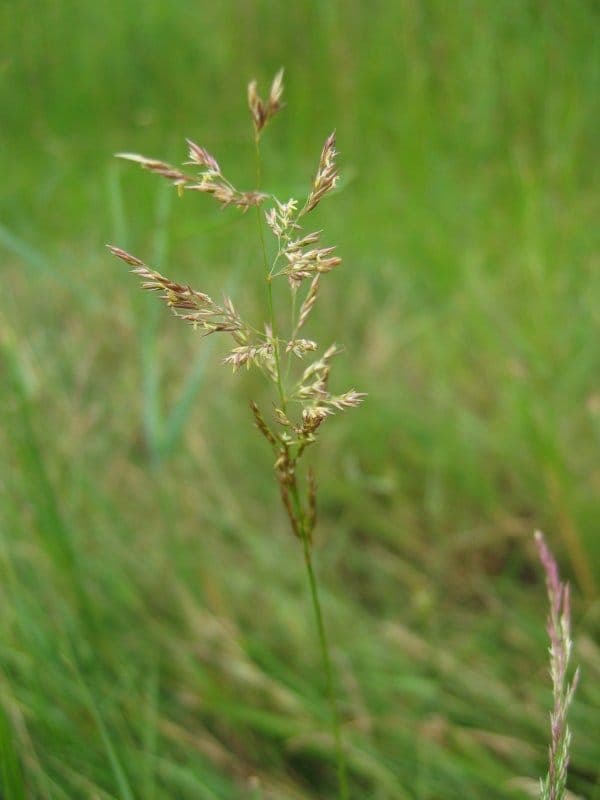
Kristian Peters -- Fabelfroh 07:20, 11 July 2006 (UTC) / CC BY-SA 3.0, via Wikimedia Commons
European alkali grass: complete guide
Puccinellia distans
¿Quieres ver European alkali grass: complete guide en tu jardín?
1 minuto, sin tarjeta de crédito
European alkali grass (Puccinellia distans) is a specialized grass that grows on salt-affected, marginal soils where little else thrives. This small Eurasian grass tolerates extreme conditions and offers elegant structure to problem gardens. With fine culms and small but abundant flowers, Puccinellia distans is a unique choice for designers seeking plant material for challenging soils.
Overview
Puccinellia distans, known as European alkali grass or alkali grass, is a small, frost-hardy grass native to subarctic to temperate Eurasia. This grass grows only 20-40 centimeters tall, making it highly suitable for small spaces and marginal sites. The name refers to its ability to tolerate salt-affected, alkaline soils where other plants fail.
This grass is known for extreme tolerance and ability to survive in unfavorable conditions. In gardens it is valued for rapid establishment, fine texture, and clean, open form. This is a valuable specialist plant for difficult salt-affected soils.
Appearance and Bloom
The culms are fine, slender, and light green, reaching only 20-40 centimeters height. The leaves are narrow, finer than most ornamental grasses. Flowers appear in June in loose panicles, light greenish in color, reaching 5-10 centimeters high.
The grass blooms early summer and produces small, inconspicuous seeds. Seeds ripen in July-August. Plants maintain compact, closed form without invasive behavior. This makes it suitable for small gardens where growth control matters.
Ideal Location
Puccinellia distans grows best in open, sunny locations with minimum 6-8 hours direct sunlight daily. This grass tolerates semi-shade but bloom and seed set may reduce. A sheltered position against strong winds is preferred, though plant possesses considerable wind resistance.
Use this grass for salt-affected soils where other plants fail, along roads with salt application, near pools and marshes. This is the grass of choice for specialist salt-affected soils and alkaline sites. Excellent for small groupings in modern gardens seeking structure.
Soil
Puccinellia distans is extremely specialized for salt-affected soils with pH 6-8. Plant thrives in alkaline soils where most other grasses fail to survive. This makes it ideal for coastal areas or sites with salt-washed ground.
At planting, no further improvement needed in salt-affected soils. In normal gardens this grass can be planted in poor, dry soil. Drainage is not critical as plant is very drought-tolerant. No special feeding required.
Diseño gratis
¿Quieres ver European alkali grass: complete guide en tu jardín? Crea un diseño gratis ahora.
Watering
Once established, Puccinellia distans is very drought-tolerant and requires minimal water. This grass thrives in dry, salt-affected soils where little else grows. Water young plants during first growing season until roots go deep.
This grass is valuable for water-conserving gardens and dry sites. Even in very dry years it grows with minimal care. This water-saving specialist is ideal for climates with drought periods.
Pruning
Puccinellia distans requires minimal pruning. This small grass grows in compact forms without guidance. In spring, prune dead foliage back to ground when new growth begins.
Plant is not invasive and maintains natural form. No aggressive pruning needed. For neat appearance, remove only dead sections in March-April before growth begins.
Maintenance Calendar
March-April: Check new growth; remove dead foliage. No feeding. May-June: Enjoy rapid growth. Water only if very dry. July-August: Enjoy flower panicles. Check seed set. September-October: Seeds ripen; allow plant to disperse seed. November-February: Remove dead foliage if needed. Minimal maintenance.
Winter Hardiness
Puccinellia distans is very hardy to -30C or lower, thus suitable for all temperate regions. This grass tolerates severe frost without protection. In winter foliage may die back but plants recover fully in spring.
Use winter foliage loss to your advantage: clean appearance by pruning in February before new growth.
Companion Plants
Combine European alkali grass with other salt-tolerant plants like artemisia, limonium, or other specialist grasses. Plant in groupings for effect. Associate with low succulents on very dry salt sites.
In modern gardens with salt problems, association with other grass species creates texture. For coastal gardens, pairing with salt-tolerant native plants.
Closing Thoughts
Puccinellia distans opens possibilities on problematic salt-affected sites. This specialized grass thrives where little else grows and requires minimal care. Ideal for designers seeking plant material for challenging soils. Experienced gardeners value it for salt tolerance and water-saving value. Beginners appreciate low maintenance requirements. Source plant material from specialist garden centers supporting salt-affected applications. Visit gardenworld.app for more advice on specialist grasses and difficult sites. Discover how alkali grass can transform your problematic spaces. More inspiration at gardenworld.app for specialist garden design.
¿Quieres ver European alkali grass: complete guide en tu jardín? Crea un diseño gratis ahora.
Sube una foto, elige un estilo y obtén un diseño fotorrealista con lista de plantas en menos de un minuto.
Más de 10.000 jardines diseñados
Sin tarjeta de crédito


Plantas similares
Sporobolus pungens: complete guide
Sporobolus pungens
Sporobolus pungens is a stoloniferous Mediterranean coastal grass with outstanding salt and drought tolerance, perfect for seaside and dry gardens.
Mediterranean aegilops: complete guide
Aegilops biuncialis
Everything about Aegilops biuncialis, a Mediterranean annual grass with ornamental spikes and outstanding drought tolerance for dry gardens.
Silver bluestem: complete guide
Bothriochloa saccharoides
Full guide to Bothriochloa saccharoides (silver bluestem): site, soil, watering, winter hardiness, pruning, and garden companions.