
J.M.Garg / CC BY-SA 4.0, via Wikimedia Commons
Pterocarpus santalinus: complete guide
Pterocarpus santalinus
¿Quieres ver Pterocarpus santalinus: complete guide en tu jardín?
1 minuto, sin tarjeta de crédito
Overview
Pterocarpus santalinus, commonly known as red sandalwood, red sanders, or Indian rosewood, is a precious slow-growing tree native to the southern Indian peninsula. This valuable hardwood tree has been harvested for centuries for its stunning deep red heartwood used in fine woodwork, furniture, and traditional medicine. The species is now protected under Indian wildlife law and CITES appendices due to overharvesting. Beyond its native range in India and Sri Lanka, this tree is extremely challenging to cultivate.
Appearance and bloom
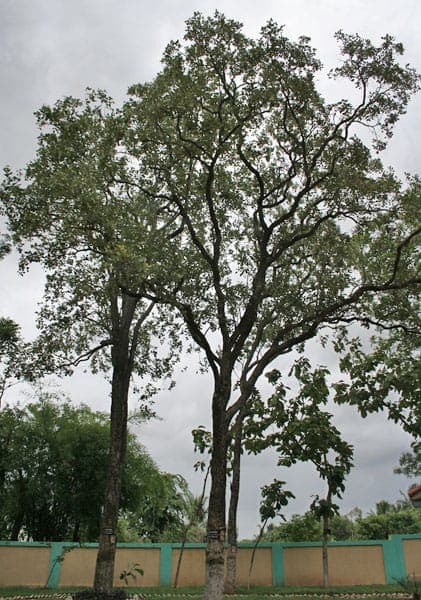
Pterocarpus santalinus matures as a medium to large tree reaching 15-20 meters in its natural habitat. The tree develops a broad, well-branched crown with glossy compound foliage. The imparipinnate leaves are smooth, deep green, and highly ornamental. Small yellow to orange flowers appear in spring clusters. The wood itself is the main attraction: intensely red-crimson heartwood that deepens with age and exposure.
Ideal location
This tree thrives exclusively in warm tropical climates with high humidity. It demands full sun with shelter from harsh midday exposure. Wind protection is essential as the wood is brittle when young. In temperate regions, this tree can only survive in heated greenhouses or conservatories.
Soil
Pterocarpus santalinus prefers fertile, well-draining loamy soil with pH around 7.0. It develops strong tap roots that penetrate deeply. For container cultivation, use rich potting compost amended with extra slow-release fertilizer. Good drainage prevents root issues.
Diseño gratis
¿Quieres ver Pterocarpus santalinus: complete guide en tu jardín? Crea un diseño gratis ahora.
Watering
Regular watering is essential during active growth in tropical rainy seasons. This tree is accustomed to seasonal monsoons. Daily watering or frequent misting maintains vigor in cultivation. Reduce water during cooler rest periods, though in the tropics dormancy is minimal.
Pruning
Minimal pruning needed. Remove dead branches and congested growth to maintain an open canopy. Allow the tree to develop its natural broad form. Avoid heavy pruning which stresses slow-growing specimens.
Maintenance calendar
- Spring (March-May): Flowering period. Heavy watering needs.
- Summer (June-September): Peak growth. Regular watering and fertilizing.
- Autumn (October-November): Growth slows. Reduce watering gradually.
- Winter (December-February): Rest period. Minimal water, maintain warmth.
Winter hardiness
Pterocarpus santalinus cannot tolerate frost. Temperatures below 10 Celsius cause stress and damage. Below 5 Celsius is fatal. Outside tropical regions, greenhouse cultivation is mandatory.
Companion plants
In tropical gardens, pair with other tropical timber and fruit trees like mango, jackfruit, and neem. Underplant with tropical groundcovers like Homalanthus or Rhoeo. Create a layered tropical canopy effect.
Closing
Pterocarpus santalinus represents the intersection of horticulture and conservation. While a magnificent tree, it's protected under international law due to overexploitation. Cultivation outside its native range is extremely difficult and impractical for most gardeners. If you encounter plants offered for sale, verify they're legally propagated from cultivated stock, not wild-collected. For tropical garden design ideas, visit gardenworld.app. For greenhouse management of challenging tropical species, consult gardenworld.app for specialized growing guides.
¿Quieres ver Pterocarpus santalinus: complete guide en tu jardín? Crea un diseño gratis ahora.
Sube una foto, elige un estilo y obtén un diseño fotorrealista con lista de plantas en menos de un minuto.
Más de 10.000 jardines diseñados
Sin tarjeta de crédito


Plantas similares
Tall Silky Lupine: complete guide
Lupinus elatus
Tall silky lupine is a fast-growing Californian perennial with silvery foliage and blue-purple flower spikes, ideal for a prairie-style garden.
Garfield Lupine: complete guide
Lupinus garfieldensis
The Garfield lupine is a rare, fast-growing American perennial for alkaline, dry grassland gardens, with striking blue flower spikes.
Lupinus elegans: complete guide
Lupinus elegans
Lupinus elegans, the elegant lupine, is a spectacular blooming plant from Mexico with blue flower spikes. Care, cultivation and garden use.