
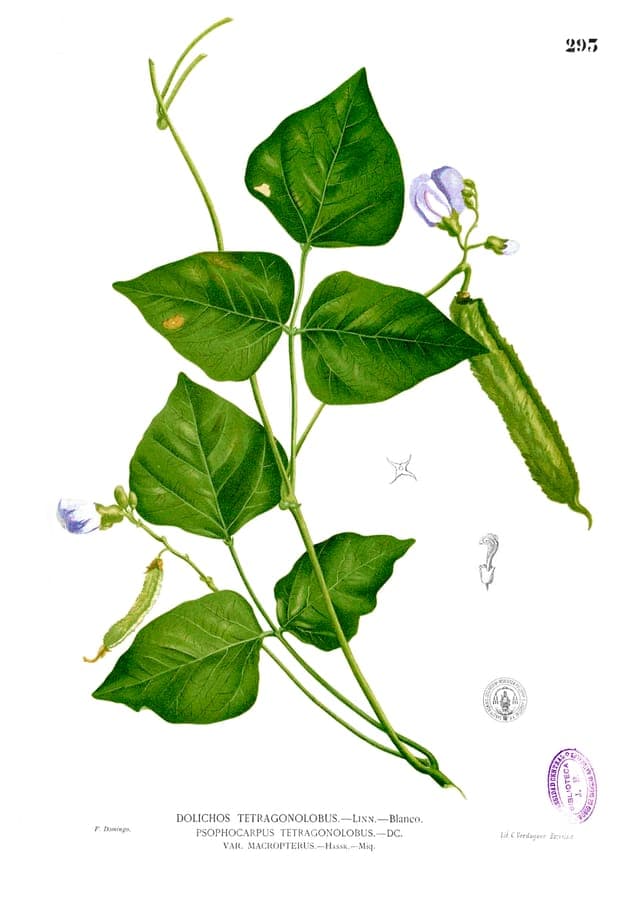
Francisco Manuel Blanco (O.S.A.) / Public domain, via Wikimedia Commons
Winged bean: complete guide
Psophocarpus tetragonolobus
¿Quieres ver Winged bean: complete guide en tu jardín?
1 minuto, sin tarjeta de crédito
Overview
The winged bean (Psophocarpus tetragonolobus), also called goa bean or asparagus pea, is a tropical vegetable of African origin now popular in Asian cuisine. This climbing legume produces distinctive four-sided pods with wing-like edges. The entire plant is edible and highly nutritious with impressive protein content.
Appearance & bloom
Winged beans are climbing plants reaching 2-3 meters with purple, pink or white flowers. The characteristic pods have four papery wings running lengthwise, making them distinctly recognizable. Flowers appear in long racemes and attract pollinators. Young immature pods taste best, tender and mild.
Ideal location
Winged beans thrive in warm, sunny spots with 6-7 hours of direct light daily. They love warmth and warm soil. In temperate zones, protection is essential. Plant near a warm wall or in a greenhouse. They perform better in sheltered gardens with southeast exposure.
Soil
Winged beans grow in nutrient-rich, well-draining soil with pH 6.0-7.0. As legumes, they fix nitrogen; work compost in before planting. Poor soils improve with organic matter. Ensure good structure through mulching and proper drainage.
Watering
Young plants need regular water, especially during dry periods. Once established, they tolerate moderate drought. Water consistently for even moisture. Excessive water causes root rot problems. Mulching helps retain soil moisture effectively.
Diseño gratis
¿Quieres ver Winged bean: complete guide en tu jardín? Crea un diseño gratis ahora.
Pruning
Winged beans respond well to support and guidance systems. Provide sturdy supports - rope, stakes or netting. Remove lower leaves for air circulation. Pruning side shoots can improve later productivity and plant structure.
Maintenance calendar
Spring: plant after last frost, install supports. Summer: water regularly, feed every 4 weeks. Fall: harvest continuously, frost kills the plant. Winter: store seeds for next season indoors.
Winter hardiness
Winged beans are very frost-sensitive and die below 10°C. They're annuals in temperate zones. Harvest all fruit before frost. Seeds can be stored in cool conditions for next growing season.
Companion plants
Winged beans grow well with corn (Three Sisters), squash, and other vegetables. Their nitrogen fixation benefits neighboring plants. Train them alongside support plants. Avoid overcrowding the garden.
Closing
Winged beans are interesting tropical vegetables that are both nutritious and delicious. With warmth, support, and regular watering, they deliver extended harvests throughout the season. Ideal for gardeners wanting something exotic to grow.
For supplies: Find seeds and plants at major garden retailers. Visit gardenworld.app/en for personalized growing advice and design consultation. Explore gardenworld.app/en/plants for more vegetable information.
¿Quieres ver Winged bean: complete guide en tu jardín? Crea un diseño gratis ahora.
Sube una foto, elige un estilo y obtén un diseño fotorrealista con lista de plantas en menos de un minuto.
Más de 10.000 jardines diseñados
Sin tarjeta de crédito


Plantas similares
Tall Silky Lupine: complete guide
Lupinus elatus
Tall silky lupine is a fast-growing Californian perennial with silvery foliage and blue-purple flower spikes, ideal for a prairie-style garden.
Garfield Lupine: complete guide
Lupinus garfieldensis
The Garfield lupine is a rare, fast-growing American perennial for alkaline, dry grassland gardens, with striking blue flower spikes.
Lupinus elegans: complete guide
Lupinus elegans
Lupinus elegans, the elegant lupine, is a spectacular blooming plant from Mexico with blue flower spikes. Care, cultivation and garden use.