
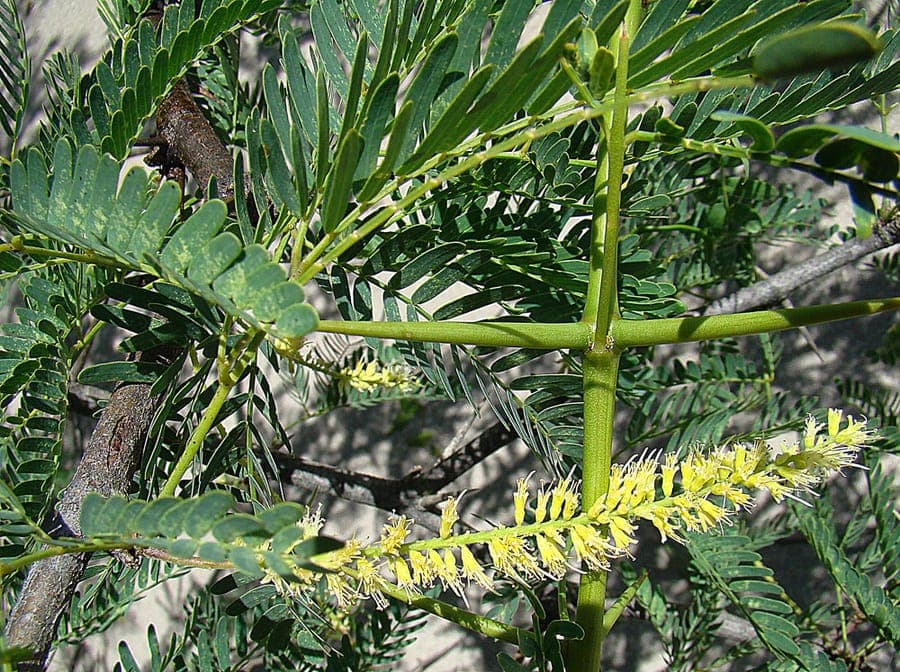
Dick Culbert from Gibsons, B.C., Canada / CC BY 2.0, via Wikimedia Commons
Prosopis juliflora: complete guide
Prosopis juliflora
¿Quieres ver Prosopis juliflora: complete guide en tu jardín?
1 minuto, sin tarjeta de crédito
Overview
Prosopis juliflora, better known as Mesquite or Algarroba, is a robust tree from tropical America, renowned for its extreme drought tolerance and architectural beauty. This tree reaches 8-12 meters tall and offers fine, elegant foliage and yellow, pleasantly scented flowers. It's becoming increasingly popular in Mediterranean and semi-arid gardens due to its dual nutritional benefits and low water requirements.
The tree produces edible pods traditionally used as a food source. With its valuable wood and nutritious products, and its ability to improve poor soil, Mesquite is a valuable addition to sustainable gardens.
Appearance and bloom
Prosopis juliflora grows as a narrow tree-form or shrubby specimen with multiple branches. The bark is grey to brown, smooth on young plants, rougher on older specimens. The leaves are fine, compound-pinnate (twice-compound), creating a light, airy look.
From May through September, flowering specimens produce numerous yellow to cream-colored flowers in spike-like clusters. These are pleasantly musky-scented.
The fruits are long, thin pods reaching 10-30 cm, yellow to brown in color. These pods contain sweet seeds surrounded by starch and are highly nutritious.
Ideal location
Mesquite grows best in full sun, with at least 6-8 hours of direct sunlight daily. The tree is highly heat-loving and thrives in hot, dry climates. It cannot grow well in cold.
The tree is extremely wind and salt-resistant and suitable for windy positions.
Diseño gratis
¿Quieres ver Prosopis juliflora: complete guide en tu jardín? Crea un diseño gratis ahora.
Soil
Mesquite thrives in very poor, dry, sandy or gritty soil. It can grow in much more eroded soil than many other trees. Well-draining soil is absolutely essential - the tree cannot tolerate wet feet.
The tree is extremely salt-tolerant and can grow in coastal regions.
Watering
Mesquite is extremely drought-tolerant once established. Water regularly during the first or two seasons. After establishment, the tree rarely requires supplemental water except during extreme drought.
The tree can survive months without rain.
Pruning
Minimal pruning required. Remove dead branches and shape the tree for optimal form. The tree can be heavily pruned for more compact growth.
The tree may grow slowly, especially in arid regions.
Maintenance calendar
April-May: Growth begins, bloom. June-August: Fruit development. September: Bloom ends. October-March: Dormancy and rest period.
The tree is highly maintenance-friendly.
Winter hardiness
Mesquite is not winter hardy and cannot tolerate frost below 5C. The tree grows only in warm climates outdoors, though it can be grown in containers in cold areas.
Companion planting
Mesquite combines well with other drought-resistant species such as acacia, agave, and yucca in xeriscape designs.
Closing
Prosopis juliflora offers a unique combination of drought tolerance, nutritional value, and architectural beauty. For gardeners in hot, dry climates, this is a valuable tree choice.
At GardenWorld, we help design sustainable gardens. Visit gardenworld.app for more ideas.
Check local availability at garden centers and nurseries near you.
¿Quieres ver Prosopis juliflora: complete guide en tu jardín? Crea un diseño gratis ahora.
Sube una foto, elige un estilo y obtén un diseño fotorrealista con lista de plantas en menos de un minuto.
Más de 10.000 jardines diseñados
Sin tarjeta de crédito


Plantas similares
Tall Silky Lupine: complete guide
Lupinus elatus
Tall silky lupine is a fast-growing Californian perennial with silvery foliage and blue-purple flower spikes, ideal for a prairie-style garden.
Garfield Lupine: complete guide
Lupinus garfieldensis
The Garfield lupine is a rare, fast-growing American perennial for alkaline, dry grassland gardens, with striking blue flower spikes.
Lupinus elegans: complete guide
Lupinus elegans
Lupinus elegans, the elegant lupine, is a spectacular blooming plant from Mexico with blue flower spikes. Care, cultivation and garden use.