
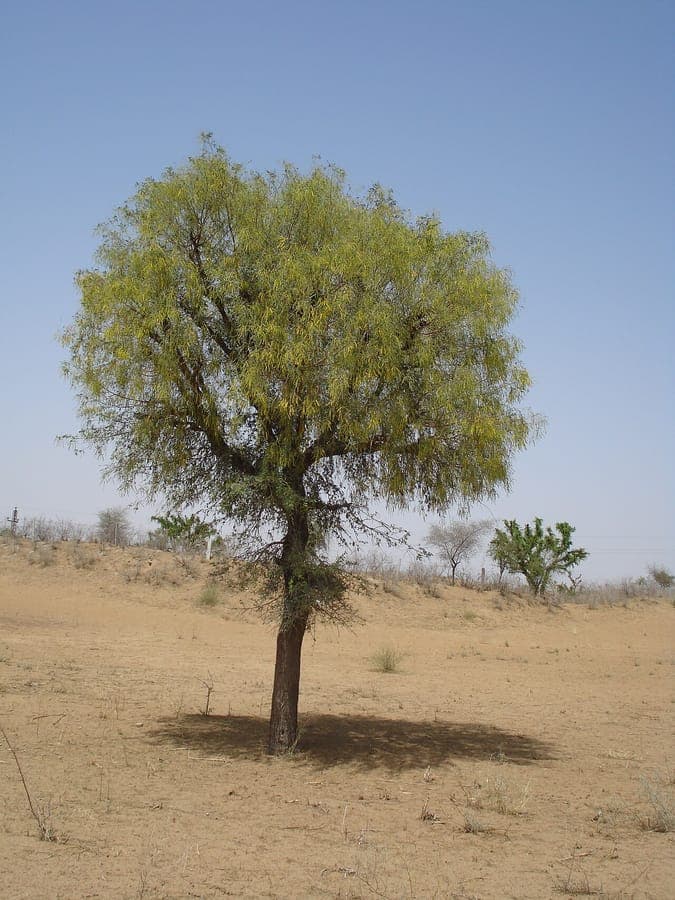
LRBurdak / CC BY-SA 4.0, via Wikimedia Commons
Prosopis cineraria: complete guide
Prosopis cineraria
¿Quieres ver Prosopis cineraria: complete guide en tu jardín?
1 minuto, sin tarjeta de crédito
Overview
Prosopis cineraria, also known as Jandi or Ghaf, is an important utility tree from the Arabian Peninsula and parts of Asia. This tree is celebrated for its exceptional drought resistance and ability to survive in very arid conditions. It is one of the most valuable trees for desert regions due to its rapid growth, nutritional value, and ecological benefits. The tree can reach 12-25 meters tall and provides valuable shade.
Appearance & Bloom
Jandi is a tree with an irregular to inverted-conical crown. The bark is gray and deeply furrowed. The most characteristic feature is its fine, doubly-compound (bipinnate) leaves that create a delicate, feathery appearance. The flowers are small, yellow-greenish, and appear in elongated, dense flower clusters. The flowering period is brief and typically follows rainfall. The fruits are elongated, brown seed pods that are very sweet and eagerly consumed by animals.
Ideal Location
Jandi is extremely drought-tolerant and can grow in very arid to semi-arid areas where annual rainfall is less than 200 mm. The tree grows best in open, sunny locations with good air circulation. It tolerates wind and saline conditions. The tree can also grow in partial shade, although growth is then slower. Place the tree where it receives full sun for optimal growth.
Soil
Jandi can grow in a broad range of soils but thrives best in sandy, well-draining soils. The tree tolerates heavy clay soils and even saline soils. Alkaline soils are suitable. The plant can grow on poor soils with minimal nutrients, which is a great advantage in desert regions. Moderate drainage is sufficient; waterlogging must be avoided.
Diseño gratis
¿Quieres ver Prosopis cineraria: complete guide en tu jardín? Crea un diseño gratis ahora.
Watering
Once established, Jandi is highly drought-tolerant and requires minimal water. During the first 1-2 years, water regularly to establish the tree well. After that, irrigation can be limited to occasional water during extreme drought. In very dry climates, the tree can grow without supplemental water. Avoid overwatering; waterlogging can cause root rot.
Pruning
Jandi requires minimal pruning. Remove dead, damaged, or diseased branches in early spring. Check the tree's form; excessive pruning can negatively affect its natural shape. Dead wood can be removed for safety. Under normal conditions, the tree grows well without regular pruning.
Maintenance Calendar
Spring: Plant new trees or expand. Remove winter damage. Summer: Water regularly in first years. Autumn: Harvest fruits as needed. Winter: Minimal maintenance; tree is fully dormant.
Winter Hardiness
Jandi is moderately hardy but grows best in warm climates. The tree tolerates temperatures down to about -5 degrees Celsius when mature, but young trees are more sensitive. In temperate frost-free climates, the tree can remain outdoors, but in more northern regions, it must be grown indoors or in a greenhouse. The tree doesn't require winter dormancy.
Companion Plants
Jandi can grow alongside other drought-tolerant trees such as acacias, neem, and date palms. For underplanting, xeric herbs and shrubs can be used. Find more combinations for arid gardens on gardenworld.app. Jandi can also be underplanted with lavender and salvias.
Closing
Jandi is an exceptionally valuable tree for arid climates. With minimal maintenance, this tree grows for years. Available at major garden centers. Discover more plant guides on gardenworld.app.
¿Quieres ver Prosopis cineraria: complete guide en tu jardín? Crea un diseño gratis ahora.
Sube una foto, elige un estilo y obtén un diseño fotorrealista con lista de plantas en menos de un minuto.
Más de 10.000 jardines diseñados
Sin tarjeta de crédito


Plantas similares
Tall Silky Lupine: complete guide
Lupinus elatus
Tall silky lupine is a fast-growing Californian perennial with silvery foliage and blue-purple flower spikes, ideal for a prairie-style garden.
Garfield Lupine: complete guide
Lupinus garfieldensis
The Garfield lupine is a rare, fast-growing American perennial for alkaline, dry grassland gardens, with striking blue flower spikes.
Lupinus elegans: complete guide
Lupinus elegans
Lupinus elegans, the elegant lupine, is a spectacular blooming plant from Mexico with blue flower spikes. Care, cultivation and garden use.