
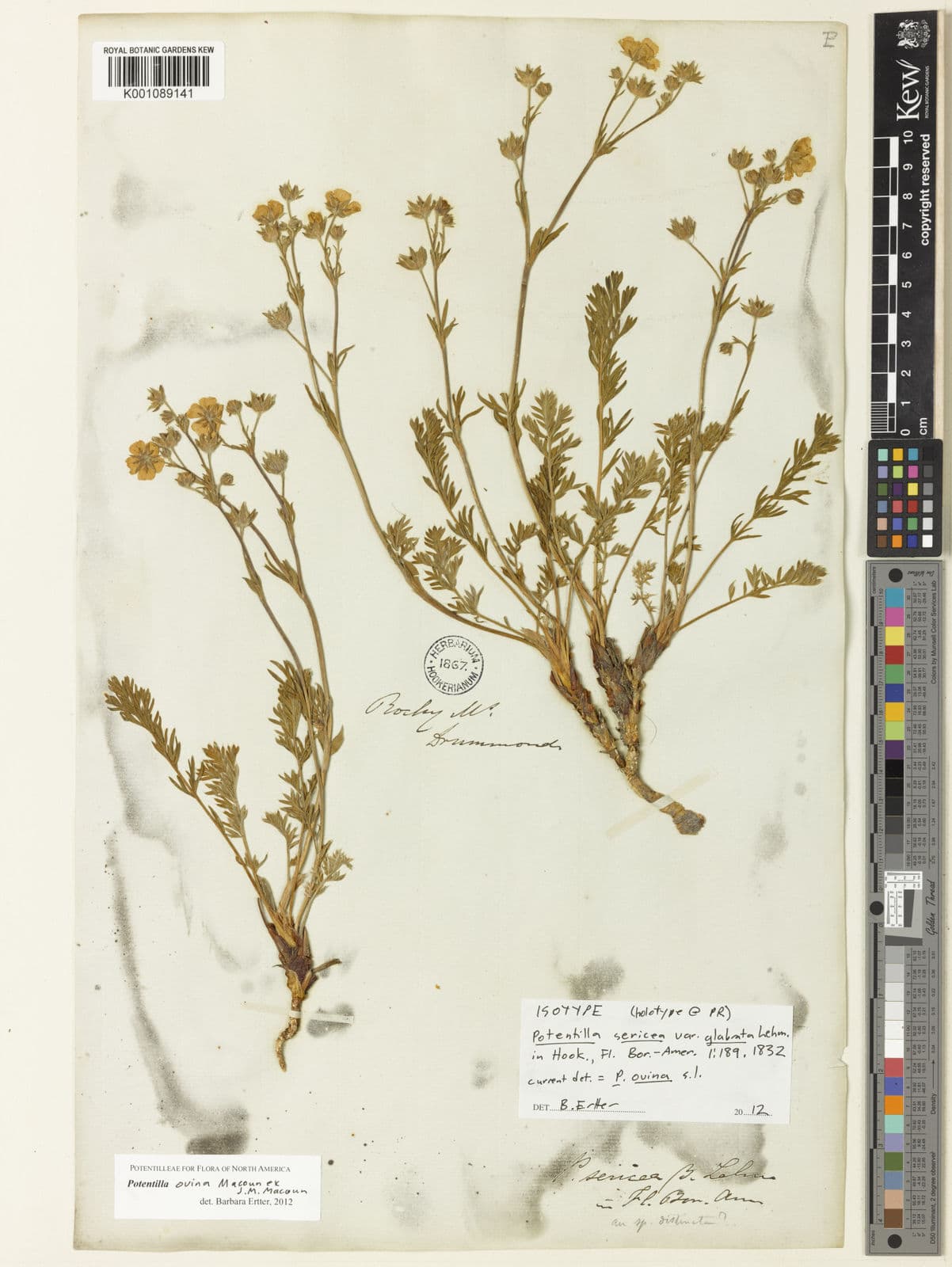
Potentilla ovina: complete guide
Potentilla ovina
¿Quieres ver Potentilla ovina: complete guide en tu jardín?
1 minuto, sin tarjeta de crédito
Overview
Potentilla ovina, commonly known as sheep cinquefoil, is a refined yet robust perennial from the mountain meadows of western North America and Canada. This member of the rose family (Rosaceae) grows naturally on alpine pastures where sheep graze - hence the name "ovina" (of sheep). The plant forms compact, loose mats of finely divided foliage with abundant yellow flowers.
This is a specialist in alpine conditions, naturally occurring on dry, rocky slopes, open mountain meadows, and alpine scree. It's a plant for those seeking authentic alpine character in their gardens.
Appearance and Bloom
Potentilla ovina forms open, airy mats of very finely divided, silvery-green foliage. The leaves are deeply compound, with five to seven leaflets per leaf, each leaflet finely toothed. In spring the foliage can appear almost silvery; by summer it takes on more green tones.
Flowers are small but abundant: bright yellow, approximately three-quarters to one inch in diameter, appearing from June through August. They're borne on short stems above the foliage, creating an airy, graceful flowering display. The bloom period extends into September in favorable years.
Following bloom, small fruits develop, allowing modest self-seeding. Fall foliage remains attractive and may persist clean until winter.
Ideal Location
Sheep cinquefoil demands full sun for optimal blooming: at least six to eight hours of direct sunlight daily. In very hot climates, light afternoon shade may be appreciated, but full sun is preferred.
Ideal for alpine rock gardens, on mountain slopes, scree areas, alpine troughs, and containers (with excellent drainage). Avoid dense shade and very moist sites. This plant is extremely wind-tolerant; wind damage is rarely an issue.
Use this plant in alpine troughs, steep borders, and as underplanting beneath dwarf alpine shrubs.
Soil
Well-draining soil is essential. Heavy clay leads to rot. Ideal composition: gravel, grit, coarse sand with minimal fines. pH neutral to slightly acidic (6.0-7.5).
In very heavy gardens, create a raised bed or mound with 50% gravel/grit, 30% coarse sand, 20% garden soil. Avoid water-retentive amendments.
Soil may be poor. Indeed: poor soil promotes blooming; rich soil promotes excessive foliage.
Watering
Once established, watering is minimal. This is a plant for dry conditions. During normal rainfall, no supplemental water is needed. During drought exceeding four weeks: limited watering, then allow drying.
In container culture: water only when the top inch is completely dry. In very hot weather, containers may need more frequent watering, but still not excessively.
Drought is preferable to moisture for this plant.
Pruning
Scarcely needed. The plant grows naturally compact. Remove only dead foliage in early spring (March-April) if desired.
Damaged or yellowed leaves may be gently removed. Deadheading is unnecessary; flowers naturally fade gracefully.
Maintenance Calendar
January-February: Check after extreme frost. Protection is virtually never needed.
March-April: Remove dead foliage. Growing season begins.
May-June: Plant grows actively. Monitor moisture.
June-August: Peak blooming. Water only during extreme drought.
September-October: Bloom decreases. Plant prepares for winter.
November-December: Dormancy. No water needed.
Winter Hardiness
Potentilla ovina is extremely cold-hardy, withstanding temperatures to -35°C (-31°F) without protection. This plant thrives in USDA zones 3-4 and colder. Snow cover provides additional protection in very harsh winters.
Diseño gratis
¿Quieres ver Potentilla ovina: complete guide en tu jardín? Crea un diseño gratis ahora.
Companion Plants
Attractive combinations with:
- Other alpine Potentilla species
- Alpine Dianthus varieties
- Dwarf conifers: Juniperus communis 'Compressa'
- Alpine grasses: Festuca ovina, Stipa species
- Silene acaulis, Androsace
- Stone as sculptural element
Propagation
Potentilla ovina propagates most easily from seed, cuttings, or division, with seed being the most natural method for this mountain native. Collect the small fruits in August-September once they feel brown and dry, and sow immediately in a mix of 50% grit and 50% seed compost. Like many alpine plants, the seed needs a cold period: leave seed trays outdoors for eight to ten weeks at near-freezing temperatures before bringing them in during March for germination at 15-18°C (59-64°F), which takes three to six weeks.
Cuttings offer a faster method. In June or July, take semi-ripe shoots 2 to 3 inches (5 to 7 cm) long, strip the lower leaves, and dip the cut end in rooting hormone. Place cuttings in a mix of coarse sand and perlite in bright, indirect light; rooting takes four to six weeks.
Division works well on plants at least three years old. Lift the clump in March-April, divide it into sections 4 to 6 inches (10 to 15 cm) across with at least two growth points each, and replant immediately 8 to 10 inches (20 to 25 cm) apart. Keep the soil moist for the first few weeks until new growth appears.
Pests and Diseases
Potentilla ovina generally stays largely pest-free thanks to its origin in nutrient-poor mountain grasslands. Aphids may colonize young spring shoots; a strong water spray or insecticidal soap usually suffices. In hot, dry summers spider mites can become active, recognizable by fine webbing between the leaves; increased humidity slows the infestation.
In container culture, vine weevil larvae pose the greatest danger: they feed unnoticed on the roots until the plant suddenly wilts. A nematode treatment in August-September works best as prevention.
Root rot from waterlogged soil is by far the most serious threat and almost always fatal once symptoms appear: yellowed, limp foliage and a dark, mushy root ball. Excellent drainage is the only real protection. Powdery mildew occurs rarely, but can appear on plants kept in overly humid, shaded corners.
Cultivars and Related Varieties
Potentilla ovina is rarely sold under a cultivar name; it is almost always the true wild species. Gardeners wanting more choice within the genus Potentilla can turn to the shrubby Potentilla fruticosa, offered in numerous cultivars including 'Goldfinger' (bright yellow), 'Abbotswood' (white), 'Princess' (pink), and 'Red Ace' (orange-red). These shrub forms are easier to maintain in ordinary garden soil but lack the fine alpine texture of Potentilla ovina.
Pair the true species with the grass Festuca ovina (sheep's fescue) for an authentic mountain-landscape effect; the two share their species epithet with the very sheep that graze their native habitat.
Closing
Potentilla ovina is ideal for those seeking authentic alpine landscapes. This sheep cinquefoil naturally prefers challenging, dry sites where many other plants fail. Perfect for alpine gardens, rocky mountain slopes, and for gardeners who value performance over ease.
Find seedlings from alpine-specialized nurseries. For detailed advice and region-specific care information, visit gardenworld.app where experts help you optimize this alpine jewel for your climate zone - gardenworld.app also provides detailed alpine-plant selection by elevation and climate. A true mountain spirit for experienced gardeners!
¿Quieres ver Potentilla ovina: complete guide en tu jardín? Crea un diseño gratis ahora.
Sube una foto, elige un estilo y obtén un diseño fotorrealista con lista de plantas en menos de un minuto.
Más de 10.000 jardines diseñados
Sin tarjeta de crédito


Plantas similares
Potentilla bipinnatifida: complete guide
Potentilla bipinnatifida
The tansy cinquefoil is a robust flowering plant from North America's mountains. Discover cultivation details, ideal locations, and care essentials.
Potentilla effusa: complete guide
Potentilla effusa
The branched cinquefoil is an elegant, versatile groundcover from North America. Learn cultivation and care essentials.
Potentilla hookeriana: complete guide
Potentilla hookeriana
Hooker's cinquefoil is a compact alpine plant perfect for rock gardens. Learn cultivation of this specialist mountain beauty.