
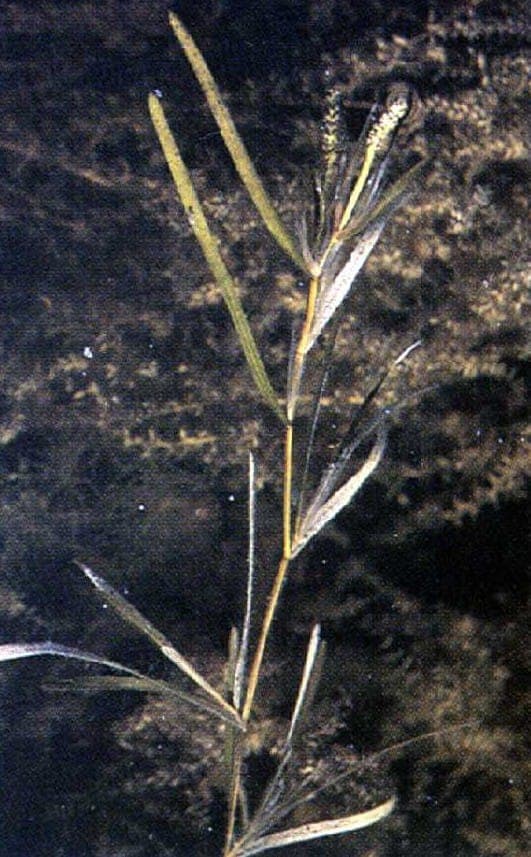
Robert H. Mohlenbrock / Public domain, via Wikimedia Commons
Grass-wrack Pondweed: complete guide
Potamogeton compressus
¿Quieres ver Grass-wrack Pondweed: complete guide en tu jardín?
1 minuto, sin tarjeta de crédito
Overview
Grass-wrack pondweed, scientifically known as Potamogeton compressus, is a submerged aquatic plant occurring naturally in temperate waters throughout Europe and Asia. This elegant water plant is also called wrack-like pondweed or flattened pondweed, depending on locale. For pond enthusiasts and aquarium hobbyists, this species offers an excellent choice combining aesthetic appeal with practical benefits such as water purification and oxygen production.
Appearance and Bloom
Grass-wrack pondweed features characteristically flattened, compressed stems that explain its botanical name. Linear leaves attach densely along the stem, creating a graceful, feathery, grass-like appearance. Underwater, the leaves are translucent to greenish, permitting light penetration. During summer, the plant produces small green flowers that may protrude slightly above the water surface, though fully submerged specimens often flower minimally. The overall aesthetic is elegant and refined.
Ideal Location
Grass-wrack pondweed thrives in clean, nutrient-rich water with slightly alkaline to neutral pH between 7.0 and 7.5. Plant this species in moderate light; it struggles in very dim corners but doesn't require intense full sunlight. In ponds, position it in shallow to moderately deep zones. In aquaria, place it in mid-ground to background areas so mature growth doesn't overshadow foreground features.
Soil
When cultivated in aquaria, grass-wrack pondweed favors nutrient-enriched substrates. A combination of aquarium gravel mixed with organic matter and slow-release fertilizer pellets promotes vigorous growth. In ponds, natural sediments usually suffice, though slow-release liquid fertilizers applied during the growing season enhance development.
Diseño gratis
¿Quieres ver Grass-wrack Pondweed: complete guide en tu jardín? Crea un diseño gratis ahora.
Watering
In this context, "watering" translates to maintaining water quality rather than traditional irrigation. Grass-wrack pondweed requires clean, uncontaminated water. Regular partial water changes maintain quality in aquaria; pond systems benefit from good circulation. Stagnant water promotes algae proliferation and poor conditions.
Pruning
Occasionally pinch growing tips to encourage branching and bushier development. Remove completely dead or decaying plant material. During peak growing season (summer), gentle trimming prevents overgrowth and maintains form in aquaria. Avoid aggressive removal, which stresses the plant.
Maintenance Calendar
Spring: increase nutrient supplementation as growth resumes. Summer: regular gentle trimming, water quality monitoring, partial water changes. Autumn: gradually reduce fertilization. Winter: minimal care; plant enters partial dormancy.
Winter Hardiness
Grass-wrack pondweed is hardy to temperatures just above freezing. In temperate-climate ponds, it typically survives winter, though aerial portions may die back. Submerged plant material persists and regenerates in spring. In cold regions, overwinter portions in aquaria or indoor containers.
Companion Plants
Grass-wrack pondweed combines well with other submerged aquatics such as water milfoil, water sprite, and related pondweed species. Avoid vigorous, aggressive plants that might overtake this gentler species. Slow-growing plants and mosses make ideal companions.
Final Thoughts
Grass-wrack pondweed represents an excellent choice for those seeking underwater elegance combined with practical water purification. Its distinctive flattened stems and delicate silhouette enhance aquaria and ponds alike. Visit gardenworld.app for comprehensive information on water gardening and aquatic plant selection for various environments. With proper placement and regular maintenance, this beautiful plant provides years of aesthetic and practical benefits. Learn more about aquatic design on gardenworld.app.
¿Quieres ver Grass-wrack Pondweed: complete guide en tu jardín? Crea un diseño gratis ahora.
Sube una foto, elige un estilo y obtén un diseño fotorrealista con lista de plantas en menos de un minuto.
Más de 10.000 jardines diseñados
Sin tarjeta de crédito


Plantas similares
Floating-leaf Pondweed: complete guide for water gardens
Potamogeton natans L.
Floating-leaf Pondweed is a floating-leaf plant with submerged and floating leaf forms. Discover how this plant improves water quality and biodiversity.
Shining Pondweed: complete guide for garden ponds
Potamogeton lucens L.
Shining Pondweed is elegant with lustrous translucent leaves. Discover how this plant produces oxygen and improves the water environment well.
Brazilian water-milfoil: complete guide
Myriophyllum aquaticum
Learn how to grow and care for Myriophyllum aquaticum in your aquarium, paludarium, or pond. Details on temperature, light, pruning, and dual-growth.