
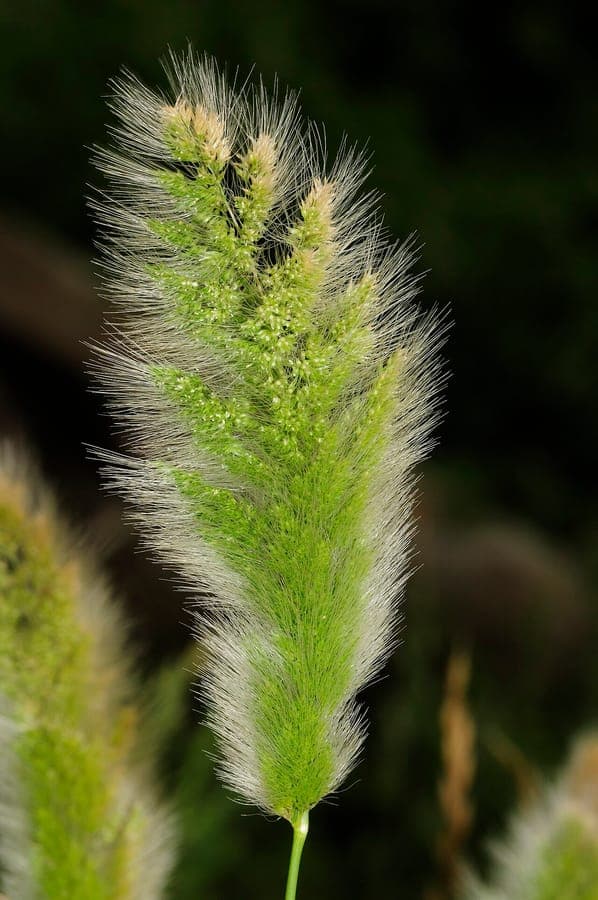
Philipp Weigell / CC BY 3.0, via Wikimedia Commons
Annual beard-grass: complete guide
Polypogon monspeliensis
¿Quieres ver Annual beard-grass: complete guide en tu jardín?
1 minuto, sin tarjeta de crédito
Overview
Annual beard-grass (Polypogon monspeliensis) is a fast-growing annual grass that grows year-round in temperate climates. This grass is recognizable by its characteristic fine, fluffy seed heads. Although originally from South Europe and North Africa, it spreads worldwide in moist, disturbed soils. In gardens, it can be useful for wet areas, but it is also a strong competitor that can become weedy.
Appearance and bloom
Annual beard-grass reaches 30-60 cm in height and forms loose, bulging tillers. The leaf blade is light to mid-green. The flower spikes are very characteristic: fine, soft and fluffy, almost like small brushes. These seed heads are purplish to yellowish-brown and form cluster-like panicles. Each floret has two long, thin sterile lemmas that remain attached to the seed.
The flowering period runs from May to October in temperate regions.
Ideal location
Annual beard-grass grows best in full sun to light shade. The grass prefers moist locations such as pond edges, ditches and wet meadows. It tolerates waterlogged soil and often appears in regularly flooded areas. The grass can also grow in more normal garden soil, but performs best in moister conditions.
Ensure the location has good drainage to prevent fungal problems in winter.
Soil
Polypogon monspeliensis grows on all soil types, from sand to heavy clay. It prefers slightly nutrient-rich, moist soil. The grass grows equally well in acidic, neutral and alkaline soils. A pH between 5.5 and 7.5 is ideal. Add organic matter at planting time to improve water retention.
Watering
Annual beard-grass loves moisture and is not drought-tolerant. Water regularly during the growing season, especially in dry weeks. The grass grows best where the water table is close to the surface. Don't let it dry out in July and August - this leads to early senescence.
In wet conditions, supplemental watering is barely necessary. The grass benefits more from regular small waterings than from sporadic large amounts.
Diseño gratis
¿Quieres ver Annual beard-grass: complete guide en tu jardín? Crea un diseño gratis ahora.
Pruning and maintenance
Annual beard-grass grows very fast and can be mown weekly during the growing season for maintenance. Cut the grass back to 5-10 cm height. After mowing, the grass recovers quickly and continues growing. In autumn, around mid-October, you can cut the grass to ground level and remove it.
The plant itself usually dies back with the first frost, so intensive autumn care is not needed.
Maintenance calendar
FEBRUARY-MARCH: Sow seed on moist areas APRIL-MAY: Start regular mowing JUNE-JULY: Heavy mowing (2-3x weekly in strong growth) AUGUST-SEPTEMBER: Add water during dry periods OCTOBER: Last mowing; plants die back NOVEMBER-JANUARY: Clean up and prepare for next season
Winter hardiness
Polypogon monspeliensis is not winter hardy in cold climates. The grass dies back at the first frost or during severe frosts in late October. For Germany and Northern Europe, this is an annual grass that must be resown each year. This is actually advantageous, as it prevents wild spread.
In areas with mild winters, the grass can sometimes overwinter.
Companion plants
Annual beard-grass combines well with:
- Mimulus (monkeyflower) - both waterside plants
- Lysichiton (skunk cabbages) - dramatic foliage
- Astilbe - fine texture alongside flowers
- Iris laevigata - high water tolerance
- Juncus inflexus (glaucous rush) - structural counterpart
Final thoughts
Annual beard-grass is an interesting grass for wet garden areas where other plants won't grow. Its fast growth and fluffy flower panicles provide movement and texture. With regular mowing and sufficient moisture, annual beard-grass grows excellently and adds greenery and structure.
Seed is available from ecological seed suppliers. Plant it in the ground in April and maintain with regular mowing. Gardenworld.app offers advice for moist areas in your garden.
¿Quieres ver Annual beard-grass: complete guide en tu jardín? Crea un diseño gratis ahora.
Sube una foto, elige un estilo y obtén un diseño fotorrealista con lista de plantas en menos de un minuto.
Más de 10.000 jardines diseñados
Sin tarjeta de crédito


Plantas similares
Sporobolus pungens: complete guide
Sporobolus pungens
Sporobolus pungens is a stoloniferous Mediterranean coastal grass with outstanding salt and drought tolerance, perfect for seaside and dry gardens.
Mediterranean aegilops: complete guide
Aegilops biuncialis
Everything about Aegilops biuncialis, a Mediterranean annual grass with ornamental spikes and outstanding drought tolerance for dry gardens.
Silver bluestem: complete guide
Bothriochloa saccharoides
Full guide to Bothriochloa saccharoides (silver bluestem): site, soil, watering, winter hardiness, pruning, and garden companions.