
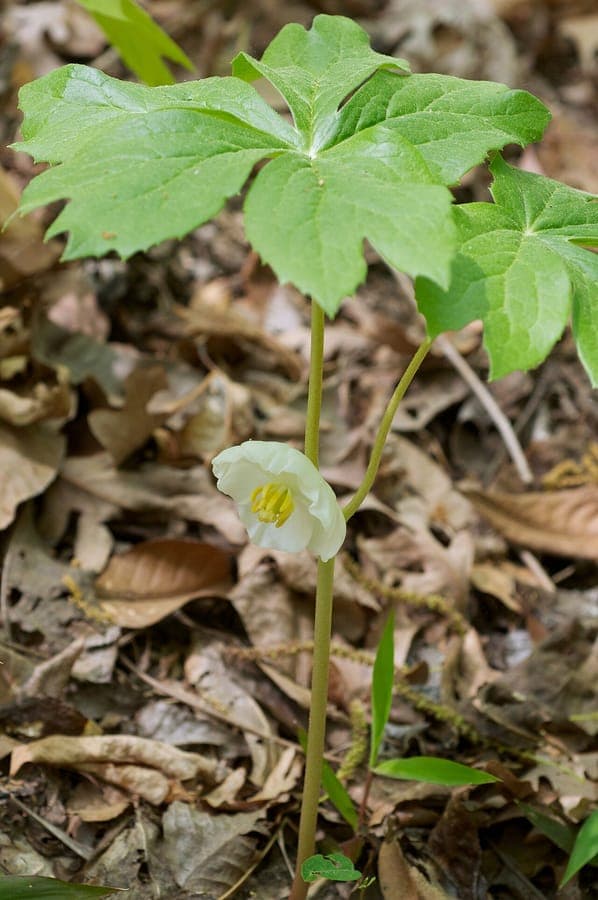
Eric Hunt / CC BY-SA 4.0, via Wikimedia Commons
Podophyllum peltatum: complete guide
Podophyllum peltatum
¿Quieres ver Podophyllum peltatum: complete guide en tu jardín?
1 minuto, sin tarjeta de crédito
Overview
Podophyllum peltatum, commonly known as Mayapple or American mandrake, is a distinctive woodland plant native to eastern North America. Distinguished by its unique shield-shaped leaves and delicate flowers, this hardy ground cover typically grows 30-40 cm tall, spreading slowly via underground rhizomes to form dense colonies. It's a classic choice for natural garden designs and woodland border plantings in temperate climates.
The plant is prized for its architectural foliage, elegant white or pink flowers, and characteristic yellow fruits that appear after blooming. Though Podophyllum peltatum is toxic and requires careful handling, it carries medicinal and ethnobotanical interest that fascinates gardeners.
Appearance and bloom
The most striking feature of Mayapple is the large, shield-shaped leaf carried vertically on slender, unblemished stems. The leaf surface can reach 30 cm across and is deeply lobed with 5-9 segments, creating an umbrella-like appearance. The stems are smooth and yellow-green to reddish-brown in color.
From April through May, flowers emerge - usually white with pink tints - where two leaves meet on the stem base. The flowers are modest, approximately 2-3 cm wide, with six petals and yellow stamens. Though not showy from outside, they are pleasantly fragrant.
After blooming (June-July), green fruits develop into yellow-green plumps about 5 cm long. These fruits serve as unique ornamental elements and add structure to late summer displays.
Ideal location
Mayapple thrives in partial to deep shade. While the plant tolerates some morning sun, direct afternoon sun should be avoided, particularly in warmer regions. The plant is entirely suitable for woodland edges, under deciduous trees, and in shaded corners of the garden.
Ensure the planting location has adequate airflow to prevent fungal diseases. Though Mayapple is extremely winter hardy, mulch protection offers benefits in very cold regions.
Soil
Podophyllum peltatum prefers rich, moisture-retentive soil types with acidic to neutral pH (6.0-7.0). The ideal soil contains abundant organic matter such as leaf mold or composted peat. Well-draining soil is essential - waterlogging leads to root rot.
For optimal growth, it's recommended to prepare the planting hole thoroughly with decomposed leaves, peat moss, and sand to improve drainage. Avoid heavy clay soils without amendment.
Diseño gratis
¿Quieres ver Podophyllum peltatum: complete guide en tu jardín? Crea un diseño gratis ahora.
Watering
Mayapple has moderate water needs and prefers consistent moisture without waterlogging. During the growing season (May-August), soil should be kept continuously moist. Mulching helps retain moisture and stabilize temperature.
During extreme drought periods - particularly for young plants - supplemental watering may be necessary. Conversely, the plant tolerates wet winters without problems.
Pruning
Mayapple requires minimal maintenance. Dead leaves and stems can be removed in autumn after withering. Avoid pruning green tissue during the growing season.
The plant spreads via underground rhizomes. If expansion is undesired, growth must be controlled through years of consistent maintenance.
Maintenance calendar
May-June: Bloom and early growth. July-August: Fruit development. September-October: Leaf color change and withering. November-March: Winter dormancy. April: Preparation for growing season with mulch renewal.
Garden use results best in perennial plantings under established trees without frequent relocation.
Winter hardiness
Podophyllum peltatum is extremely winter hardy to zone 3 (-40C). The plant dies back completely in winter and reappears in spring. Winter protection is usually unnecessary in temperate zones, though mulching 5-10 cm thick can be beneficial.
Companion planting
Mayapple combines well with other woodland plants such as tiarella, brunnera, polygonatum, and helleborus. These combinations create layered woodland scenery with different bloom times and leaf shapes.
Avoid aggressive growers and heavy competitors for best results.
Closing
Podophyllum peltatum forms a valuable addition to shaded gardens where its unique leaves and delicate flowers bring natural elegance. At GardenWorld, we've helped many homeowners transform dark woodland corners into beautiful underplantings.
If you want more advice about woodland situations or shade planting, visit gardenworld.app for design insights and plant recommendations tailored specifically to your space.
Check your local nurseries or garden centers for Mayapple plant availability in your region.
¿Quieres ver Podophyllum peltatum: complete guide en tu jardín? Crea un diseño gratis ahora.
Sube una foto, elige un estilo y obtén un diseño fotorrealista con lista de plantas en menos de un minuto.
Más de 10.000 jardines diseñados
Sin tarjeta de crédito


Plantas similares
Bambú celeste: guía completa
Nandina domestica
Todo sobre el bambú celeste (Nandina domestica): plantación, poda, resistencia al invierno y efectos de color. Advertencia: las bayas son tóxicas para aves y mascotas.
Colorado barberry: complete guide
Berberis fendleri
Everything about Berberis fendleri, the Colorado barberry with yellow flowers and red berries. Perfect as a thorny hedge or specimen shrub in dry gardens.
Jeffersonia diphylla: complete guide
Jeffersonia diphylla
Discover Twinleaf, a charming woodland plant from North America. White flowers, unique foliage, perfect for shady borders.