
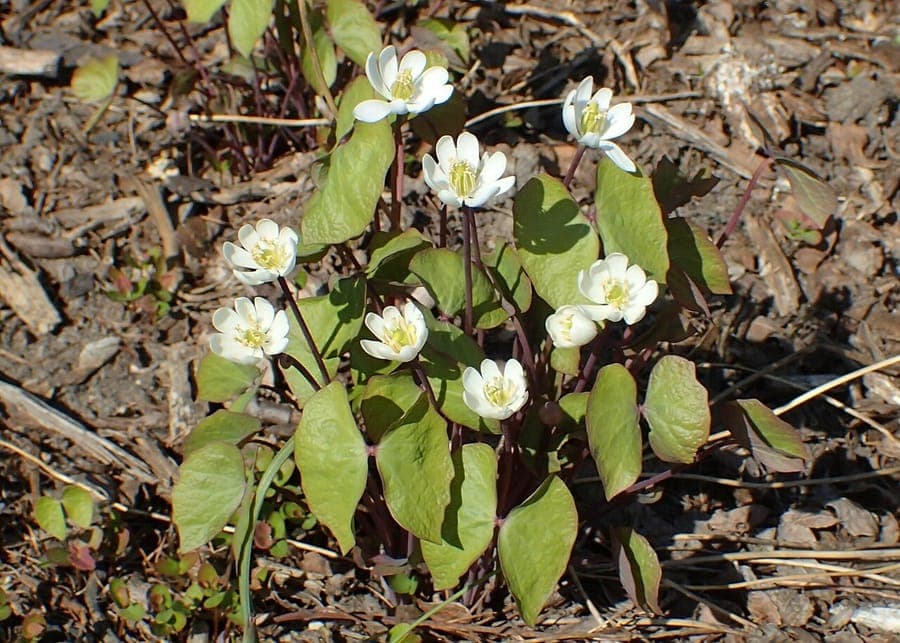
Krzysztof Ziarnek, Kenraiz / CC BY-SA 4.0, via Wikimedia Commons
Jeffersonia diphylla: complete guide
Jeffersonia diphylla
¿Quieres ver Jeffersonia diphylla: complete guide en tu jardín?
1 minuto, sin tarjeta de crédito
Introduction
The Jeffersonia diphylla, also known as Twinleaf or Rheumatism-root, is a charming woodland perennial from the deciduous forests of eastern North America. This plant grows from Ontario to North Carolina, thriving in shaded, moist forest environments. The plant is named after Thomas Jefferson, third president of the United States and gardening enthusiast. This little gem of a plant offers subtle elegance to shady spots where many other plants struggle.
The Jeffersonia diphylla is special because it distinguishes itself with its unique two-lobed leaves (diphylla literally means two-leaved) and delicate white flowers that appear in early spring. For those who love planting shady spots, this plant is an absolute godsend. With well-prepared soil and a shaded location, this plant will provide years of gentle beauty.
Appearance and Bloom
The Jeffersonia diphylla grows into a compact perennial reaching approximately 20 to 30 centimeters high. The leaves are the most remarkable feature of this plant. Each leaf consists of two lobed leaflets that together create an interesting effect. The leaves are green and remain attractive throughout the growing season. After flowering and in fall, they take on brownish tones.
The flowers appear in early spring (April to May) before many other woodland plants bloom. The flowers are small, approximately 2 centimeters in diameter, and pure white with yellow stamens in the center. The flowers grow on slender stems and are delicate yet striking. Although small, they are very charming and attract bee lovers.
After flowering, interesting seed pods form that can be ornamental. The plant becomes less prominent later in summer.
Ideal Location
The Jeffersonia diphylla thrives best in full to partial shade. The plant grows wild under the dense leaf canopy of deciduous trees, so it feels at home in shaded environments. At least 3 to 4 hours of filtered sunlight daily is ideal. In full summer sun, the plant would suffer, especially in hot climates.
The plant feels at home in moist spots such as under trees or along creeks. A spot under trees or on the north side of buildings is perfect. Avoid locations where the plant is exposed to full sun.
The plant is also suitable for stone or woodland gardens where natural shade is present.
Soil
The Jeffersonia diphylla requires rich, humus-rich soil with good moisture retention. This mimics the forest soil environment in which the plant naturally grows. Plant the specimen in soil mixed with plenty of compost, leaf mold, or other organic materials.
The plant feels at home in moist to moderately wet soil. Good drainage is, however, important in winter. The pH preference is between 6.5 and 7, so slightly acidic to neutral is ideal.
Preparation of the planting hole with plenty of organic material is crucial. Ensure the soil has been improved with compost months before planting.
Diseño gratis
¿Quieres ver Jeffersonia diphylla: complete guide en tu jardín? Crea un diseño gratis ahora.
Watering
The Jeffersonia diphylla feels at home in moderately moist soil. This means not waterlogged, but consistently moist. Ensure the plant receives regular water, especially during the growing season.
Once established, the plant is fairly self-sufficient in normal rainfall. During dry periods, however, extra water must be given. Check regularly that the soil moisture remains around 60 to 70 percent.
In containers, water more frequently than in-ground plantings. Ensure the soil does not dry out but also does not become waterlogged.
Pruning
The Jeffersonia diphylla requires no pruning. The plant grows naturally compact and maintains its shape without intervention. Remove only dead leaves and flowers at season's end.
Let the foliage die back naturally at season's end. This helps the plant prepare for winter and next season.
Maintenance Calendar
Spring (March-April): Plant emerges, flowers, watering begins. Summer: Regular watering, plant less prominent. Fall: Preparation for winter, adding mulch. Winter: No special care, plant dormant.
Winter Hardiness
The Jeffersonia diphylla is fully winter-hardy in the Netherlands and Belgium. The plant can tolerate temperatures of minus 20 degrees Celsius and lower. This is a major advantage of this plant: you need not worry about frost protection.
In very severe winters, some snow or mulch may fall on the plant, providing protection. This is not necessary and can even be harmful. Let the plant winter naturally.
Companion Plants
The Jeffersonia diphylla combines beautifully with other woodland plants. Helleborus, Trillium, Primula, and other shade-loving herbaceous plants form perfect neighbors. Ferns also fit well.
In woodland gardens, plant these in groups for greater effect. Three to five plants together create an attractive woodland clump.
Conclusion
The Jeffersonia diphylla is a subtle yet charming perennial that puts shady spots in new glory. With its unique foliage, delicate flowers, and complete winter-hardiness, this is a perfect choice for woodland garden lovers. Whether you want to establish a woodland grove or simply seek something special for a difficult shady spot, this woodland beauty will certainly satisfy.
The plant is available at specialized garden centers carrying woodland plants. Plant this in well-prepared soil with plenty of compost and enjoy its gentle beauty year after year. For more planting help and design tips, visit gardenworld.app where you can request personalized garden designs.
¿Quieres ver Jeffersonia diphylla: complete guide en tu jardín? Crea un diseño gratis ahora.
Sube una foto, elige un estilo y obtén un diseño fotorrealista con lista de plantas en menos de un minuto.
Más de 10.000 jardines diseñados
Sin tarjeta de crédito


Plantas similares
Bambú celeste: guía completa
Nandina domestica
Todo sobre el bambú celeste (Nandina domestica): plantación, poda, resistencia al invierno y efectos de color. Advertencia: las bayas son tóxicas para aves y mascotas.
Colorado barberry: complete guide
Berberis fendleri
Everything about Berberis fendleri, the Colorado barberry with yellow flowers and red berries. Perfect as a thorny hedge or specimen shrub in dry gardens.
Snowy barberry: complete guide
Berberis candidula
Discover snowy barberry, a compact Chinese barberry with silvery-gray foliage and red fruits. Perfect for hedging and borders. Learn all about cultivation, care and winter hardiness.