
Petr Filippov / CC BY-SA 3.0, via Wikimedia Commons
Poa supina: complete guide
Poa supina
¿Quieres ver Poa supina: complete guide en tu jardín?
1 minuto, sin tarjeta de crédito
Overview
Poa supina, known as supine bluegrass, is a compact, fine-textured grass species native to Europe and Asia. This is an exceptional choice for lawns in shaded locations and areas subjected to intensive use.
This Poaceae family grass is widely used on sports fields, golf courses, and gardens where standard heavier grasses struggle. At gardenworld.app, we help you select the right grass species for your specific garden conditions.
Appearance and growth
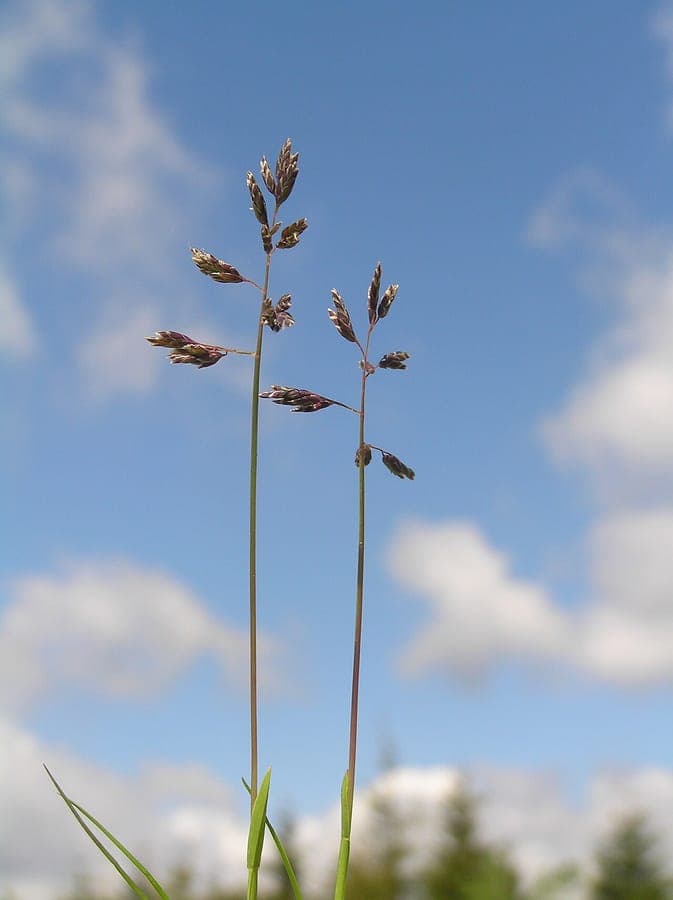
Poa supina grows as a very fine, dense grass with narrow, light green blades. The plant reaches typically 10-15 centimeters height without mowing. Flowering spikes are subtle and appear in May-June.
Growth is creeping to semi-creeping, meaning the plant spreads via shallow runners. This creates very fine, dense turf. The grass forms an extremely fine, uniform texture.
The plant is early-flowering and remains green all season, making it perfect for ornamental lawns and playing fields.
Ideal location
Poa supina is exceptionally suited to shaded locations. It is one of the few grasses thriving under trees and in partially shaded areas. It tolerates 3-4 hours of indirect light well.
The plant also thrives in zones subjected to foot traffic and intensive wear. This makes it perfect for entrance areas, pathways, and playing fields.
It performs poorly in full sunny locations without shade. For full sun, choose higher Poa species like Poa trivialis.
Soil
Poa supina grows best in moist, nutrient-rich soils. It thrives on clay-loam soils but functions on sand and sandy loam provided nutrients are present.
Optimal pH is between 6.0 and 7.5 (slightly acidic to neutral). The plant tolerates slightly higher pH values as well.
Add compost and slow-release grass fertilizer before seeding. This ensures adequate nutrition in early years.
Watering
Poa supina is less drought-tolerant than some other grasses. Regular watering is important, especially during the first year after seeding.
Keep soil continuously moist but not waterlogged. In dry summers, supplemental watering may be needed. Once established (after one year), less frequent watering is necessary, though the plant still prefers moist conditions.
In shaded areas, water evaporates more slowly, so adjust watering accordingly.
Diseño gratis
¿Quieres ver Poa supina: complete guide en tu jardín? Crea un diseño gratis ahora.
Maintenance and mowing
Mow regularly to 2-3 centimeters height for compact, dense growth. More frequent mowing (one to two times weekly) during growth season promotes thickening.
Apply fertilizer two to three times yearly in spring, summer, and fall. Use grass-specific fertilizer.
Verticut in spring to remove dead thatch and promote growth.
Maintenance calendar
January to March: Spring preparation. Check for winter damage.
April to May: Begin mowing. Apply first feeding. Growth accelerates.
June to August: Weekly mowing. Regular feeding. Water regularly during dry spells.
September to October: Fall feeding. Reduce mowing as growth slows.
November to December: Minimal maintenance. Plant reaches dormancy.
Seeding and establishment
Poa supina can be seeded in spring (April-May) or fall (September-October). Fall seeding often produces better results because plants can maximize spring growth.
Spread seed evenly and gently press into soil. Keep soil moist until germination (7-10 days). Once germinated, maintain moisture until establishment.
Seeding rate: approximately 35-50 grams per square meter.
Winter hardiness
Poa supina is winter hardy to very low temperatures. This is an alpine species tolerating snow, frost, and extreme cold. No protection needed in Netherlands or Belgium.
The plant can suffer from waterlogging in extremely wet winters, especially on heavy soils. Ensure good drainage.
Landscape combinations
Poa supina works well in various garden scenarios.
Under trees: Perfect as grass under shade-casting trees.
Pathways: Suitable for informal paths where some foot traffic is acceptable.
Shade gardens: Combine with ferns and other shade-lovers.
Play areas: Ideal for playgrounds due to durability.
Conclusion
Poa supina is an underrated grass species offering perfect solution for shaded gardens. With regular watering and maintenance, it forms dense, attractive lawns lasting years. For gardens with significant shading or intensive use, Poa supina is an excellent choice. Visit gardenworld.app for more advice on grass selection and lawn design.
¿Quieres ver Poa supina: complete guide en tu jardín? Crea un diseño gratis ahora.
Sube una foto, elige un estilo y obtén un diseño fotorrealista con lista de plantas en menos de un minuto.
Más de 10.000 jardines diseñados
Sin tarjeta de crédito


Plantas similares
Sporobolus pungens: complete guide
Sporobolus pungens
Sporobolus pungens is a stoloniferous Mediterranean coastal grass with outstanding salt and drought tolerance, perfect for seaside and dry gardens.
Mediterranean aegilops: complete guide
Aegilops biuncialis
Everything about Aegilops biuncialis, a Mediterranean annual grass with ornamental spikes and outstanding drought tolerance for dry gardens.
Silver bluestem: complete guide
Bothriochloa saccharoides
Full guide to Bothriochloa saccharoides (silver bluestem): site, soil, watering, winter hardiness, pruning, and garden companions.