
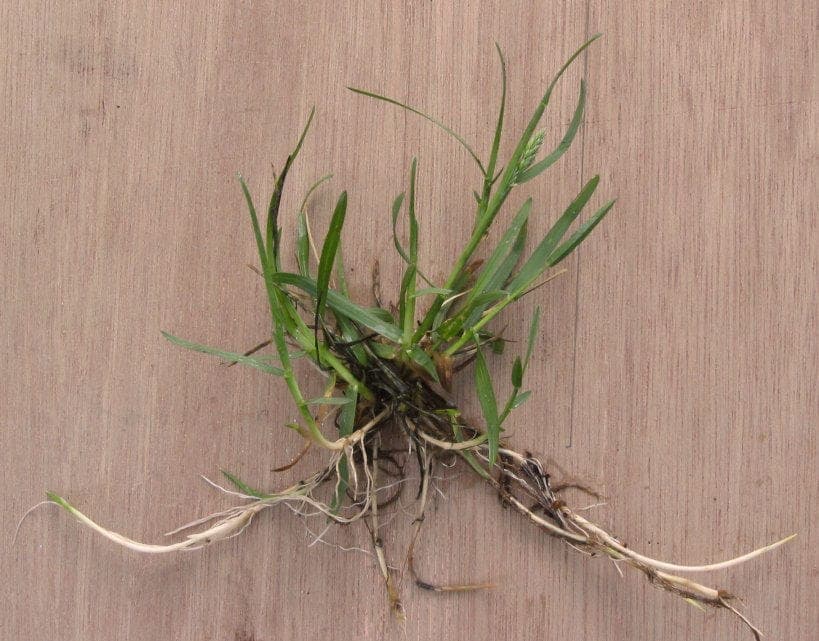
Rasbak / CC BY-SA 3.0, via Wikimedia Commons
Smooth meadow grass: complete guide
Poa pratensis
¿Quieres ver Smooth meadow grass: complete guide en tu jardín?
1 minuto, sin tarjeta de crédito
Overview
Smooth meadow grass (Poa pratensis) is the most prevalent grass species in northern Europe and an essential component of both natural pastures and garden lawns. This hardy perennial is native to subarctic through temperate regions of the northern hemisphere, extending into northern Mexico. It is renowned for exceptional versatility, rapid recovery ability, and elegant fine leaf texture.
For gardeners across northern regions, this grass is indispensable. It grows robustly in virtually any soil type, from sand to clay, tolerating diverse conditions. Whether seeking lawn maintenance or refined turf design, Smooth meadow grass provides the foundation.
Appearance and Bloom
Smooth meadow grass grows in dense, tightly clumped tufts with fine, upright stems. Leaves are light to blue-green with characteristic boat-shaped tips. The plant reaches heights of approximately 40-80 centimeters depending on conditions.
From May through June, delicate panicles emerge in green to purple-brown tones. These flowers are elegant and discreet, making the grass suitable for refined turf designs. The plant naturally forms dense, homogeneous coverage through underground runners.
Ideal Location
Smooth meadow grass is remarkably adaptable, thriving in virtually any location. It accepts full sun to partial shade and grows in wet to dry conditions. For optimal growth, choose a location with at least 4-5 hours direct sunlight and moderately moist soil.
The grass is exceptionally suited to lawn areas, borders, slopes, and corners where other plants struggle. This adaptive capacity makes it the industry standard for turf seed mixes across northern Europe.
Soil
Smooth meadow grass is flexible regarding soil type, thriving in sandy to clay soils. It prefers neutral to slightly acidic soil (pH 5.5-7.5) but accepts alkaline conditions. This grass even grows in nutrient-poor soils, though richer soils support better growth.
The key to success is good drainage - stagnant water causes problems, though the grass tolerates silting reasonably well. When planting, incorporate compost or sawdust to improve water retention and nutrition, especially in sandy soils.
Watering
Smooth meadow grass has moderate moisture requirements and tolerates both dry and wet conditions once established. After seeding or planting, water regularly until the grass has deep roots (approximately 2-3 weeks).
In normal conditions, the grass needs no supplemental water except during extreme drought. In very dry summers, especially on sandy soils, watering improves growth. Encourage deep rooting through infrequent but thorough watering rather than daily light sprinkling.
Diseño gratis
¿Quieres ver Smooth meadow grass: complete guide en tu jardín? Crea un diseño gratis ahora.
Pruning
Smooth meadow grass in lawn use is cut regularly - typically weekly in the growing season at 3-5 centimeters height. For grass clumps in borders, cut less frequently or not at all, allowing the plant to assume its natural form.
The grass recovers quickly after cutting thanks to rapid leaf regeneration. Avoid cutting too short (not below 2.5 cm) to prevent drought stress and weed invasion. In autumn, allow grass to grow longer for winter protection.
Maintenance Calendar
March/April: Spring maintenance: aerate lawns with a machine, remove dead thatch, reseed bare spots. Feed once with nitrogen-rich fertilizer.
May through August: Cut weekly at 3-5 centimeters. Feed monthly with balanced fertilizer. Watering during dry periods helps.
September/October: Reduce feeding, increase cutting height to 5-7 centimeters. Autumn aeration promotes root depth.
November through February: Minimal cutting needed (only if grass grows faster). No feeding after October.
Winter Hardiness
Smooth meadow grass is fully winter-hardy throughout northern regions. It remains green in mild winters and recovers extremely rapidly in spring. This grass tolerates even severe frost, snow load, and wet winters without damage. Thanks to underground runners, it expands and naturally fills bare spots after winter.
Companion Plants
Smooth meadow grass forms the foundation for many turf designs and pairs well with:
- Other grass species (Lolium, Festuca)
- Clovers (Trifolium repens)
- Daisies (Bellis perennis)
- Plant companions (Veratrum)
- Arnica (Arnica montana)
- Jacob's ladder (Polemonium caeruleum)
Together they create natural, biodiverse turf mixtures.
Conclusion
Smooth meadow grass is the foundation of healthy, natural lawns across northern regions. Its versatility, winter hardiness, and recovery capacity make it ideal for both classical and modern garden designs. The grass is easy to maintain and requires minimal special attention once established.
Use this grass as the basis for your lawn, seed it in borders, and enjoy natural beauty. Check specialty nurseries for seed mixes containing this grass. For lawn improvements and design inspiration, visit gardenworld.app.
Plant Smooth meadow grass in spring or autumn and enjoy a healthy, natural lawn year-round!
¿Quieres ver Smooth meadow grass: complete guide en tu jardín? Crea un diseño gratis ahora.
Sube una foto, elige un estilo y obtén un diseño fotorrealista con lista de plantas en menos de un minuto.
Más de 10.000 jardines diseñados
Sin tarjeta de crédito


Plantas similares
Sporobolus pungens: complete guide
Sporobolus pungens
Sporobolus pungens is a stoloniferous Mediterranean coastal grass with outstanding salt and drought tolerance, perfect for seaside and dry gardens.
Mediterranean aegilops: complete guide
Aegilops biuncialis
Everything about Aegilops biuncialis, a Mediterranean annual grass with ornamental spikes and outstanding drought tolerance for dry gardens.
Silver bluestem: complete guide
Bothriochloa saccharoides
Full guide to Bothriochloa saccharoides (silver bluestem): site, soil, watering, winter hardiness, pruning, and garden companions.