
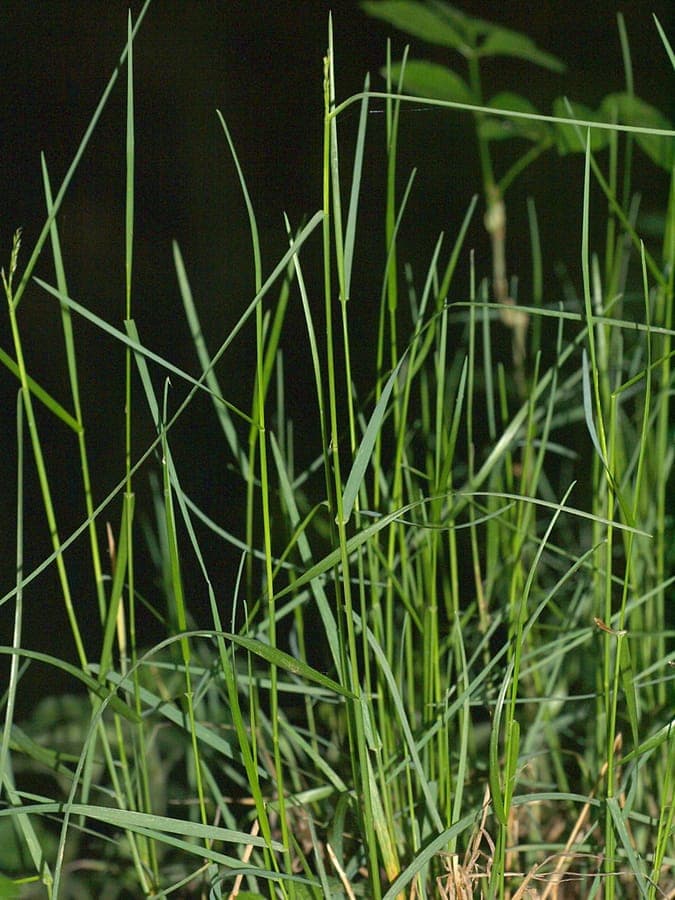
Sarefo / CC BY-SA 3.0, via Wikimedia Commons
Wood bluegrass: complete guide
Poa nemoralis
¿Quieres ver Wood bluegrass: complete guide en tu jardín?
1 minuto, sin tarjeta de crédito
Overview
Wood bluegrass (Poa nemoralis) is a remarkably elegant grass species from the Poaceae family, named for its affinity for woodlands and semi-shaded environments. This hardy perennial is distributed across subarctic and temperate regions of the northern hemisphere, with populations also found in northwest Africa. Wood bluegrass is renowned for its fine, delicate leaf texture and exceptional ability to thrive in shade where most other grasses struggle.
For gardens throughout northern Europe, this grass is invaluable, reflecting forest-floor character and thriving beneath trees and shrubs. It adds natural woodland charm to shaded garden corners.
Appearance and Bloom
Wood bluegrass grows in fine, airy panicles with extremely thin, upright stems. The leaves are hair-thin, giving the grass an exceptionally elegant appearance. In deep shade, leaves remain vibrant green, while in partial sun subtle purple-brown tones may appear in the flowering panicles.
The plant reaches approximately 30-50 centimeters tall and forms densely clumped, naturally bunched tufts ideal for woodland settings. Flowering occurs May through June, with delicate, subtle panicles that appear almost inconspicuous.
Ideal Location
Wood bluegrass is exceptional among grasses: it thrives better in partial to full shade than in full sun. Ideal locations include beneath deciduous trees, against north-facing hedges, or in dappled light areas where other grasses would struggle.
In deep shade (less than 4 hours sun), the grass grows more slowly but remains healthy. In full sun, the grass typically becomes less attractive and may lose vigor. This makes Wood bluegrass irreplaceable in shaded corners of northern gardens.
Soil
Wood bluegrass is quite flexible regarding soil, but thrives in nutrient-rich, slightly acidic to neutral soil with good moisture retention. In woodland settings, it naturally grows on humus-rich, moist substrates with leaf litter, so adding compost or aged leafmold improves growth.
Optimal pH ranges from 6.0 to 7.0. This grass tolerates both drier conditions and consistently moist soil, making it versatile for various garden situations. In clay soils it performs equally well, provided drainage is not completely stagnant.
Watering
Wood bluegrass has moderate moisture requirements and tolerates shaded conditions with lower evaporation. In established ground plantings with well-prepared soil, the grass typically requires no supplemental water except during extreme droughts.
In containers, water more frequently, especially if positioned in sun. Soil should remain moist but never waterlogged. In shade, water evaporates much more slowly, so careful watering prevents rot.
Water regularly the first season after planting until the grass is fully established. Thereafter it requires minimal attention.
Diseño gratis
¿Quieres ver Wood bluegrass: complete guide en tu jardín? Crea un diseño gratis ahora.
Pruning
Wood bluegrass requires minimal pruning. It naturally assumes an attractive, densely clumped form. In spring (March-April), gently remove dead winter foliage and lightly comb the grass with a fine rake to loosen dead material.
Avoid cutting back in autumn, as this shade grass has dormant buds at the leaf base that extend in spring. Excessive pruning weakens the plant unnecessarily.
Maintenance Calendar
March/April: Remove dead winter foliage. On drier soils, amend once with compost or aged leafmold. No additional feeding required.
May through August: Monitor soil moisture in containers. In ground plantings, rarely needs supplemental water. Do not fertilize - this grass performs better without excess nutrition.
September/October: No special care needed. Check that soil moisture reserves are adequate for winter.
November through February: Minimal maintenance required. In very dry winters, gentle watering on sandy soils may help.
Winter Hardiness
Wood bluegrass is fully winter-hardy in northern regions. As a hardy perennial, it remains in the ground through severe winters and regrows vigorously in spring. This is a major advantage for permanent garden interest in shaded areas.
In snowy winters, heavy snow cover may temporarily yellow the grass, but it recovers completely once snow melts and soil warms.
Companion Plants
Wood bluegrass pairs perfectly with shade-garden plantings:
- Structure plants (such as Helleborus)
- Ferns (many shade-tolerant species)
- Bergenia
- Euonymus japonica
- Cornus alba 'Sibirica'
- Geranium nodosum
- Daphne mezereum
- Winter aconite (Anemone blanda)
This grass provides perfect textural contrast with taller foliage plants in woodland-style designs.
Conclusion
Wood bluegrass is essential for shaded gardens. Its shade preference and elegant woodland character make it ideal for northern regions. The grass is fully hardy, low-maintenance, and requires minimal water once established.
Try this grass in shaded corners beneath trees and against north-facing structures. The beautiful effect emerges over several years as the grass becomes established. Check specialty nurseries for potted plants. Visit gardenworld.app for more woodland grass inspiration.
Plant this unique grass in spring and enjoy its elegant, naturally woodland appearance year-round!
¿Quieres ver Wood bluegrass: complete guide en tu jardín? Crea un diseño gratis ahora.
Sube una foto, elige un estilo y obtén un diseño fotorrealista con lista de plantas en menos de un minuto.
Más de 10.000 jardines diseñados
Sin tarjeta de crédito


Plantas similares
Sporobolus pungens: complete guide
Sporobolus pungens
Sporobolus pungens is a stoloniferous Mediterranean coastal grass with outstanding salt and drought tolerance, perfect for seaside and dry gardens.
Mediterranean aegilops: complete guide
Aegilops biuncialis
Everything about Aegilops biuncialis, a Mediterranean annual grass with ornamental spikes and outstanding drought tolerance for dry gardens.
Silver bluestem: complete guide
Bothriochloa saccharoides
Full guide to Bothriochloa saccharoides (silver bluestem): site, soil, watering, winter hardiness, pruning, and garden companions.