
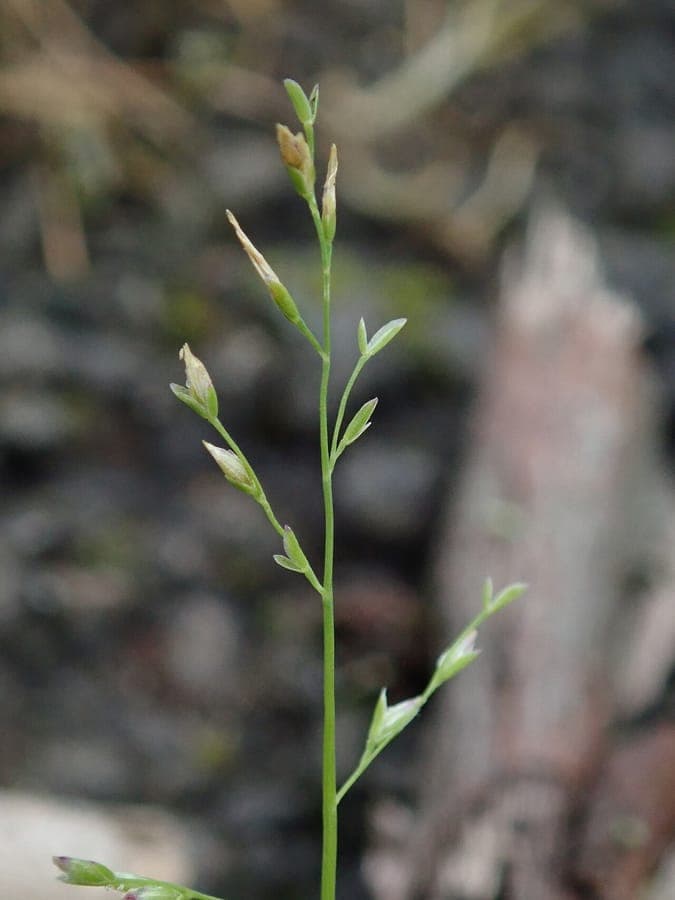
Daniel Cahen / CC BY 4.0, via Wikimedia Commons
Weak bluegrass: complete guide
Poa infirma
¿Quieres ver Weak bluegrass: complete guide en tu jardín?
1 minuto, sin tarjeta de crédito
Overview
Weak bluegrass (Poa infirma) is an elegant grass species from the Poaceae family native to the Mediterranean region, extending east toward Central and South China. This annual grass is renowned for its extremely fine leaf texture and rapid growth habit. In colder northern climates, including most of the UK and Scandinavia, weak bluegrass is not winter-hardy and must be cultivated as an annual or biennial.
Thanks to its refined appearance and delicate texture, weak bluegrass offers a unique option for gardeners seeking to introduce southern plant materials in sheltered conditions. Early flowering seasons provide distinctive spring and summer accents in mixed plantings.
Appearance and Bloom
Weak bluegrass grows in loose tufts with extremely fine, thin stems. The leaves are hair-thin and remain green in warm climates throughout the season. While inconspicuous individually, the grass creates an airy, delicate texture in garden designs. In full sun, particularly in Mediterranean regions, flowers emerge with subtle purple and brown tones that create pleasant contrast against other plantings.
The growth habit is compact and bunched, with leaves growing upright and reaching heights of approximately 30-40 centimeters. This fine texture makes it ideal for borders and large containers with soft, Mediterranean character.
Ideal Location
Weak bluegrass demands full sun. Position this grass where sunlight reaches at least 8 hours daily. Insufficient light causes stems to become floppy and compromises the grass's characteristic elegant appearance.
In temperate zones, this grass thrives in protected, sunny corners: against warm-colored walls, on sunny terraces, or in large drainage containers with roof protection in colder climates. In Mediterranean regions, particularly Spain, France, and Italy, it performs better outdoors in full-sun locations and can overwinter with proper protection.
Soil
Weak bluegrass is known for modest nutrient demands. It grows best in well-draining, lightly sandy to loamy soil with excellent water drainage. On heavy clay or poorly draining soils, growth suffers and roots risk rot, especially during winter or after prolonged waterlogging.
Optimal soil pH ranges from slightly acidic to neutral (6.5-7.5). The grass tolerates reasonably dry conditions once established, provided it receives regular water during the growing season. Adding coarse sand, perlite, or other drainage amendments helps improve clay soils.
Watering
Weak bluegrass has moderate moisture requirements. During the growing season (spring through early summer), soil should remain evenly moist but never waterlogged. Once the soil surface feels dry to touch, watering is needed.
During extended drought, the grass may yellow and decline. In container culture, water evaporates faster than in ground plantings, so daily checks in warm summers are essential. Ensure water never pools in saucers beneath pots.
In autumn and winter, water requirements drop significantly. For annual or biennial cultivation in cool climates, monitor after heavy rain to prevent complete waterlogging of the root zone.
Diseño gratis
¿Quieres ver Weak bluegrass: complete guide en tu jardín? Crea un diseño gratis ahora.
Pruning
Weak bluegrass requires minimal pruning, as this naturally tufted grass assumes its own attractive form. If growth becomes unruly at season's end, gently remove old, dead stems and lightly shape the plant in May or June.
The grass typically recovers from mild frost damage by producing new shoots from the base, so avoid drastic cutting. For containerized plants, gentle combing of dead material with a fine-tooth rake helps prevent frost damage to remaining foliage.
Maintenance Calendar
March/April: Position in full sun and apply once with balanced lime-free fertilizer (NPK 6-2-3 or equivalent). Check for dead foliage from winter.
May through August: Water regularly during dry periods and feed monthly with lime-free fertilizer. Monitor evaporation, particularly in containers.
September/October: Reduce watering as temperatures drop. Discontinue feeding after early September.
November through February: Provide minimal water, especially outdoors. Move potted plants indoors to a cool location around 50-55 degrees Fahrenheit.
Winter Hardiness
Weak bluegrass is not winter-hardy outdoors in cool northern climates. As a warm-climate grass, it survives outdoor winters only in mild coastal regions or urban heat islands, and only with protection against warm south-facing walls.
It is better cultivated as an annual or biennial, or overwintered as a potted plant in frost-free greenhouses or cool conservatories. If attempting outdoor cultivation, protect heavily with mulch and position against warm walls.
Companion Plants
Weak bluegrass pairs well with other warm-climate lovers:
- Lavender (Lavandula angustifolia)
- Red or orange Asclepias species
- Osteospermum
- Catmint (Nepeta sibirica)
- Everlasting flowers such as Statice
- Silver foliage plants like Senecio cineraria
This grass works best in larger containers alongside complementary Mediterranean plants, particularly for season-long winter display.
Conclusion
Weak bluegrass offers gardeners outside Mediterranean climates a unique opportunity to introduce subtle southern textures into their spaces. While not hardy outdoors in cool climates, it delivers striking seasonal effects in protected locations. The grass demands minimal maintenance, provided you meet its basic needs: full sun, excellent drainage, and regular water during growth.
For gardeners in temperate regions, container cultivation is most practical. Check specialty nurseries and online retailers for potted grass and suitable containers. Combine this grass with other Mediterranean favorites for authentic southern character on your patio. Visit gardenworld.app for more inspiration on southern grasses.
Try planting this delicate grass in May or June and enjoy its elegant character throughout the season!
¿Quieres ver Weak bluegrass: complete guide en tu jardín? Crea un diseño gratis ahora.
Sube una foto, elige un estilo y obtén un diseño fotorrealista con lista de plantas en menos de un minuto.
Más de 10.000 jardines diseñados
Sin tarjeta de crédito


Plantas similares
Sporobolus pungens: complete guide
Sporobolus pungens
Sporobolus pungens is a stoloniferous Mediterranean coastal grass with outstanding salt and drought tolerance, perfect for seaside and dry gardens.
Mediterranean aegilops: complete guide
Aegilops biuncialis
Everything about Aegilops biuncialis, a Mediterranean annual grass with ornamental spikes and outstanding drought tolerance for dry gardens.
Silver bluestem: complete guide
Bothriochloa saccharoides
Full guide to Bothriochloa saccharoides (silver bluestem): site, soil, watering, winter hardiness, pruning, and garden companions.