
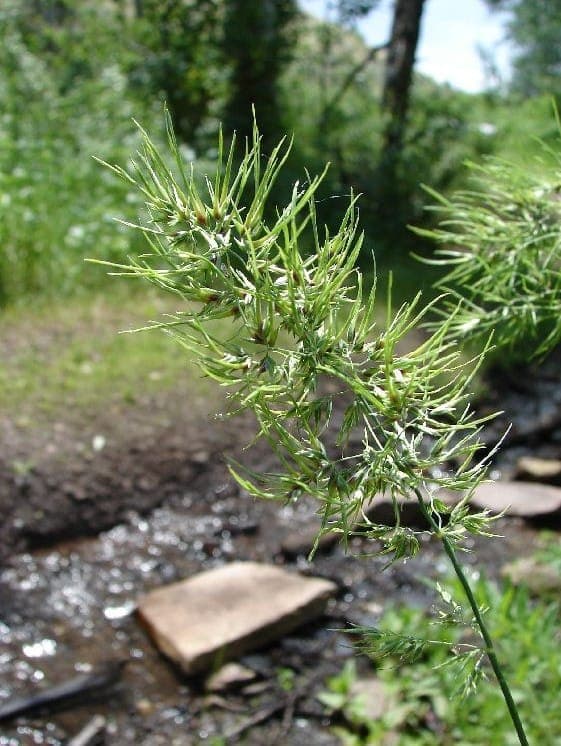
Sheri Hagwood / Public domain, via Wikimedia Commons
Poa bulbosa: complete guide for gardeners
Poa bulbosa
¿Quieres ver Poa bulbosa: complete guide for gardeners en tu jardín?
1 minuto, sin tarjeta de crédito
Overview
Poa bulbosa, commonly known as bulbous bluegrass, is a distinctive grass species characterized by underground bulblets (small tuber-like structures at the roots). This perennial grass belongs to the Poaceae family and originates from European mountain regions extending to the Himalayas. It is appreciated for its compact growth habit and special adaptations to dry environments.
This grass is valued for its elegant appearance and relatively low maintenance requirements. Bulbous bluegrass has expanded to many parts of the world, from southern Africa to the Mediterranean region.
Appearance and Bloom
Poa bulbosa forms dense, fine mats of 15 to 25 centimeters high with blue-green, narrow leaves. The plant flowers from April to May with delicate, green to purple flower panicles. Most notably, however, are the small bulblets at the root and stem base, which help the plant survive dry periods.
The plant frequently displays small bulbils (mini-bulbs) along the flowering spikes, which enable natural propagation. This makes it self-seeding and very easy to propagate.
Ideal Location
Poa bulbosa thrives in sunny to lightly shaded spots. The plant is very drought-tolerant and prefers dry rather than wet locations. Do not plant in waterlogged or wet sites, as this can cause root diseases. Alpine gardens and scree gardens are ideal environments.
Ensure good air circulation to prevent fungal diseases. This grass feels at home on warm, sunny slopes and in Mediterranean gardens.
Soil
Poa bulbosa has minimal soil requirements and grows well on poor, sandy to stony soils. The plant even tolerates very dry soils and grows on slopes where other grasses fail. A pH between 5 and 7 is ideal. Avoid heavy, waterlogging clay soils.
When planting on very poor soil, small amounts of compost can help, but excessive nutrients can promote unwanted growth and weaken the plant.
Watering
Once established, Poa bulbosa requires very little water. This is one of the most drought-tolerant grass species. Water moderately only in the first growing season. After that, it can usually survive without supplemental water, except during extreme droughts.
Ensure water never stagnates, especially in winter. In rainy climates, this grass grows without any supplemental watering. Excessive water can actually be harmful.
Diseño gratis
¿Quieres ver Poa bulbosa: complete guide for gardeners en tu jardín? Crea un diseño gratis ahora.
Pruning
Pruning is not really necessary. You can remove dried leaves and flowers after they have lost their ornamental value. This does not stimulate special growth but keeps the plant neat.
To prevent seeding (which may be undesirable in many climates), remove flower spikes before they set seed. This also extends the ornamental period.
Maintenance Calendar
Spring (March-May): Remove dead leaves from previous year. Plant new specimens in sunny, dry locations. No fertilization needed.
Summer (June-August): Practically no care required. Minimal water only during extreme drought. Remove faded flowers.
Fall (September-October): Planting season. Seedlings can be collected from mature plants.
Winter (November-February): Rest period. Reduce plant watering. In very wet winters, drainage can help.
Winter Hardiness
Poa bulbosa is very winter-hardy to zone 5 (down to -29 degrees Celsius) and actually grows better in cold winters. The bulblets protect the plant against frost damage. In very warm climates, the plant may become dormant in summer.
The plant requires no special winter protection in temperate climates. In very wet winters, mulching with gravel can help remove excess moisture.
Companion Plants
Poa bulbosa combines beautifully with:
- Other drought-tolerant grasses (Festuca glauca, stipa)
- Rock garden plants (sedum, sempervivum)
- Alpine plants (Saxifraga, primula)
- Lavender and other drought-tolerant plants
It forms an elegant accent in alpine borders and scree gardens.
Closing Remarks
Poa bulbosa is an excellent choice for gardeners wanting a resilient element in their landscape. Its exceptional drought tolerance and low maintenance needs make it particularly useful on difficult, dry sites. Bulbous bluegrass deserves more attention in modern gardens.
Seeds and plants can be found at specialized garden centers or alpine plant nurseries. Visit gardenworld.app for inspiration and discover how this elegant grass can transform your dry garden corners. With virtually no care, this grass will remain clean and attractive for years.
Poa bulbosa proves that limitations in garden conditions (drought, poor soil) need not be a problem. This grass actually turns dry corners into interesting, decorative garden areas.
¿Quieres ver Poa bulbosa: complete guide for gardeners en tu jardín? Crea un diseño gratis ahora.
Sube una foto, elige un estilo y obtén un diseño fotorrealista con lista de plantas en menos de un minuto.
Más de 10.000 jardines diseñados
Sin tarjeta de crédito


Plantas similares
Poa annua: complete guide for gardeners
Poa annua
Discover everything about Poa annua, annual bluegrass. From cultivation to maintenance: tips for healthy plants in your garden.
Poa compressa: complete guide for gardeners
Poa compressa
Discover all about Poa compressa, Canada bluegrass. Cultivation and care of this strong, resilient grass.
Poa chaixii: complete guide for gardeners
Poa chaixii
Discover all about Poa chaixii, broadleaf meadow grass. Cultivation and care of this elegant alpine grass.