
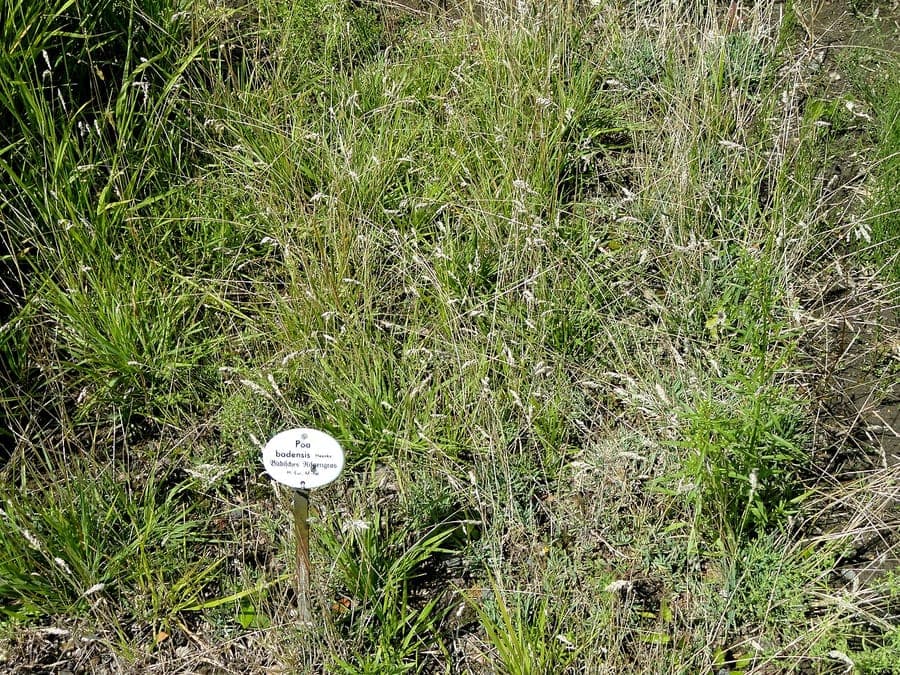
Daderot / CC0, via Wikimedia Commons
Baden's bluegrass: complete guide
Poa badensis
¿Quieres ver Baden's bluegrass: complete guide en tu jardín?
1 minuto, sin tarjeta de crédito
Overview
Baden's bluegrass, scientifically known as Poa badensis, is an elegant ornamental grass native to central and southeastern Europe. The plant naturally ranges from Baden (from which its name derives) to Iran, indicating broad climatic adaptation. First scientifically described in 1797, it has since earned its place in alpine and contemporary gardens.
In modern gardens, Baden's bluegrass offers refined ornamental value with delicate flower panicles and elegant growth patterns. The grass attracts numerous insects and benefits wildlife. It works beautifully in alpine meadows, rock gardens, and contemporary landscape designs.
Appearance & bloom cycle
Baden's bluegrass is a slender, upright grass typically reaching 30-60 cm in height, depending on growing conditions. The foliage is fine and linear, characteristic of the Poaceae family, with an elegant, refined texture.
Flower panicles emerge from May to June, appearing as delicate green to yellow-green plumes. These panicles are exceptionally elegant, swaying gracefully in the breeze and creating dynamic visual interest. Unlike many ornamental grasses, these panicles retain their form well into autumn.
After flowering, tiny seeds develop and disperse on the wind. The plant remains ornamental long after blooming, developing warm brown tones in autumn.
Ideal location
Baden's bluegrass thrives in full sun to light dappled shade. At least 4-6 hours of direct sunlight daily is ideal. The plant naturally grows on sunny alpine meadows where light is abundant.
Position the plant where air circulation is good, reducing moisture problems. Alpine lawns, rock gardens, path borders, and mixed perennial plantings are all suitable. The grass adds elegance to mixed grass compositions and meadow-style gardens.
Extremely hardy and frost-tolerant, Baden's bluegrass survives year-round outdoors across Europe. In hot regions, afternoon shade in summer may be beneficial, but this is rarely necessary in temperate climates.
Soil requirements
Baden's bluegrass is flexible regarding soil type but performs best on well-draining, moderately fertile soil. The plant grows naturally on alpine meadows with moderate nutrient levels, so overly rich, fertilizer-heavy soils are not ideal.
Preferred soil mix:
- 50% garden soil
- 30% sand
- 20% gravel or small stonechips
Soil pH should be neutral to slightly acidic (pH 6.0-7.5). Heavy clay soils can be improved with sand and gravel. Adding organic matter also helps, though not excessively.
Watering
Once established, Baden's bluegrass is drought-tolerant and requires minimal supplemental water. During the growing season in spring and summer, water when soil becomes dry, typically once or twice monthly unless conditions are exceptionally arid.
Newly planted specimens require more regular hydration during their first season. Water when soil feels dry to a depth of 3 cm. Once the grass is established (after 1-2 growing seasons), water requirements decrease significantly.
Autumn and winter typically require no supplemental watering except in exceptionally dry winters. Excess moisture can cause root rot, so err on the side of under-watering.
Diseño gratis
¿Quieres ver Baden's bluegrass: complete guide en tu jardín? Crea un diseño gratis ahora.
Pruning
Baden's bluegrass requires minimal pruning. In early spring (February-March), you can remove dead material from previous seasons by gently cutting the grass back to just above ground level.
After flowering, leave spent panicles standing for ornamental value through deep autumn. This adds textural interest to fall and winter gardens. Wait until the full spring growing season arrives before cutting back.
Avoid heavy cutting in autumn; this can damage the plant. Let the grass rest quietly through winter and cut back as full spring growth begins.
Maintenance calendar
February-March: Cut back dead material from previous year. Check for winter damage.
April-May: Growth accelerates. Water as needed. Plant looks fresh and vigorous.
June-July: Peak growth period. Flowering appears. Enjoy the elegant panicles.
August-September: Flowering ends. Seeds ripen. Remains ornamental through autumn.
October-November: Autumn colour develops. Minimal maintenance needed. Plant goes dormant.
December-January: Winter dormancy. Plant stands elegantly through winter. No maintenance required.
Winter hardiness
Baden's bluegrass is exceptionally hardy, tolerating temperatures down to approximately -20 degrees Celsius. This makes it ideal for European gardens, including mountainous regions with harsh winters.
The plant dies back and largely disappears below ground in winter, but roots survive readily. In spring, new shoots emerge with other plants.
Snow may accumulate on the plant, but causes no problems thanks to its flexible structure. No winter protection is necessary in typical European winters.
In exceptionally wet winters, waterlogging can be a risk, especially in poorly draining sites. Good drainage matters more than frost protection.
Companion plants
Baden's bluegrass combines exceptionally well with other alpine flora. Try these combinations:
- Sedum varieties: Sedums form beautiful low-lying contrast beneath the grass.
- Sempervivum: Houseleeks add structural interest with their rosette form.
- Armeria maritima: Sea pink blooms simultaneously in pink and pairs well alongside.
- Saxifraga: Small saxifrages form attractive low layers beneath the grass.
- Thymus alpinus: Alpine thyme adds warmer colour blocks.
Combined in alpine meadow-style gardens, these offer excellent compositions.
Conclusion
Baden's bluegrass is a valuable addition to gardens seeking elegant, low-maintenance ornamental grasses. With its refined texture, delicate flower panicles, and long decorative season, it offers years of garden beauty.
Seek this grass from specialized grass nurseries or larger garden centres with ornamental grass selections. Once established with minimal care, it returns reliably each season.
Discover more plant guides and garden design inspiration at gardenworld.app, where you can learn to compose grass plantings for your landscape. Let this elegant grass inspire your next garden project!
¿Quieres ver Baden's bluegrass: complete guide en tu jardín? Crea un diseño gratis ahora.
Sube una foto, elige un estilo y obtén un diseño fotorrealista con lista de plantas en menos de un minuto.
Más de 10.000 jardines diseñados
Sin tarjeta de crédito


Plantas similares
Sporobolus pungens: complete guide
Sporobolus pungens
Sporobolus pungens is a stoloniferous Mediterranean coastal grass with outstanding salt and drought tolerance, perfect for seaside and dry gardens.
Mediterranean aegilops: complete guide
Aegilops biuncialis
Everything about Aegilops biuncialis, a Mediterranean annual grass with ornamental spikes and outstanding drought tolerance for dry gardens.
Silver bluestem: complete guide
Bothriochloa saccharoides
Full guide to Bothriochloa saccharoides (silver bluestem): site, soil, watering, winter hardiness, pruning, and garden companions.