
Marty Aligata / CC BY-SA 4.0, via Wikimedia Commons
Buttonball: complete guide
Platanus occidentalis
¿Quieres ver Buttonball: complete guide en tu jardín?
1 minuto, sin tarjeta de crédito
Overview
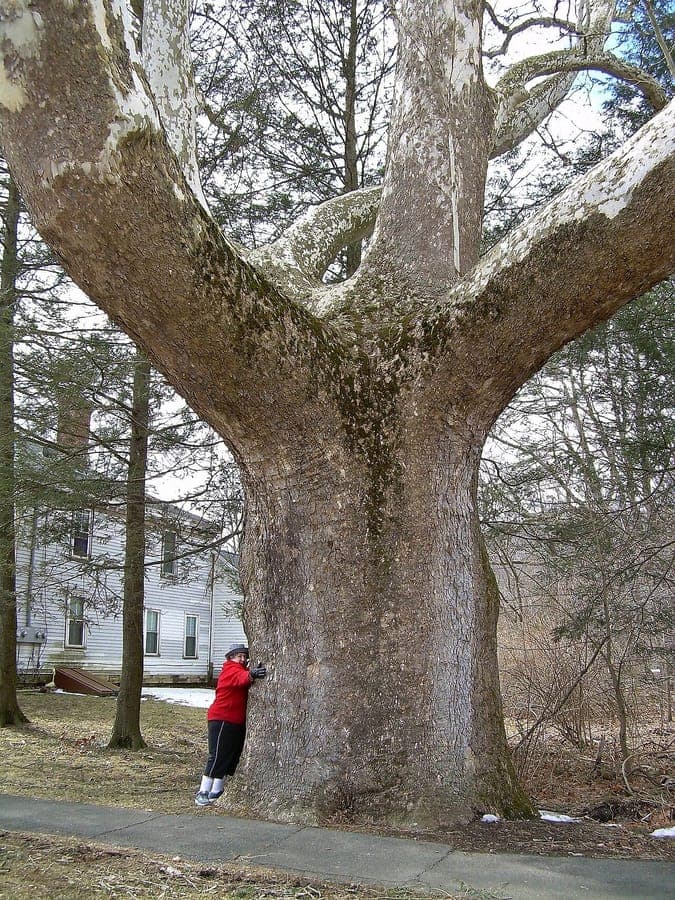
The buttonball or sycamore (Platanus occidentalis) is a colossal North American tree native to the southeastern and eastern United States. Known for its immense stature (35-50 meters in its native habitat), enormous leaves (up to 25 cm), and distinctive white-grey-brown marbled bark, this is one of the largest and most vigorous trees in North America. In European gardens, it makes a spectacular specimen for spacious estates and parks.
Appearance and Bloom Cycle
In Europe, buttonball reaches 20-30 meters tall with a spread of 15-20 meters. Leaves are remarkably large (15-25 cm), three-lobed, bright green, highly decorative. The bark is the signature feature: old bark exfoliates in large, irregular plates creating a handsome marbled pattern of white, grey, and brown.
Flowers are insignificant, but fruits are ornamental: 3-4 cm button-like seed balls hanging from thin stalks. Autumn foliage is ochre to reddish-brown.
Ideal Location
Buttonball thrives in full sun with minimum five to six hours of direct light daily. This is a tree for spacious settings - at least 8-10 meters clear of buildings. Ideal for parks, grand estates, and riverside plantings.
It's a vigorous grower capable of overwhelming smaller spaces. Wind-resistant and tolerant of urban and coastal conditions.
Soil Requirements
Buttonball is tolerant of soil types but performs best in freely draining, moderately moist soil. Heavy clay is acceptable, though the tree grows faster in loose substrates. Optimal pH is neutral (6.5-7.5).
This is a moderate feeder - composted bark and leaf mould assist in the first year. After establishment, little nutrition is needed. The tree is remarkably tough and tolerant even in poor soils.
Diseño gratis
¿Quieres ver Buttonball: complete guide en tu jardín? Crea un diseño gratis ahora.
Watering
Regular deep watering (15 litres weekly) for the first growing season after planting is essential. After establishment (2-3 years), the tree is very drought-tolerant and self-sufficient except during extreme drought.
This is a tree for natural water cycles; its deep roots search far underground.
Pruning
Buttonball is vigorous and tolerates minimal pruning. Remove only dead or damaged branches in autumn (October-November). Formative pruning of young trees involves gentle heading-back in year one.
The tree recovers well from pruning wounds. Older specimens can be pruned without harm if needed. Generally unnecessary unless growth is obstructing structures.
Maintenance Calendar
FEBRUARY-MARCH: Inspection and light pruning APRIL: Fertilise only young trees MAY-OCTOBER: Growth phase; water during drought OCTOBER-NOVEMBER: Remove damaged branches DECEMBER: Winter inspection
Winter Hardiness
Buttonball is hardy to USDA Zone 5 (-28°C). In UK, northern France, Germany, and Scandinavia, no winter protection is required. This is an exceptionally hardy tree suitable for all temperate and boreal European zones.
Companion Plants
Buttonball is a majestic specimen tree. Underplanting is challenging due to its massive shade and deep roots. Suitable plants include:
- Helleborus niger (shade lovers)
- Hardy ferns (native species)
- Hostas (in moister soils)
- Hedera helix ivy (trunk accompaniment)
Avoid competing stone fruits in proximity.
Closing
Platanus occidentalis is for those making a grand landscape statement. With its colossal leaves, marbled bark, and commanding presence, this is the ultimate scale tree for stately parks and large estates. This is not a tree for small gardens or balconies - it's a legacy tree for future generations. If you're seeking a true statement specimen for spacious grounds, this delivers. Explore scale-plant recommendations on gardenworld.app to design your dream landscape. Visit gardenworld.app for expert tree selection guidance.
¿Quieres ver Buttonball: complete guide en tu jardín? Crea un diseño gratis ahora.
Sube una foto, elige un estilo y obtén un diseño fotorrealista con lista de plantas en menos de un minuto.
Más de 10.000 jardines diseñados
Sin tarjeta de crédito


Plantas similares
Mexican Plane: complete guide
Platanus mexicana Moric.
Discover the Mexican Plane (Platanus mexicana), a magnificent shade tree with striking bark and broad canopy. Learn cultivation, care and landscape use.
Platanus racemosa: complete guide
Platanus racemosa
Discover California sycamore, a majestic tree with striking patterned bark. Growing guide for this native specimen.
London planetree: complete guide
Platanus acerifolia
A full guide to growing and caring for the London planetree: ideal conditions, pruning, soil, and companion plants for this majestic urban tree.